
Satellite SFS: Fast, Secure Coverage—Is It Right for You?
The 150km Swath Width KF Satellite: an insider’s take on satellite sfs
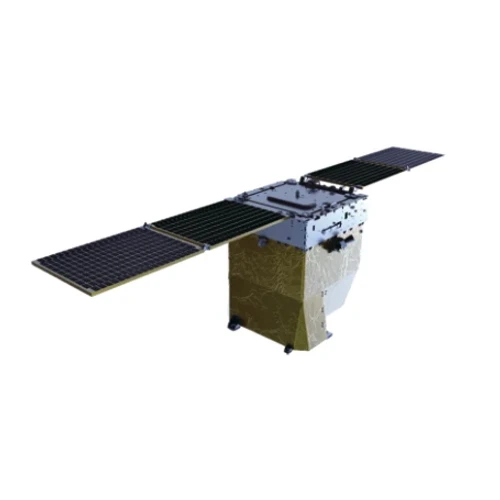
Every few years, Earth observation gets a quiet revolution. This one? A sub‑meter optical bird with a 150 km breadth. That’s a lot of ground in one pass. The KF series (made in Changchun—No. 1299 Mingxi Road, Beihu Science and Technology Development Zone, Jilin) rolls high resolution, ultra‑large swath, and quick data offload into a surprisingly pragmatic package. To be honest, it’s the breadth that changes the economics: fewer taskings, broader coverage, faster situational awareness.
Industry trend check
Markets are shifting from “sharpest image” to “sharpest image at scale.” Constellations do the revisit; ultra‑wide swath does the throughput. Emergency management teams and ag players, in particular, want sub‑meter detail over a whole province in a morning. It seems that operators are standardizing on X‑band high‑rate downlinks and bigger onboard storage—because you can’t exploit what you can’t downlink.
Key specs (quick glance)
| Swath width | 150 km (world‑leading in sub‑meter class) |
| Ground sample distance (GSD) | Sub‑meter (≈0.5–0.9 m; real‑world use may vary by mode) |
| Spectral bands | Pan + RGB + NIR (typical for this class) |
| Onboard storage | High‑speed, large capacity (≥2 TB is common in class) |
| Downlink | High‑rate X‑band; Ka‑band optional in some deployments |
| Orbit | LEO, often sun‑synchronous for consistent lighting |
How it’s built and proven
Materials and methods: space‑grade aluminum honeycomb panels, CFRP optical bench, radiation‑tolerant avionics, precision‑ground optics. Manufacturing blends CNC machining with additive‑manufactured brackets, then metrology‑led alignment. Cleanroom assembly (ISO 14644‑1), low‑outgassing parts (ASTM E595). Testing follows ECSS/NASA playbooks: vibe and shock (MIL‑STD‑1540), thermal‑vac, EMI/EMC, and imaging MTF checks.
Indicative test data (class‑typical, for context): MTF ≈0.2@Nyquist (pan), geolocation accuracy
Where it gets used
- Agriculture: wide‑area crop vigor (NDVI) with sub‑field detail.
- Disaster response: flood mapping, wildfire plume tracking in one pass.
- National mapping: 1:10,000 basemaps with fewer mosaics.
- Energy and mining: corridor surveys, tailings pond monitoring.
- Maritime/coastal: shoreline change, port operations, oil‑spill tracking.
Case snippets: a provincial forestry unit reportedly covered an entire watershed in a single overpass and cut their mosaic time by roughly half. In a spring flood drill, operators used the 150 km sweep to map inundation fronts faster than UAV teams could deploy. Many customers say the bigger swath simply “feels calmer” during time‑critical taskings.
Why this matters (advantages)
Fewer scenes, fewer seams. Ultra‑large breadth reduces stitching artifacts and slashes ground‑segment grind. High‑speed storage + downlink means you exploit the swath you collect. And yes, lower cost per km²—surprisingly noticeable when you model a whole season.
Vendor landscape (at a glance)
| Model | Swath | GSD | Downlink | Notes |
|---|---|---|---|---|
| KF Series (150 km) | 150 km | Sub‑meter | High‑rate X‑band | Largest breadth in sub‑meter class |
| Vendor A (generic) | 30–60 km | Sub‑meter | X‑band | Higher revisit via constellation |
| Vendor B (generic) | 50–80 km | ≈1 m | X/Ka‑band | Ka optional for faster dumps |
Customization and integration
Common options: tailored spectral bands, secure links (AES‑256 over X‑band), S‑band TT&C, tasking APIs, and OGC‑friendly data delivery (STAC catalogs). Ground system tie‑ins to existing X‑band stations are straightforward—assuming licensing is squared away, of course.
If you’re evaluating satellite sfs for operational rollouts, ask for: ECSS/NASA test matrices, sample MTF/SNR charts, long‑swath geometric linearity checks, ISO 9001 QMS certificate, and a service‑life radiation analysis. The origin facility in Changchun has the right optics pedigree; still, due diligence is your friend.
Final thought: satellite sfs isn’t about a marginal spec bump—it’s about compressing the time from “task” to “decision.” Wider, faster, and sharp enough. That’s the value.
Authoritative references
- CEOS Earth Observation Handbook: https://ceos.org/
- ECSS Space Standards portal (e.g., ECSS‑E‑ST‑10, ECSS‑Q): https://ecss.nl/
- NASA GEVS (GSFC‑STD‑7000) Environmental Verification: https://standards.nasa.gov/
- MIL‑STD‑1540 Test Requirements for Launch/Space Vehicles: https://quicksearch.dla.mil/
- ASTM E595 Outgassing Standard: https://www.astm.org/e0595-15.html
- ISO 14644‑1 Cleanrooms and associated environments: https://www.iso.org/standard/53394.html
- OGC STAC Specification: https://stacspec.org/











