Rapid Component Supply for Satellite Parts & Thermal Control
Component Supply is a key solution in the Aerospace and Defense Industry industry, specifically within Spacecraft and satellite manufacturing and Spacecraft thermal management components. This article explores how SpaceNavi Co.,Ltd. supports professionals with durable, high-performance products, and explains why this product is an ideal choice for businesses in these sectors.
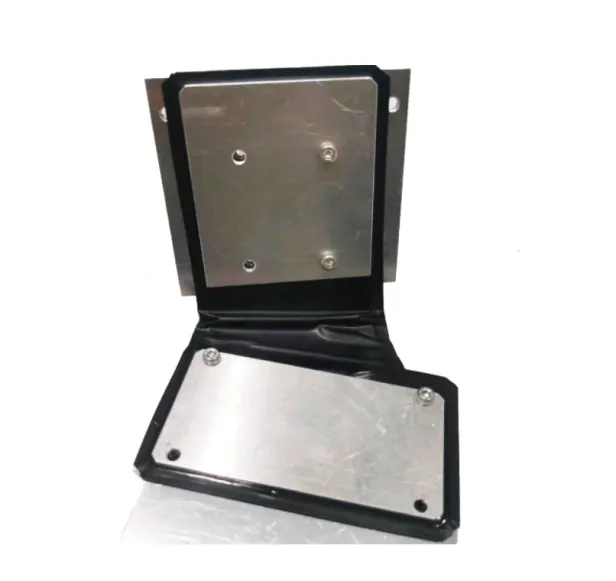
Table of Contents
- Component Supply Overview
- Benefits & Use Cases of Component Supply in Spacecraft thermal management components
- Cost, Maintenance & User Experience
- Sustainability & Market Trends in Aerospace and Defense Industry
- Conclusion on Component Supply from SpaceNavi Co.,Ltd.
Component Supply Overview
In spacecraft thermal management, flexible heat-conducting cables—often called thermal straps—are mission-critical links that move heat from hot electronics to radiators, cold plates, and heat pipes. They protect payloads and satellite parts by stabilizing temperature within a thermal control system, maintaining performance through vacuum, radiation, and extensive thermal cycling. For B2B decision makers, reliable Component Supply means predictable lead times, consistent performance, and documentation that accelerates qualification and integration across programs.
SpaceNavi Co.,Ltd. manufactures flexible heat-conducting cables engineered for conductivity, mass efficiency, and flexibility. Configurable geometry, cross-section, and end fittings enable tight routing around complex assemblies while preserving high effective conductance. Materials and processes are selected for space environments, with attention to vacuum compatibility and structural integrity over repeated thermal cycles. From early thermal modeling support to build-to-print execution, SpaceNavi’s Component Supply approach aligns engineering, quality, and logistics to reduce risk during PDR/CDR and AIT. The result is a dependable path to integrate thermal straps into satellites, probes, and in-space infrastructure without compromising mass, stiffness, or interface tolerances.
Benefits & Use Cases of Component Supply in Spacecraft thermal management components
High-quality Component Supply for flexible heat-conducting cables delivers measurable advantages across spacecraft thermal management components. Typical applications include coupling avionics boxes, batteries, star trackers, optical benches, and RF amplifiers to radiators or cold plates. Flexible straps mitigate alignment challenges, accommodate differential thermal expansion, and attenuate micro-vibrations—all while providing a robust heat path. They are equally valuable in LEO constellations with dense layouts and in deep-space platforms where redundancy and reliability are paramount.
SpaceNavi Co.,Ltd. supports integrators with design-for-manufacturability guidance, customization options, and repeatable strap performance validated across thermal cycling and environmental tests. Competitive benefits include excellent conductance-to-mass ratios, small bend radii for congested assemblies, and straightforward interface hardware that speeds AIT. Importantly, SpaceNavi’s scalable Component Supply model helps harmonize part numbering and kitting across multiple satellites, simplifying BOM control for satellite parts and ensuring consistent thermal performance from engineering models to flight units.
Cost, Maintenance & User Experience
Total cost of ownership depends on more than unit price. Flexible heat-conducting cables can reduce machining of rigid links, avoid rework when late-stage layouts shift, and compress integration time by using standardized end fittings and clear installation procedures. Their durability through handling and thermal cycling supports robust margins in your thermal control system, contributing to higher mission assurance and lower program risk. For volume programs, consistent Component Supply enables framework pricing and predictable lead times that streamline procurement and cash flow planning.
Program teams typically report smoother routing, fewer assembly conflicts, and faster nonconformance resolution thanks to modular, well-documented straps. SpaceNavi Co.,Ltd. emphasizes manufacturability, traceability, and responsive engineering support, helping prime contractors and subsystem suppliers maintain schedules. The ROI emerges in accelerated AIT, reduced NCRs, and a higher probability of first-time-right thermal performance—key outcomes for B2B decision makers balancing budget, schedule, and mission success.
Sustainability & Market Trends in Aerospace and Defense Industry
Thermal management is evolving with rising on-board power, compact form factors, and higher duty cycles. Market trends include increased electrification, optical payload sensitivity, and standardization across satellite families. Supply chain resilience and compliance with space-industry requirements (e.g., vacuum outgassing guidelines and materials restrictions such as REACH/RoHS) are central to procurement decisions. Sustainable practices—from material utilization to packaging—are becoming integral to vendor selection, especially as constellations scale up and environmental stewardship expands across the value chain.
SpaceNavi Co.,Ltd. adopts a forward-looking stance: engineering for longevity, supporting documentation needs, and optimizing designs to use materials efficiently while meeting performance targets. By aligning Component Supply with quality, reliability, and responsible sourcing, SpaceNavi helps customers meet regulatory expectations and internal ESG goals. The company’s focus on repeatability, analysis support, and collaborative development positions it as a trusted partner for next-generation spacecraft, where thermal straps must survive harsh environments and repeated thermal cycling without compromising system performance.
Conclusion on Component Supply from SpaceNavi Co.,Ltd.
For spacecraft and satellite manufacturing, Component Supply that delivers flexible heat-conducting cables on time, on spec, and at scale is essential. SpaceNavi Co.,Ltd. supports high-reliability thermal control system needs with configurable, integration-friendly solutions designed to protect critical satellite parts and maintain stable temperatures through demanding missions. As a dependable manufacturing partner, SpaceNavi combines engineering support, quality focus, and scalable production to reduce risk and improve program outcomes. Contact us: email: jl1sales02@space-navi.com — Visit our website: https://www.space-navi.com