Premium Satellite Imagery & SAR Data | Actionable Insights
Industry Trends in Advanced Geospatial Intelligence
The landscape of geospatial intelligence is undergoing a transformative period, driven by rapid advancements in sensor technology, artificial intelligence, and cloud computing. A key enabler of this revolution is the increasing accessibility and sophistication of satellite imagery. We are observing a significant shift towards higher spatial, spectral, and temporal resolutions, allowing for unprecedented detail and frequency in Earth observation. This evolution is not merely about more data; it's about smarter data, processed and delivered with greater efficiency.
Key trends include the proliferation of small satellite constellations, which dramatically improve revisit times, enabling near real-time monitoring critical for dynamic applications like disaster response and agricultural management. Furthermore, the integration of advanced analytics, machine learning, and deep learning algorithms is extracting richer insights from raw imagery, moving beyond simple visualization to predictive modeling and automated feature extraction. The demand for multi-source data fusion, combining optical imagery with `sar data` and other sensor inputs, is also expanding to overcome limitations imposed by weather conditions or illumination.
Enterprises across diverse sectors are leveraging these developments for enhanced operational efficiency, risk mitigation, and strategic planning. From environmental monitoring to urban planning, and from precision agriculture to defense intelligence, the ability to derive actionable intelligence from space-borne sensors is proving invaluable. The emphasis is increasingly on complete solutions, encompassing not just data acquisition but also sophisticated `data management` and integration into existing enterprise `data acquisition system` frameworks, often backed by robust `spatial databases`.
The Process of Acquiring and Delivering High-Quality Satellite Imagery
Unlike traditional manufactured goods, the "manufacturing process" of satellite imagery involves a highly intricate sequence of orbital operations, sensor calibration, data capture, and sophisticated ground processing. This process ensures the delivery of precise and reliable geospatial intelligence.
1. Satellite & Sensor Operations
- Orbital Positioning & Calibration: Satellites are launched into precise orbits (e.g., Sun-synchronous) to ensure consistent illumination conditions for optical sensors or optimal coverage for `sar data` missions. Sensors undergo rigorous pre-launch and in-orbit calibration using known radiometric targets to ensure data accuracy and consistency over time. Key "materials" here include advanced optical lenses, charge-coupled devices (CCDs) or complementary metal-oxide-semiconductors (CMOS) for optical sensors, and highly precise radar antennas and transceivers for Synthetic Aperture Radar (SAR) systems.
- Data Acquisition: The onboard `data acquisition system` captures raw Earth observation data. Optical sensors collect reflected sunlight in various spectral bands (e.g., visible, near-infrared, short-wave infrared), while SAR sensors emit microwave pulses and record the echoes, providing information independent of daylight or cloud cover. This step involves sophisticated `data management` algorithms onboard to compress and store data efficiently.
2. Ground Segment Processing
- Downlinking & Ingestion: Raw data is transmitted to ground stations worldwide. High-bandwidth communication links ensure rapid and secure transfer. Upon reception, data is ingested into robust `spatial databases` designed for massive geospatial datasets.
-
Pre-processing & Correction: This crucial stage applies a series of geometric, radiometric, and atmospheric corrections.
- Radiometric Correction: Converts raw digital numbers (DNs) into scientifically meaningful units like radiance or reflectance, accounting for sensor gain/offset.
- Geometric Correction & Orthorectification: Removes distortions caused by terrain, sensor tilt, and Earth's curvature. This process ensures accurate georeferencing, aligning imagery to a precise coordinate system, often using Ground Control Points (GCPs) and Digital Elevation Models (DEMs). Testing standards often adhere to ISO 19130 for sensor and data product metadata.
- Atmospheric Correction: Mitigates the effects of atmospheric scattering and absorption, improving the accuracy of land cover classification and change detection.
-
Product Generation: Based on user requirements, various levels of satellite imagery products are generated:
- Level 1 (Radiometrically & Geometrically Corrected): Basic imagery suitable for advanced users.
- Level 2 (Analysis-Ready Data - ARD): Processed to a higher degree, suitable for direct analysis, often conforming to CEOS ARD standards.
- Value-Added Products: Derived products like NDVI (Normalized Difference Vegetation Index) for vegetation health, water extent maps, impervious surface maps, or change detection layers, vital for industries like petrochemical, metallurgy, and water supply & drainage.
- Quality Assurance (QA) & Quality Control (QC): All imagery undergoes stringent QA/QC protocols, often aligned with ISO 9001 and ISO 19113 (Geographic Information – Quality Principles), to ensure geometric accuracy (e.g., RMSE values) and radiometric fidelity. The service life of the derived information is directly tied to the temporal relevance of the imagery, emphasizing the need for regular updates.
This meticulous process ensures that the satellite imagery delivered is not just an image, but a reliable source of expert-level geospatial data for critical decision-making across target industries.
Technical Specifications & Parameters
Understanding the technical specifications of satellite imagery is paramount for selecting the right data product for specific B2B applications. These parameters directly influence the utility and accuracy of the derived intelligence.
Key Imagery Parameters:
- Spatial Resolution: This defines the smallest discernible feature on the ground, typically ranging from sub-meter (e.g., 30 cm for very high resolution) to several tens of meters (e.g., 10-30m for medium resolution). Higher resolution enables detailed object identification and precise mapping.
- Spectral Resolution: Refers to the number and width of spectral bands captured. Multispectral imagery (4-8 bands) is standard, while hyperspectral imagery can have hundreds of narrow bands, enabling detailed material identification and spectral signature analysis.
- Temporal Resolution (Revisit Time): The frequency with which a satellite or constellation can re-image the same area. This can range from daily or sub-daily for large constellations to several days or weeks for single satellites, crucial for monitoring dynamic phenomena.
- Radiometric Resolution: The sensor's ability to distinguish between subtle differences in signal intensity, often expressed in bits (e.g., 8-bit, 11-bit, 16-bit). Higher radiometric resolution allows for finer discrimination of features and more accurate quantitative analysis.
- Geometric Accuracy: Quantifies how precisely image features correspond to their true geographic coordinates. Typically expressed as Root Mean Square Error (RMSE) in meters, crucial for mapping and GIS integration.
Typical Optical Satellite Imagery Specifications Table:
| Parameter | Description | Typical Range/Value |
|---|---|---|
| Spatial Resolution | Ground Sampling Distance (GSD) at Nadir | 0.3m - 30m |
| Spectral Bands | Number and type of electromagnetic spectrum bands | 4-band (RGBN) to 8-band (coastal, blue, green, red, red-edge, NIR1, NIR2, SWIR) |
| Revisit Time | Frequency of imaging the same location | Daily to 7 days (depending on constellation) |
| Radiometric Resolution | Bit depth for pixel intensity values | 11-bit to 16-bit |
| Geometric Accuracy (CE90) | Circular Error at 90% confidence level | < 5m (without GCPs), < 0.5m (with GCPs) |
| Processing Level | Level of geometric and radiometric correction | Orthorectified (Level 3), Analysis-Ready Data (ARD) |
These specifications are crucial for ensuring that the acquired satellite imagery meets the stringent requirements of various industrial applications, guaranteeing data integrity and analytical robustness.
Application Scenarios Across Industries
The versatility of satellite imagery makes it an indispensable tool across a broad spectrum of industries, providing critical insights for decision-making and operational optimization. Our expertise allows for tailored solutions for complex needs.
Precision Agriculture:
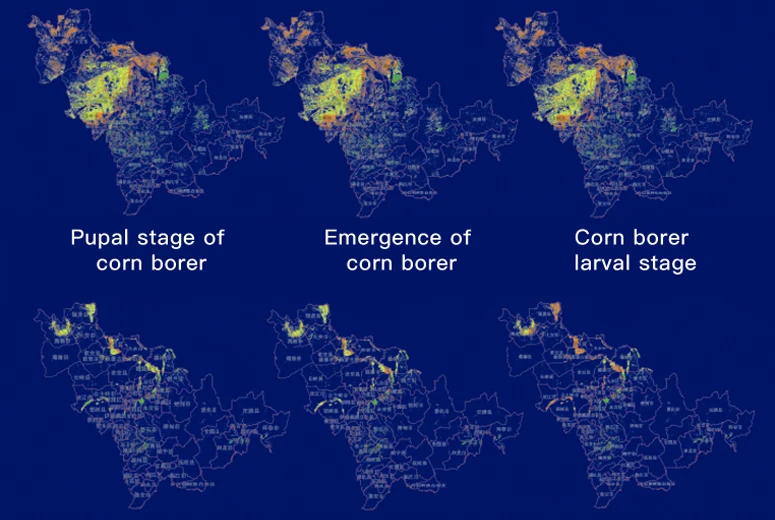
- Crop Health Monitoring: Utilizing NDVI and other vegetation indices derived from satellite imagery to detect stress, nutrient deficiencies, or pest infestations early, optimizing fertilizer and pesticide application.
- Yield Prediction: Historical imagery combined with current growth patterns allows for more accurate yield forecasting, aiding logistics and market planning.
- Irrigation Management: Assessing soil moisture variations and crop water demand for efficient water use, a critical advantage in regions facing water scarcity.
Oil & Gas and Mining (Petrochemical & Metallurgy):
- Exploration & Site Selection: Identifying geological features, land cover, and infrastructure proximity to optimize exploration and site development, reducing initial survey costs.
- Environmental Impact Monitoring: Tracking changes in land use, deforestation, water quality, and tailing pond integrity around operational sites, ensuring compliance and mitigating environmental risks. `SAR data` is particularly valuable here for monitoring ground deformation (subsidence/uplift) indicative of geological changes or infrastructure stress.
- Infrastructure Monitoring: Regular monitoring of pipelines, access roads, and facilities for damage, encroachment, or security threats, enhancing operational safety and asset integrity.
Water Supply & Drainage & Utilities:
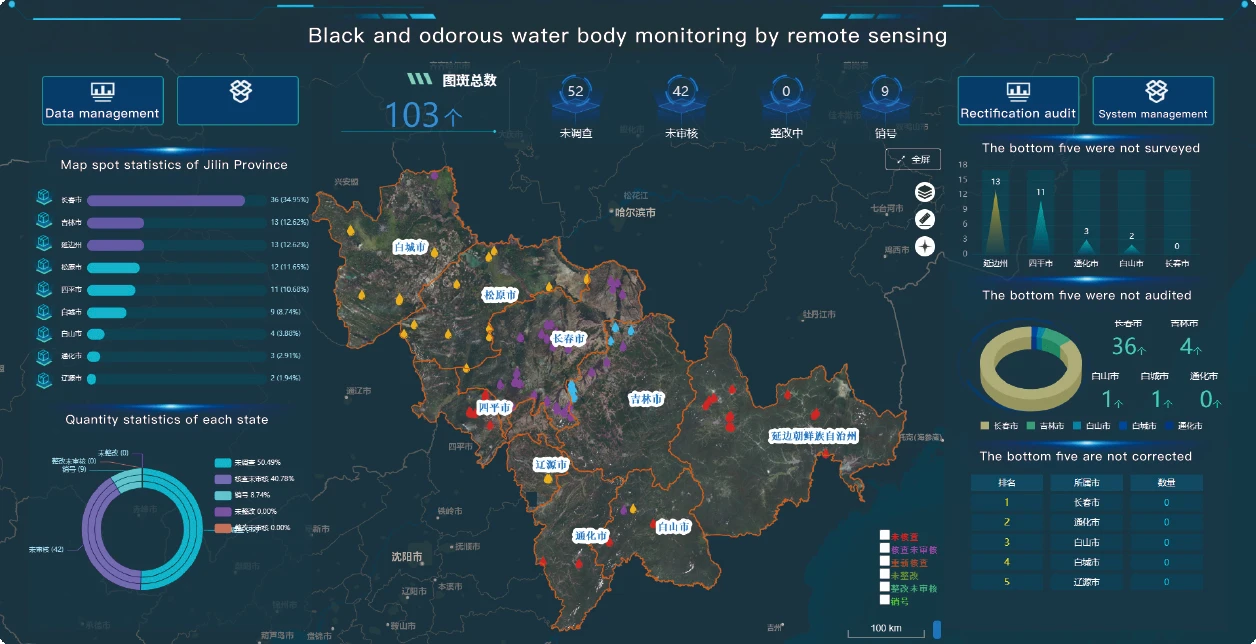
- Water Body Monitoring: Assessing water quality, algal blooms, and sediment levels in reservoirs and rivers for water resource management.
- Flood Risk Assessment: Identifying vulnerable areas, mapping flood extents, and monitoring drainage network performance to enhance resilience and response planning. This demonstrates advantage in corrosion resistance for infrastructure planning.
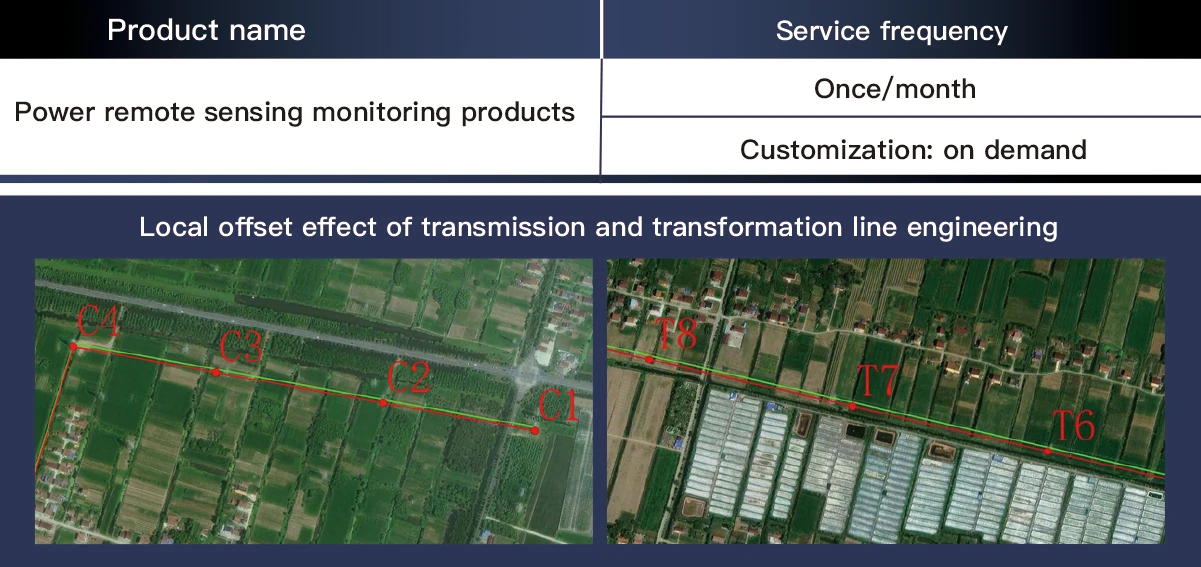
- Utility Asset Mapping: Precise mapping of power lines, poles, and other critical infrastructure for maintenance, expansion planning, and vegetation management, leading to significant energy saving through optimized operations.
Urban Planning & Infrastructure:
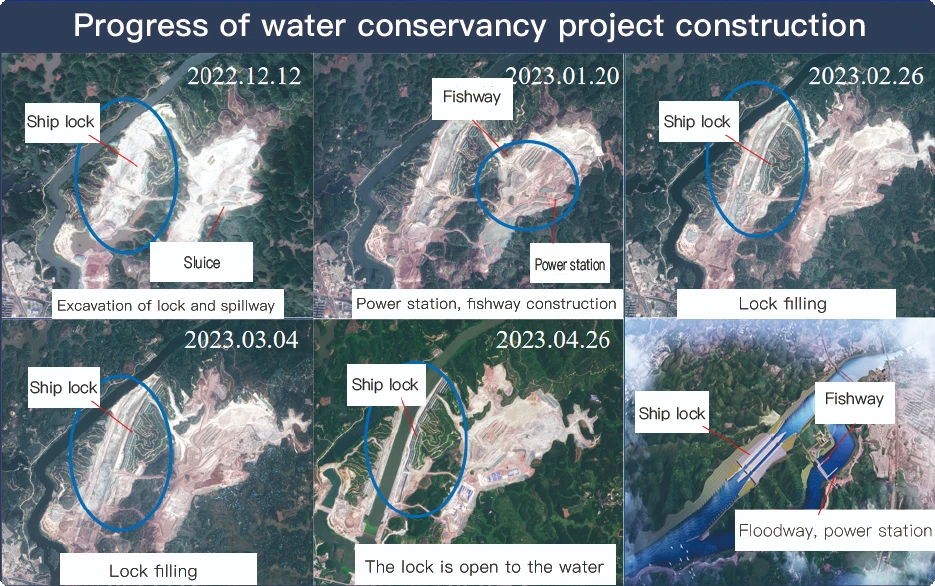
- Change Detection: Monitoring urban growth, land use/land cover changes, and construction progress.
- Environmental Management: Mapping green spaces, urban heat islands, and air quality indicators to inform sustainable urban development.
These diverse applications underscore the pivotal role of satellite imagery in driving informed decisions and operational excellence across various industry verticals.
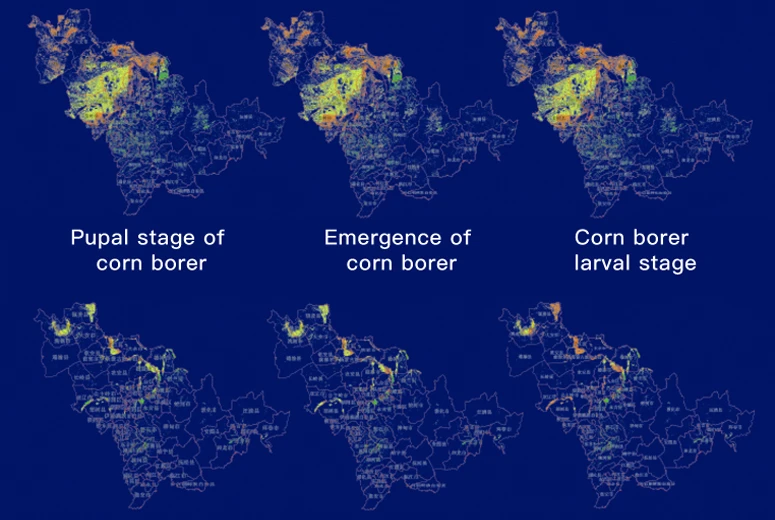
Visual representation of satellite imagery application in agriculture.
Technical Advantages and Value Proposition
The strategic integration of satellite imagery offers numerous technical and operational advantages for B2B entities seeking to optimize their decision-making processes and gain a competitive edge.
Unparalleled Coverage and Scalability:
- Global Reach: Satellites can acquire data over virtually any location on Earth, including remote or inaccessible areas, without geographical restrictions, significantly reducing the cost and logistical challenges of ground-based surveys.
- Large-Scale Monitoring: Efficiently monitor vast areas (e.g., entire agricultural regions, extensive pipeline networks) with consistent data quality, which is crucial for `data management` across distributed assets.
Enhanced Temporal Resolution:
- Frequent Updates: Modern constellations offer daily or even sub-daily revisits, enabling near real-time change detection and rapid response capabilities for critical events.
- Historical Archiving: Access to extensive archives of historical satellite imagery allows for robust baseline establishment, long-term trend analysis, and sophisticated time-series monitoring.
Cost-Effectiveness and Efficiency:
- Reduced Fieldwork: Minimizes the need for expensive and time-consuming on-the-ground surveys, especially for large or hazardous areas.
- Automated Analysis: Integration with AI and machine learning platforms automates the extraction of features and patterns, transforming raw data into actionable intelligence at scale.
Complementary Data Fusion:
- Optical and SAR Synergy: Combining optical imagery (high spectral detail) with `sar data` (all-weather, day/night capability, penetration) provides a comprehensive understanding of the Earth's surface, overcoming individual sensor limitations. This dual capability enhances the robustness of any `data acquisition system`.
- Integration with GIS and `Spatial Databases`: Seamless integration into Geographic Information Systems (GIS) and `spatial databases` facilitates advanced spatial analysis, modeling, and visualization for complex enterprise solutions.
These advantages collectively position satellite imagery as a critical asset for businesses aiming for precision, efficiency, and resilience in their operations.
Vendor Comparison: Key Differentiators
Navigating the diverse landscape of satellite imagery providers requires a thorough understanding of their core strengths and product offerings. While many provide high-resolution data, key differentiators often lie in their constellation architecture, processing capabilities, and value-added services.
Comparison of Leading Satellite Imagery Providers:
| Feature/Provider | Provider A (e.g., Maxar/WorldView) | Provider B (e.g., Airbus/Pleiades Neo) | Provider C (e.g., Planet/SkySat) |
|---|---|---|---|
| Spatial Resolution (Pan/MS) | 0.3m / 1.2m | 0.3m / 1.2m | 0.5m / 0.8m |
| Revisit Time (Typical) | <1 day (with tasking) | <1 day (with tasking) | Daily (global coverage) |
| Spectral Bands | 8 (Coastal, Blue, Green, Yellow, Red, Red-Edge, NIR1, NIR2) | 6 (Deep Blue, Blue, Green, Red, Red-Edge, NIR) | 4 (RGB, NIR) |
| Primary Focus | Very High-Res Imagery & Analytics | Very High-Res Imagery & Defense | High-Freq Monitoring, Global Coverage |
| Data Access & API | Robust API, Cloud Integration | API & Direct Delivery | Extensive API, Platform Access |
| SAR Data Offering | Partnerships/Limited (mostly optical) | Strong SAR capabilities (TerraSAR-X, TanDEM-X) | Partnerships/Emerging (mostly optical) |
When evaluating providers, consider not only the raw satellite imagery specifications but also the ease of `data acquisition system` integration, the robustness of their `data management` and `spatial databases`, and their ability to provide custom analytics. Some vendors excel in delivering ultra-high-resolution imagery for detailed mapping, while others specialize in frequent monitoring with slightly lower resolution but superior temporal revisit. For applications requiring all-weather capabilities, providers with strong `sar data` portfolios or partnerships are essential. Ultimately, the choice depends on balancing resolution, revisit, spectral capabilities, and the specific application's budget and technical requirements.
Customized Solutions and Integration
Recognizing that off-the-shelf satellite imagery products may not always align perfectly with unique business challenges, we specialize in developing customized solutions. Our approach focuses on seamless integration into existing enterprise workflows and maximizing the utility of geospatial data.
Tailored Data Acquisition:
- On-Demand Tasking: For critical or rapidly evolving situations, we can facilitate direct satellite tasking to acquire fresh satellite imagery over specific Areas of Interest (AOIs) at desired times and specifications.
- Multi-Sensor Integration: Combining optical, `sar data`, and other remote sensing inputs (e.g., LiDAR, drone data) to create a comprehensive data layer that leverages the strengths of each sensor type.
Advanced Analytics and Derivations:
- Proprietary Algorithms: Development of custom algorithms for specific feature extraction (e.g., specific crop types, infrastructure damage detection) or change detection beyond standard offerings.
- Predictive Modeling: Leveraging historical satellite imagery and AI models to build predictive capabilities for outcomes such as crop yield, asset failure, or environmental risk.
System Integration and Development:
- API Development & Integration: Building custom APIs to connect our `data acquisition system` and processing pipelines directly with client's internal `data management` platforms and `spatial databases`.
- Dashboard & GIS Integration: Developing interactive web-based dashboards or integrating data streams directly into existing enterprise GIS environments, ensuring actionable intelligence is readily accessible to decision-makers.
- Cloud-Native Solutions: Deploying scalable, cloud-based infrastructure for data storage, processing, and delivery, ensuring high availability and performance.
Our commitment to tailoring solutions ensures that clients receive not just data, but a fully integrated intelligence framework that drives measurable business value. We highlight our company's extensive experience and authoritative references in previous projects, often adhering to ISO 27001 for information security management in our data handling.
Application Case Studies
Real-world application demonstrates the transformative power of satellite imagery. Here are examples of how our solutions have delivered significant impact.
Case Study 1: Large-Scale Agricultural Management
- Client: A leading agricultural cooperative managing over 500,000 acres of various crops.
- Challenge: Inefficient resource allocation (water, fertilizer) due to lack of localized, real-time crop health data, leading to suboptimal yields and increased operational costs.
- Solution: Implemented a customized `data acquisition system` leveraging daily high-resolution satellite imagery (PlanetScope & SkySat) combined with our proprietary vegetation health algorithms. This was integrated into the client's existing farm management platform and `spatial databases`.
- Results: The client achieved an average 12% increase in crop yield for target areas, a 15% reduction in water consumption through precision irrigation, and a 10% saving on fertilizer costs within one growing season. The system provided near real-time alerts for stressed areas, enabling proactive interventions.
Case Study 2: Pipeline Integrity Monitoring (Petrochemical Industry)
- Client: A major energy company with thousands of kilometers of crude oil and natural gas pipelines in remote regions.
- Challenge: Detecting encroachment, illegal tapping, ground subsidence, and vegetation overgrowth along pipelines was labor-intensive, costly, and prone to delays using traditional aerial patrols.
- Solution: Deployed a combined `sar data` and optical satellite imagery solution. `SAR data` (e.g., from TerraSAR-X, Sentinel-1) was used for all-weather ground deformation monitoring, while high-resolution optical imagery provided visual confirmation of changes and detailed land cover analysis. Our `data management` system automatically identified anomalies and pushed alerts to client's operational teams.
- Results: Reduced field inspection costs by 30% and significantly improved response times to potential threats. Early detection of ground subsidence prevented potential pipeline damage, demonstrating clear advantages in energy saving and corrosion resistance planning.
Case Study 3: Urban Development & Environmental Impact Assessment
- Client: A municipal planning department overseeing rapid urban expansion.
- Challenge: Accurately mapping and monitoring informal settlements, quantifying impervious surfaces, and assessing green space changes for sustainable urban planning and infrastructure development.
- Solution: Provided a time-series of very high-resolution satellite imagery and applied machine learning models to classify land cover, detect impervious surfaces, and quantify green infrastructure. The data was integrated into the city's `spatial databases` and GIS platform.
- Results: Enabled the planning department to accurately track urban growth, identify areas for green infrastructure investment, and support informed policy decisions regarding resource allocation and environmental protection. This highlights our commitment to responsible development, leveraging years of service in urban analytics.
Frequently Asked Questions (FAQ)
- Q1: What is the typical lead time for acquiring new satellite imagery?
- A1: Lead times for new satellite imagery acquisition (tasking) can vary. For standard high-resolution optical imagery, it typically ranges from 24 hours to 7 days, depending on cloud cover, satellite availability, and the size/location of the Area of Interest (AOI). `SAR data` acquisition often has shorter lead times as it is not affected by cloud cover or daylight.
- Q2: How do you ensure the accuracy and reliability of the satellite imagery provided?
- A2: Our commitment to data quality is paramount. We adhere to stringent processing standards, including geometric and radiometric corrections, conforming to ISO 19130 and ISO 19113 for geospatial data quality. All satellite imagery undergoes rigorous Quality Assurance (QA) and Quality Control (QC) checks before delivery. Our `data acquisition system` and `data management` protocols are designed for maximum integrity.
- Q3: What kind of customer support can we expect after purchasing satellite imagery products?
- A3: We provide comprehensive after-sales support, including technical assistance for data integration, interpretation, and troubleshooting. Our dedicated support team is available during business hours to address any queries and ensure optimal utilization of our satellite imagery solutions. We also offer training and consultation services for specific application needs.
- Q4: What are your warranty and fulfillment commitments?
- A4: We warrant that all delivered satellite imagery products meet the agreed-upon technical specifications and quality standards (e.g., geometric accuracy, radiometric consistency). In the event of data not meeting these specifications, we commit to reprocessing or re-acquiring the data at no additional cost. Fulfillment is typically via secure cloud download links or integration into client's cloud environments, with delivery times clearly communicated and adhered to post-acquisition and processing.
Contact and Support Information
For further inquiries, custom project discussions, or technical support related to satellite imagery and geospatial intelligence solutions, please reach out to our team.
- Sales & Project Inquiries: sales@space-navi.com
- Technical Support: support@space-navi.com
- General Information: info@space-navi.com
- Phone: +1 (800) 123-4567
Our team of geospatial experts is ready to assist you in leveraging the power of `sar data`, high-resolution satellite imagery, and advanced `data management` techniques to meet your specific business objectives.
Authoritative References
- CEOS (Committee on Earth Observation Satellites). (2020). Analysis Ready Data (ARD) for Land. Retrieved from https://ceos.org/ard/
- ISO 19130-1:2018. Geographic information — Imagery sensor models for geopositioning — Part 1: Fundamentals. International Organization for Standardization.
- European Space Agency. (2023). Sentinel-1 Technical Guide. Retrieved from https://sentinel.esa.int/web/sentinel/missions/sentinel-1/mission-performance
- NASA Earth Observatory. (2023). Remote Sensing Technology. Retrieved from https://earthobservatory.nasa.gov/features/RemoteSensing/remote_sensing_2.php