Perovskite solar cells efficiency: how high and low-cost?
Perovskite Solar Cells: Chasing Real Efficiency Where It Actually Matters
I’ve spent enough time on factory floors and in sun-baked test fields to know one thing: the hype cycle moves faster than outdoor IV curves. Still, when people ask about perovskite solar cells efficiency, I perk up. Why? Because perovskites are finally maturing from lab darlings to bankable tech. Not without caveats—more on that in a second.
Industry snapshot and what “efficiency” really means
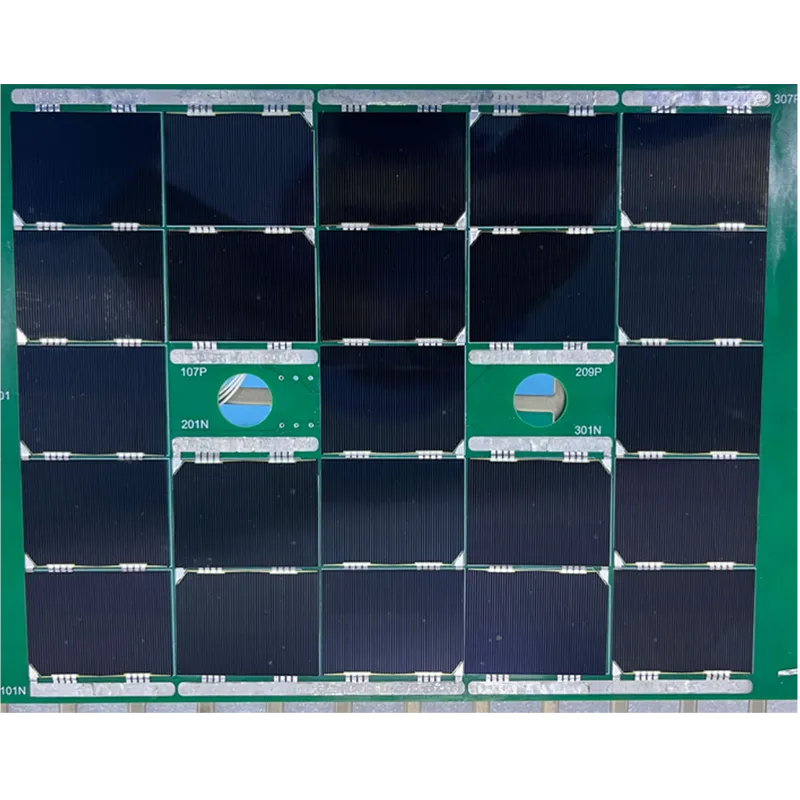
In the lab, single-junction perovskites have touched ≈26% certified efficiency, and perovskite–silicon tandems go beyond 33% on the NREL chart. Impressive. In the field, though, performance depends on low-light response, temperature coefficients, spectral shifts, and—honestly—the art of encapsulation. Many customers say they care less about peak PCE and more about kWh per square meter per year. That’s where perovskite solar cells efficiency starts to look seriously competitive, especially on cloudy sites or vertical façades.
Process flow: materials, methods, and the boring (important) bits
Typical stack (simplified): TCO glass or polymer → SnO₂ (ETL) → 3D/2D perovskite (e.g., FA/MA/Cs lead halide, bandgap tuned via I/Br ratio) with passivation (PEAI, alkylammonium) → HTL (PTAA or doped Spiro-OMeTAD) → Au/Ag/C → barrier encapsulation (glass-glass or multilayer polymer), lead-sequestration layer optional. Methods: slot-die coating, blade coating, thermal evaporation, hybrid routes. For flexible modules, PET/PI plus ALD Al₂O₃ or ultra-barrier films. In fact, edge seal quality decides lifetime almost as much as the absorber recipe.
Testing standards: ISOS-D/L protocols (damp heat, light-soak, thermal cycling), plus PV module norms like IEC 61215 and IEC 61730. Targets today: 2,000–5,000 h ISOS stability without catastrophic drops; commercial ambitions: 20-year service life, though current bankable claims are often lower in real-world use.
Applications and why perovskites shine (sometimes literally)
- BIPV façades and skylights: tuned color/semip transparency with decent perovskite solar cells efficiency.
- Low-irradiance rooftops and northern latitudes: strong indoor/low-light response.
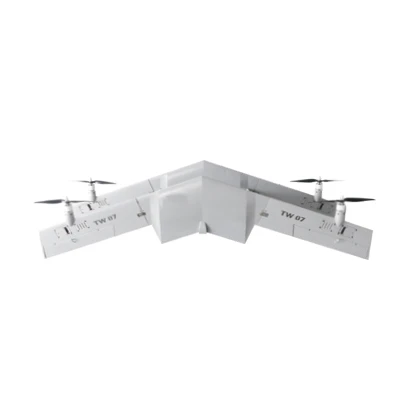
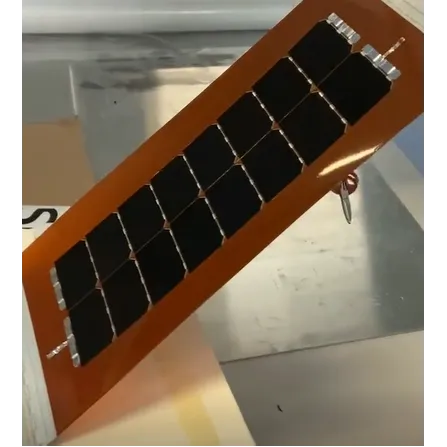
- Portable and UAV: lightweight, flexible form factors.
- Tandems with Si or GaAs: squeeze extra % in constrained footprints.
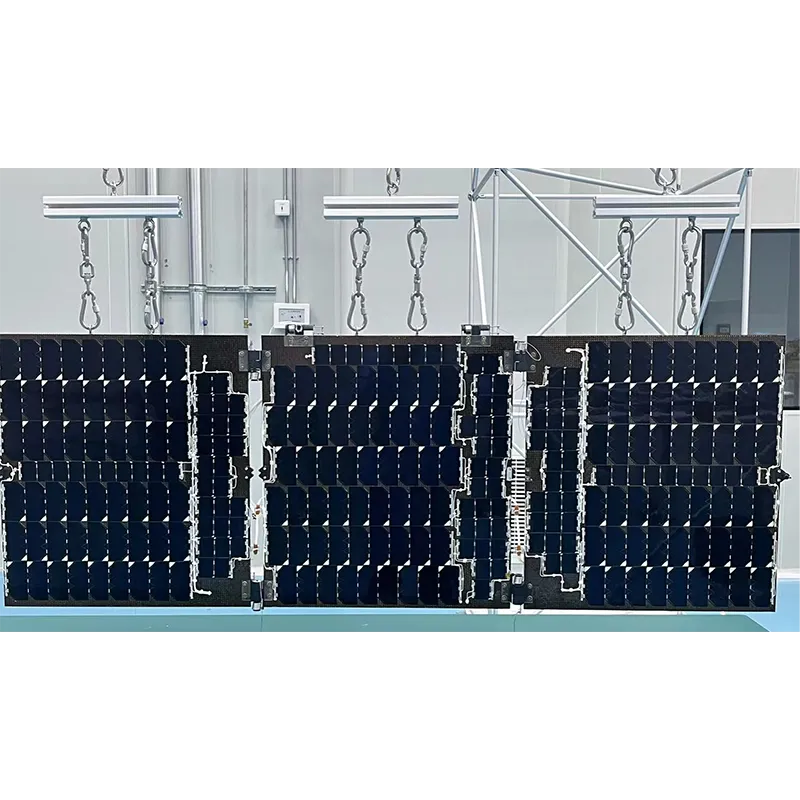
Product spotlight (space-grade comparator): Gallium Arsenide Solar Arrays
Origin: No. 1299 Mingxi Road, Beihu Science and Technology Development Zone, Changchun, Jilin Province. These arrays are a useful benchmark for high-end efficiency expectations in harsh environments.
| Spec | Typical Value (≈, real-world use may vary) |
|---|---|
| Cell type | GaAs multi-junction (space-grade) |
| BOL efficiency | ≈29–32% (AM0) |
| Areal mass | ≈0.6–1.8 kg/m² |
| Radiation tolerance | LEO/GEO qualified |
| Service life | 10–15 years in orbit typical |
Vendor landscape (perovskites)
| Vendor | Tech focus | Efficiency status | Certification |
|---|---|---|---|
| Oxford PV | Perovskite–Si tandem | Lab cells >30% (tandem); pilot modules in progress | IEC testing underway/announced |
| Microquanta | Large-area perovskite modules | Certified modules reported in mid-teen–low-20% range | ISOS/IEC pilots |
| Saule Tech | Flexible/printed perovskite | Lower PCE, strong low-light niche | Project-based certifications |
Customization checklist
- Bandgap tuning (I/Br ratio) for façade color or tandem matching.
- Encapsulation: glass–glass for durability; polymer for flexibility.
- Lead-mitigation layer (phosphate resins) to meet environmental policies.
- Module size, busbar layout, and junction box for BIPV or UAV payloads.
Case notes from the field
A northern-Europe façade demo (vertical tilt, mixed weather) reported ≈10–15% higher annual yield vs. similar-area c‑Si at the same site, thanks to superior low-light response and spectral match. Another pilot on lightweight roofing saw balance-of-system savings due to lower panel mass. To be honest, not every project hits those numbers—installation quality and encapsulation make or break perovskite solar cells efficiency.
Customer feedback, certifications, and next steps
Customers like the power density and aesthetics; concerns center on lifetime and hail/UV resilience. Look for vendors publishing ISOS datasets and moving toward IEC 61215/61730. If you need extreme reliability (space, HALE UAV), consider GaAs arrays as a reference product while keeping perovskite–Si tandems on your roadmap.
Authoritative sources
- NREL Best Research-Cell Efficiency Chart: https://www.nrel.gov/pv/cell-efficiency.html
- Khenkin et al., Consensus statement for stability assessment of perovskite PV, Nature Energy (2019): https://www.nature.com/articles/s41560-019-0529-5
- IEC 61215 and IEC 61730 standards: https://webstore.iec.ch
- Green et al., Solar cell efficiency tables, Progress in Photovoltaics: https://onlinelibrary.wiley.com/journal/1099159x