Material Selection for 0.5m Resolution Satellite Optical Payloads
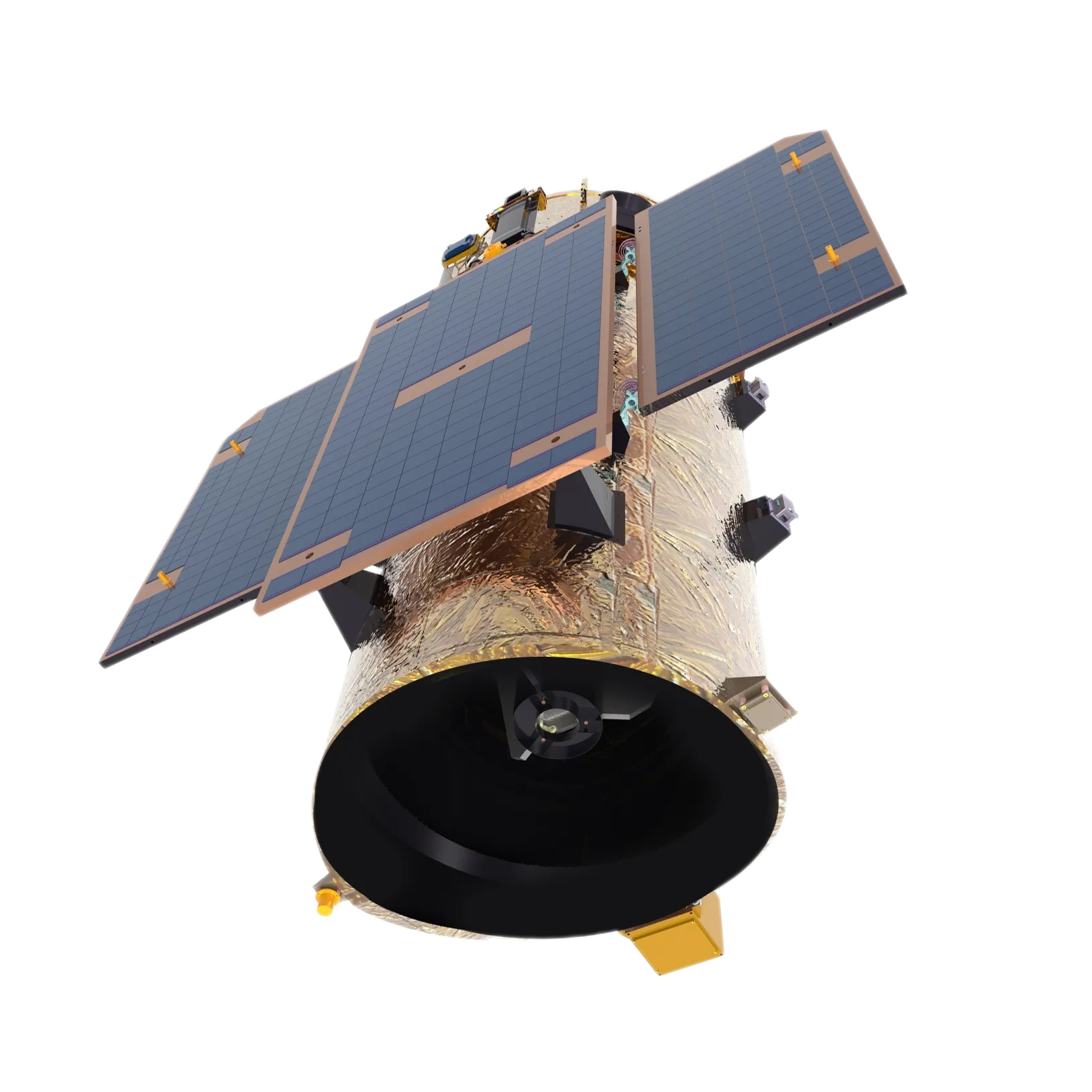
Material selection for high-resolution optical payloads in Low Earth Orbit RFPs requires balancing thermal dimensional stability, mass constraints, and environmental durability based on industry procurement norms.
Navigating structural and optical material trade-offs demands a structured evaluation framework for aerospace subsystem integrators and satellite procurement directors.
Mitigating Focal Plane Displacement Through Thermal Dimensional Stability
Material selection for aerospace optical payloads requires prioritizing thermal dimensional stability to maintain focal plane integrity during orbital sun-eclipse transitions. Rapid thermal gradients occur as spacecraft transition between direct solar illumination and Earth shadow, inducing uneven expansion or contraction across structural components. Without adequate thermal management, differential structural movement shifts the focal plane relative to primary optical elements, resulting in immediate image blurring.
Subsystem integrators evaluate carbon fiber reinforced polymers, ultra-low expansion glass, or silicon carbide when balancing mass, stiffness, and thermal performance. Carbon fiber composites offer tailorable thermal expansion characteristics through directional fiber layup, though anisotropic behaviors require precise structural modeling during preliminary design reviews. Ceramic and glass-ceramic alternatives deliver exceptional dimensional stability across wide temperature ranges, effectively dissipating localized thermal loads.
Substrate Material Selection Parameters
Engineering teams deploy specialized mounting interfaces and kinematic joints to decouple support frames from optical elements during rapid orbital transitions. These mechanical provisions accommodate micro-strain without transferring mechanical stress directly into sensitive payload assemblies. Performance validation relies on technical documentation available from the supplier to confirm that selected materials operate within specified orbital tolerances.
Verifying vendor compliance regarding coefficient of thermal expansion limits remains essential prior to final contract execution. Material test coupons must match the operational temperature range of the intended low Earth orbit trajectory to confirm compliance with dimensional stability thresholds.
Thermal Distortion Mitigation Protocols
Thermal gradients interact directly with structural expansion behaviors, making accurate predictive modeling critical for maintaining optical alignment throughout the satellite lifecycle. Active thermal control loops supplement passive material properties when orbital trajectories generate severe thermal loads that exceed baseline structural resilience.
Technical specifications defined in procurement documentation guide the verification of material performance under simulated orbital conditions. Documentation available from the supplier establishes the verification baseline required for contractual acceptance.
Controlling Outgassing and Volatile Contamination in Optical Surfaces
Non-metallic structural binders, elastomeric potting compounds, and protective films release volatile organic compounds that readily migrate toward unshielded mirrors under vacuum conditions. Solar radiation subsequently bakes these condensable molecules into permanent haze layers that severely reduce optical transmission.
Verifying Volatile Condensable Material Thresholds
Adhesive and coating selections must rely on vacuum baking test baselines determined through negotiation between procurement teams and suppliers. These established baselines verify that total mass loss and collected volatile condensable material percentages remain within acceptable limits for the intended orbital trajectory.
Implementing Cleanliness Verification Procedures
Rigorous material screening protocols executed prior to final assembly integration mitigate molecular contamination risks across complex optical bench architectures. Cleanliness verification procedures aligned with the buyer-specified vacuum environmental testing requirements ensure that subsystem components do not compromise neighboring sensor assemblies.
Balancing Mass and Stiffness in Launch Vehicle Integration
Structural Mass Allocation and Stiffness Targets
Subsystem integrators must weigh structural mass against payload stiffness requirements to prevent destructive resonance during liftoff. Launch vehicles impose strict acceleration limits and low-frequency vibration profiles that dictate the minimum fundamental frequency of the entire spacecraft structure. Achieving these dynamic thresholds without adding excessive dead weight requires careful selection of structural elements that maximize rigidity while minimizing overall payload mass.
Compliance Methods for Launch Vehicle Fairing Constraints
Finite element modeling and modal testing are deployed to verify fundamental frequency compliance before integration. Structural configurations must fit within the volumetric envelope defined by the launch vehicle fairing while maintaining sufficient clearance during fairing separation events. Designers utilize stiffness-to-mass ratios to evaluate candidate materials and structural geometries.
Purchase orders should specify stiffness margins and frequency separation requirements to protect against harmonic coupling with the launch vehicle propulsion system. Commercial Earth observation platforms demand strict adherence to these mass and stiffness allocations depending on the specific launch service provider and payload adapter configuration.
Matrix of Material Trade-Offs for Optical Payloads
Comparing Substrate Performance Parameters for High-Resolution Optical Systems
Evaluating structural and optical substrate options depends on balancing thermal stability, mass efficiency, and stiffness across specific Low Earth Orbit trajectory profiles.
Carbon fiber reinforced polymers offer high specific stiffness and tailorable directional expansion, though anisotropic properties require detailed alignment modeling during preliminary structural evaluations.
Candidate Material Matrix and RFP Trade-Off Analysis
The matrix below compares candidate material categories against key performance parameters under standard commercial request for quotation conditions.
| material | Suitability for Humid Environments | Mass Efficiency | Stiffness | Price Tier |
|---|---|---|---|---|
| Carbon Fiber Reinforced Polymers | Depends on Resin Matrix | Very High | High | Depends on Layup Complexity |
| Ultra-Low Expansion Glass | High | Low to Moderate | Moderate | High |
| Silicon Carbide | High | High | Very High | Depends on Component Geometry |
Subsystem integrators assess manufacturing complexity and integration feasibility based on machining tolerances, bonding agent compatibility, and scheduled delivery milestones.
Mitigating LEO Environmental Degradation From Atomic Oxygen and UV Radiation
Counteracting Orbital Space Weathering Mechanics
Orbital decay trajectories expose external structural skins to atomic oxygen fluxes that erode unprotected polymeric binders over extended mission lifespans.
Ultraviolet photon bombardment breaks molecular chains within polymer matrices, altering surface morphology and degrading mechanical properties unless shields or resistant coatings are applied.
Earth observation mission planners factor these degradation vectors into initial trade studies to protect structural integrity throughout the satellite lifecycle.
Deploying Protective Coatings and Resistant Substrates
Space-grade polymers and specialized protective barriers withstand prolonged space weathering without measurable loss of load-bearing capacity under vacuum conditions.
Subsystem designers select surface treatments that inhibit atomic oxygen erosion while maintaining thermal emissivity requirements across wide temperature fluctuations.
Material durability assessments conducted during preliminary design phases ensure that selected finishes remain stable against solar radiation without flaking or cracking.
Integrating Environmental Durability into Trade Studies
Commercial Earth observation programs rely on systematic environmental durability evaluations to select materials that resist both atomic oxygen and solar radiation simultaneously.
Engineers weigh substrate vulnerability against the added mass of protective barriers, depending on the specific altitude and orbital inclination parameters of the target trajectory.
Verifying coating resilience prior to final assembly prevents premature degradation in Low Earth Orbit environments where replacement is impossible.
Structuring Supplier Requirements and Verification Protocols
Translating mission performance requirements into technical specifications dictates how tier-one and tier-two material vendors execute fabrication. Purchasing agents establish formal technical baselines that map mechanical, thermal, and contamination thresholds directly to the operational environment of Low Earth Orbit. Vendor submissions are filtered through structured evaluation gating mechanisms before engineering contracts are finalized.
Defining Procurement and Inspection Milestones
Fabrication schedules incorporate mandatory inspection milestones to verify material compliance before delivery occurs. Subsystem integrators inspect raw material lots, bonding agents, and surface treatment applications at predetermined checkpoints. Any deviation from the technical specifications results in an immediate hold on production until corrective actions are documented and approved by the purchasing authority.
Enforcing Traceability and Documentation Standards
Traceability documentation protocols require comprehensive record-keeping for every raw material lot, adhesive batch, and coating application used in the optical payload assembly. Material test reports must accompany each shipment to verify compliance with designated outgassing and thermal stability parameters. Verification data depends heavily on the specific grade of carbon fiber reinforced polymer or ceramic substrate selected for the mission, requiring careful audit trails throughout the manufacturing lifecycle.
Frequently Asked Questions
Engineering teams evaluate carbon fiber reinforced polymer composites alongside ceramic and glass-ceramic substrates. Candidate selection depends on tailorable thermal expansion behavior, localized thermal load dissipation capabilities, and overall payload mass fraction constraints.
Subsystem designers deploy specialized mounting interfaces and kinematic joints to decouple support structures from sensitive assemblies. These mechanical provisions absorb micro-strains induced by rapid temperature fluctuations without transferring stress directly into optical components.
Payload architecture trade-offs weigh structural rigidity against fundamental frequency requirements to ensure compliance with launch vehicle fairing constraints. Candidate composite or metallic reinforcements are selected to optimize mass fraction while withstanding dynamic ascent loads.
Material durability assessments account for atomic oxygen exposure and ultraviolet radiation degradation in Low Earth Orbit. Protective coatings and radiation-resistant polymers are selected to withstand prolonged orbital exposure without suffering mechanical property loss.
Verification processes involve inspecting raw material lots, bonding agents, and surface treatment applications against agreed technical specifications. Technical documentation and material test coupons matching operational temperature ranges confirm that selected options operate within allowable structural thresholds.
Conclusion
Commercial Earth observation programs depend heavily on systematic verification during the bidding stage. Procurement directors can secure downloadable documentation directly through the platform interface.
Technical consultations allow engineering specialists to evaluate specific orbital parameters before final contract award. These discussions address variable delivery timelines and volume-dependent pricing matrices.
Comprehensive evaluation checklists assist teams in reviewing compliance metrics for complex space assemblies.