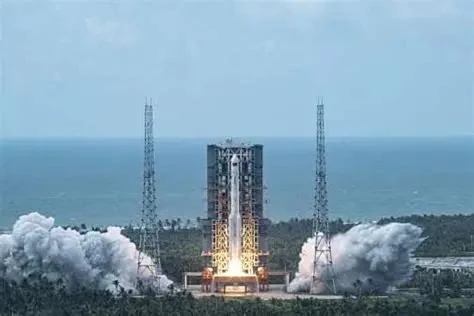
Component for Satellites & Solar Panel: Durable, Efficient?
What I Learned Evaluating the Satellite-Rocket Separation Mechanism
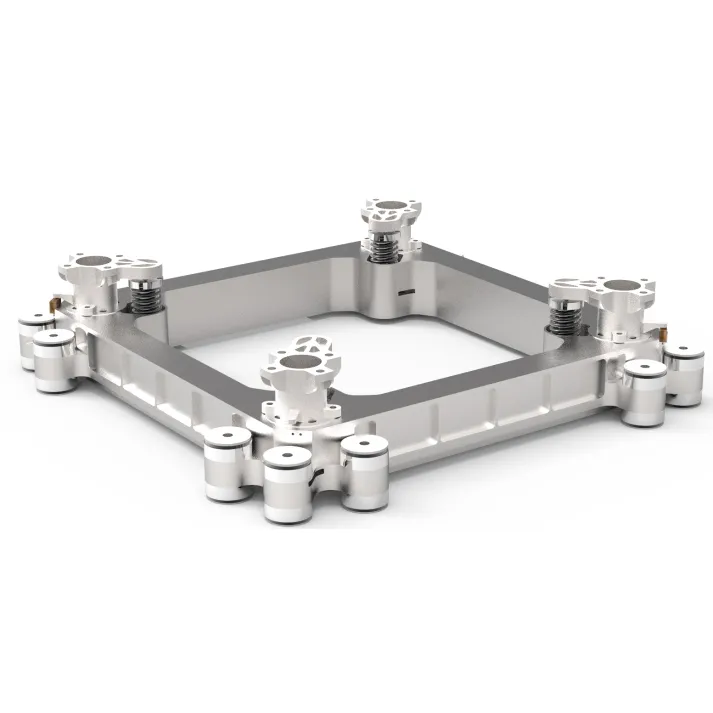
I’ve been around flight hardware teams long enough to know: getting separation right is half the mission. And, to be honest, the devil lives in the details—shock, stiffness, and predictable release. This Satellite-Rocket Separation Mechanism caught my eye because it uses a “non-initiating explosive separating nut” (industry folks often shorthand that to a non-pyro, low-impact release). Add a pushing-type disengaging spring and you’ve got a stable post-release posture—exactly what smallsat integrators want for 100 kg-class spacecraft.
Why this matters now
Market trend? Low-shock mechanisms are winning. Rideshare is routine, and many customers say they’re tired of designing sensitive payload decks around pyro-shock. The push is toward simple mechanical interfaces, repeatable testing, and quick ground reset. Surprisingly, even conservative programs are warming to non-pyro actuators because the evidence keeps stacking up.
Key specifications (real-world values)
| Satellite mass envelope | ≈100 kg class (LEO focus) |
| Axial preload / locking stiffness | ≈8–12 kN preload; high joint stiffness for vibe |
| Release method | Non-initiating separating nut + spring push, low-impact |
| Separation shock (SRS) | Peak |
| Release time | |
| Thermal range (qual) | -40°C to +70°C survival; -20°C to +50°C operation |
| Mass | around 1.8–2.5 kg (configuration-dependent) |
| Interfaces | Simple mechanical bolt pattern, optional microswitch |
Materials, build, and test flow
- Materials: Ti‑6Al‑4V and 17‑4PH stainless for strength-to-weight; dry-film lubricant on sliding faces.
- Manufacturing: CNC machining, precision grinding; passivation; controlled assembly torque.
- Qualification: Random vibe per NASA‑STD‑7001/MIL‑STD‑1540 (≈10–14 g RMS, profile-dependent); thermal‑vac cycles; functional release at hot/cold; SRS measurement.
- Acceptance: Lot screening, pull/preload verification, electrical continuity (if instrumented), visual/NDI where applicable.
- Service life: 10+ years stow with 1 on-orbit actuation; multiple ground resets for AIT are supported.
Applications and industries
Best fit: LEO imaging, IoT/5G tech demos, university missions, and rideshare payloads that can’t stomach pyro-shock. It also plays nicely in clustered dispensers where low cross-coupled shock is gold.
Vendor landscape (my quick take)
| Vendor | Actuation | Shock level | Lead time | Notes |
|---|---|---|---|---|
| Satellite-Rocket Separation Mechanism | Non-initiating nut + spring | Low (≈ | Around 8–12 weeks (typical) | Simple interface; good for 100 kg class |
| Vendor X (clamp-band) | Clamp band + release | Medium | 12–20 weeks | Great for larger buses; heavier |
| Vendor Y (pyro bolt) | Pyrotechnic | High | 6–10 weeks | Mature tech; shock mitigation needed |
| Vendor Z (SMA latch) | Shape-memory alloy | Very low | 10–16 weeks | Thermal management critical |
Customization
Common tweaks: bolt-circle diameters, spring rates (push-off energy ≈20–40 J), sensorization (microswitches), and connectorization for your EGSE. The team in Changchun (No. 1299 Mingxi Road, Beihu Science and Technology Development Zone, Jilin Province) is used to rideshare timelines, which helps.
Mini case study
A 96 kg Earth-observation cubesat-cluster bus (SSO ~520 km) qualified with 12.5 g RMS random vibe and thermal‑vac cycling (-35°C/+60°C). Measured separation shock at the payload deck peaked ~1,200 g SRS; release time clocked at 32 ms. Post-release tumble stayed within ACS capture limits—mission ops called it “boringly nominal,” which is the best compliment.
Customer feedback and compliance
It seems that AIT engineers appreciate the quick ground reset and the clean interface. Several noted fewer late-stage surprises in modal re-tests. Qualification/test methods align with ECSS and NASA standards, and the supplier maintains ISO 9001-style quality controls.
Standards and references
- Random vibration and vibroacoustics: NASA‑STD‑7001; MIL‑STD‑1540.
- Mechanisms engineering: ECSS-E-ST-33 series.
- Materials and processes: ECSS-Q references; ISO 9001:2015 quality system.
Author’s note: I guess the headline advantage is predictable, low-impact separation without overcomplicating AIT. In fact, for 100 kg class payloads, that’s the sweet spot.
Citations