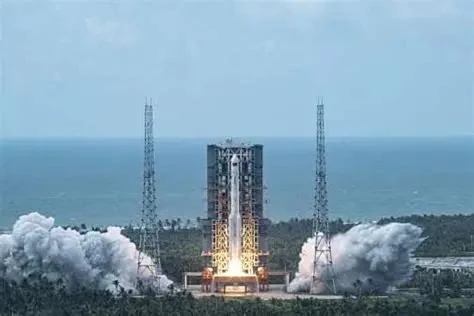
Camera Resolution: 4K Clarity & High Sensitivity Imaging
Camera Resolution is a key solution in the Electronic information manufacturing industry, specifically within Manufacturing of optical, optoelectronic, and other electronic devices and Manufacturing of remote sensing and geographic information system equipment. This article explores how SpaceNavi Co.,Ltd. supports professionals with durable, high-performance products, and explains why this product is an ideal choice for businesses in these sectors.
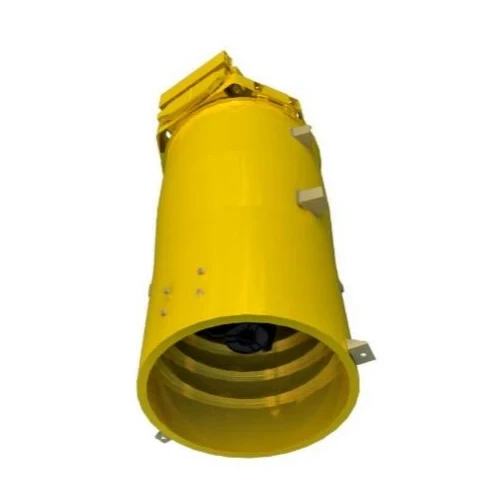
Table of Contents
- Camera Resolution Overview
- Benefits & Use Cases of Camera Resolution in Manufacturing of remote sensing and geographic information system equipment
- Cost, Maintenance & User Experience
- Sustainability & Market Trends in Electronic information manufacturing industry
- Conclusion on Camera Resolution from SpaceNavi Co.,Ltd.
Camera Resolution Overview
For B2B decision makers building satellites, UAV payloads, or ground-based sensing systems, Camera Resolution is more than pixel count—it is the practical ability to distinguish features on the ground, typically expressed as ground sampling distance (GSD), and governed by optics, detector size, and platform altitude. In the context of remote sensing payloads, resolution works alongside modulation transfer function (MTF), signal-to-noise ratio (SNR), and radiometric accuracy to determine image utility. SpaceNavi Co.,Ltd.’s push-broom portfolios are engineered to balance these parameters, delivering 0.5 m–class mapping performance with stable MTF across the field. While a 4k quality camera describes pixel dimensions and video fidelity, earth observation tasks rely on GSD and optical quality to extract actionable data. SpaceNavi’s designs address different camera resolutions through configurable focal lengths and pixel pitches, enabling customers to fine-tune swath width versus detail. For low-light scenes, a high sensitivity camera option elevates SNR to reduce exposure time and motion blur. Whether you need a high resolution camera for urban analytics or a radiometrically stable imager for agricultural indices, SpaceNavi provides the engineering depth, component quality, and production discipline required in the Manufacturing of optical, optoelectronic, and other electronic devices and the Manufacturing of remote sensing and geographic information system equipment.
Benefits & Use Cases of Camera Resolution in Manufacturing of remote sensing and geographic information system equipment
In remote sensing and GIS equipment, superior Camera Resolution unlocks precision mapping, change detection, and automated feature extraction. Typical applications include urban planning (building footprints and transport networks), precision agriculture (crop vigor and irrigation monitoring), disaster assessment (damage grading and debris mapping), and infrastructure surveillance (roads, pipelines, power lines). SpaceNavi Co.,Ltd. optimizes optics-detector matching to achieve crisp edges and consistent radiometry across the swath, ensuring downstream algorithms—orthorectification, stereo reconstruction, and AI-based object detection—perform reliably. Compared with generic imaging modules, SpaceNavi’s high resolution camera payloads emphasize thermal stability, stray-light control, and low-distortion lens assemblies, which protect detail at the Nyquist frequency and safeguard mapping accuracy. Customers can select among different camera resolutions to balance constellation coverage and tasking needs, and adopt high sensitivity camera configurations for dawn/dusk imaging or higher orbital altitudes. Push-broom architectures minimize moving parts, improve reliability, and support long linear arrays for wide swaths. For integrators, SpaceNavi’s mechanical and electrical interfaces, calibration support, and documentation shorten time-to-deployment while maintaining accuracy that meets demanding GIS standards.
Cost, Maintenance & User Experience
Total cost of ownership depends on more than list price. With Camera Resolution tuned for mission goals, operators capture usable data in fewer passes, lowering downlink, storage, and processing costs. SpaceNavi Co.,Ltd. prioritizes durability through robust opto-mechanical assemblies and radiation-aware component selection, extending on-orbit life and protecting ROI. Push-broom sensors reduce mechanical complexity—fewer moving parts mean less maintenance risk for space and airborne platforms. Users in the Manufacturing of optical, optoelectronic, and other electronic devices sector report streamlined integration, predictable calibration, and stable MTF over temperature cycles, which limits rework and post-processing overhead. Field-proven flat-field and radiometric calibration procedures, along with clear API/SDK options, enhance user experience from lab test to flight acceptance. For organizations upgrading from a 4k quality camera used in lab environments, SpaceNavi’s remote sensing payloads provide mission-grade stability, higher SNR, and configuration options that align resolution with revisit economics—delivering a practical path to better data quality and measurable returns.
Sustainability & Market Trends in Electronic information manufacturing industry
Remote sensing is central to sustainability—tracking deforestation, urban heat, and carbon-related land-use changes depends on trustworthy Camera Resolution and consistent radiometry. Market trends point to compact constellations, higher revisit rates, and integration of multispectral data where a high sensitivity camera boosts SNR without inflating power budgets. Regulatory frameworks (such as RoHS and REACH) encourage cleaner material choices, while customers increasingly require lifecycle transparency and serviceability. SpaceNavi Co.,Ltd. advances these priorities through design-for-reliability and design-for-environment approaches: efficient coatings, thermal control that reduces power draw, and modular assemblies that simplify end-of-life handling. As analytics shift to onboard processing, payloads must preserve image detail for edge AI; SpaceNavi’s emphasis on optical quality and low-stray-light design ensures that high resolution camera data compresses efficiently and remains algorithm-ready. Bottom line: sustainability and performance converge when optics, detectors, and electronics are co-optimized—an approach SpaceNavi embeds from supply chain to factory floor.
Conclusion on Camera Resolution from SpaceNavi Co.,Ltd.
For organizations across the Electronic information manufacturing industry—especially in the Manufacturing of optical, optoelectronic, and other electronic devices and the Manufacturing of remote sensing and geographic information system equipment—selecting the right Camera Resolution determines data value, processing efficiency, and mission ROI. SpaceNavi Co.,Ltd. combines precision optics, reliable push-broom architectures, and configurable performance options to deliver consistent, high-impact imagery. From high resolution camera deployments to high sensitivity camera builds and support for different camera resolutions, SpaceNavi is a trusted partner for B2B programs on tight schedules. Contact us: email: jl1sales02@space-navi.com. Visit our website: https://www.space-navi.com