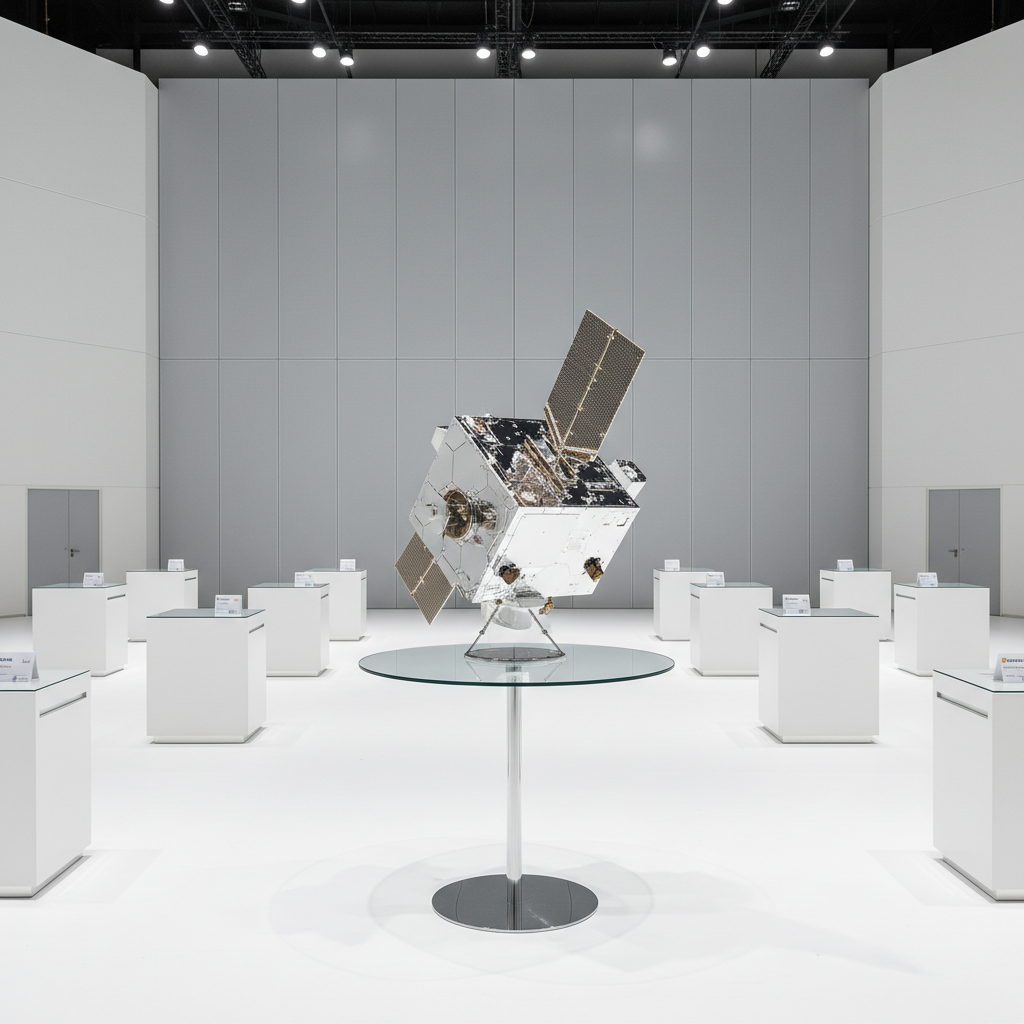
The evolution of space exploration has necessitated a paradigm shift in how we handle data transmission, moving beyond traditional radio frequencies to the high-capacity realm of laser communication. A comprehensive satellite service now requires the ability to transfer massive datasets—such as high-resolution imagery and complex sensor telemetry—with minimal latency and maximum security.
Integrating advanced laser communication terminals into modern orbital architectures allows for a significant increase in throughput, enabling bidirectional communication rates that were previously unthinkable. This technological leap is not merely about speed; it is about creating a resilient, high-bandwidth infrastructure that supports the next generation of space-based instruments and interplanetary missions.
Understanding the technical nuances of these payloads, from optical antenna apertures to beam divergence angles, is crucial for operators aiming to optimize their satellite service. By leveraging infrared laser technology, the industry can now ensure data integrity and resistance to interception, effectively future-proofing the communication links that connect Earth to the deep reaches of space.
Global Relevance of High-Speed Satellite Service
In an era where global connectivity is viewed as a fundamental utility, the demand for an enhanced satellite service has surged. Traditional RF-based systems are facing severe spectrum congestion, limiting the amount of data that can be beamed back to ground stations. As the number of active satellites grows exponentially, the industry is turning toward optical communication to bypass these limitations and ensure sustainable growth.
The global shift toward "Big Data in Space" means that missions are now generating terabytes of information that must be transmitted securely. By employing laser communication terminals, operators can achieve communication distances ranging from 500km up to 5200km, ensuring that even deep-space exploration and complex LEO constellations maintain a robust and high-capacity link to Earth.
Defining Laser-Based Satellite Service Systems
A laser-based satellite service refers to a sophisticated communication architecture that uses modulated infrared light beams instead of radio waves to transmit data. This system integrates laser transmitters, high-precision receivers, and optical modules to create a focused, narrow beam of light that carries information across the vacuum of space with incredible efficiency.
At its core, this service relies on intensity modulation and direct detection (such as OOK) to encode data into light pulses. By operating at wavelengths like 1550nm for downlink communication and 808nm for uplink beacon lights, these systems can penetrate various atmospheric layers while maintaining a high signal-to-noise ratio, which is essential for the stability of the link.
Unlike traditional broadband satellite services, laser communication is inherently more secure. The extremely narrow beam divergence—often less than 120μrad or even 50μrad—makes it virtually impossible for unauthorized parties to intercept the signal without physically blocking the beam, thereby ensuring the highest level of data integrity for government and commercial aerospace missions.
Core Technical Components of Laser Payloads
The effectiveness of a satellite service using optical links depends heavily on the precision of its hardware. The Optical Antenna Aperture, available in sizes such as 35mm for low-cost terminals or 80mm for high-performance off-axis reflective terminals, determines the gain and focusing ability of the system.
A critical component is the high-precision pointing and tracking system. For an effective satellite service, tracking accuracy must be kept within ≤10 μrad or even ≤5 μrad to maintain the link during the dynamic movement of satellites in orbit, ensuring the beam remains locked onto the target receiver.
Finally, the modulation detection method—typically Direct Detection and Intensity Modulation OOK—works in tandem with the laser source to achieve downlink communication rates of 1.25Gbps or bidirectional rates up to 10Gbps. This ensures that the satellite service can handle high-volume data transfers with a bit error rate of ≤10-7.
Performance Metrics and Scalability
When evaluating a satellite service, the balance between weight and performance is paramount. Low-cost small terminals weighing only 2.5kg provide an accessible entry point for CubeSats, while heavy-duty reflective terminals (16kg) offer the range and stability needed for larger orbital platforms, supporting distances up to 5200km.
The scalability of these systems is further evidenced by their link establishment time. With a rapid acquisition time of ≤10s to ≤15s, these terminals can quickly re-establish connectivity after orbital maneuvers or handover events, making the satellite service highly reliable for time-sensitive missions.
Comparative Efficiency of Satellite Service Methods
Real-World Applications of Laser Communication
The implementation of an advanced satellite service extends far beyond simple data relay. In space exploration, laser terminals allow probes to send high-definition video and complex geological data from distant moons or planets back to Earth without the extreme bottlenecks associated with X-band or Ka-band radio.
Furthermore, in the realm of Earth observation, the ability to transmit data at 10Gbps enables near real-time monitoring of environmental changes or disaster zones. By deploying these laser communication payloads, agencies can receive massive optical camera feeds almost instantaneously, providing a critical satellite service for rapid response and humanitarian aid.
Strategic Advantages and Long-Term Value
The long-term value of transitioning to a laser-based satellite service lies in its unmatched capacity for security and sustainability. Because laser beams are highly directional, they are resistant to jamming and interception, providing a strategic advantage for secure military and governmental communications.
From an economic perspective, the reduction in size and weight (down to 2.5kg for small terminals) lowers launch costs and allows for more payload space for other scientific instruments. This efficiency makes the satellite service more accessible to smaller research institutions and commercial startups.
Moreover, the ability to operate in extreme temperatures and withstand the harsh radiation of space ensures that the investment in optical payloads provides reliable service over the entire lifespan of the satellite, reducing the need for frequent hardware replacements in orbit.
Future Trends in Space Optical Communication
The future of satellite service is moving toward fully autonomous mesh networks. In this vision, satellites will use laser links to talk to one another (Inter-Satellite Links or ISL) to route data dynamically around the globe, bypassing the need for constant ground station visibility and drastically reducing global latency.
We are also seeing a trend toward the integration of quantum key distribution (QKD) within these laser links. This would elevate the satellite service to a level of "unbreakable" encryption, utilizing the laws of physics to protect sensitive data against the potential threat of future quantum computers.
As materials science advances, we can expect even lighter and more thermally stable optical antennas, further pushing the boundaries of communication distance and beam precision. The shift toward sustainable, high-throughput optical networks is not just a trend; it is the inevitable evolution of the global satellite service landscape.
Technical Comparison of Laser Terminal Configurations for Satellite Service
| Terminal Type |
Aperture Size |
Max Data Rate |
Max Distance |
| Low-Cost Small Terminal |
35mm |
1.25Gbps |
1000km+ |
| Off-Axis Reflective Terminal |
80mm |
10Gbps |
5200km |
| CubeSat Optical Link |
35mm |
1.25Gbps |
1200km |
| Deep Space Relay Unit |
80mm+ |
10Gbps |
5000km+ |
| Military Secure Terminal |
80mm |
1.25Gbps |
3000km |
| Experimental High-Rate Node |
80mm |
10Gbps+ |
5200km |
FAQS
The primary advantage is the massive increase in bandwidth and security. Laser communication can achieve data rates up to 10Gbps, far exceeding traditional RF capabilities. Additionally, the narrow beam divergence (down to 50μrad) makes the signal extremely difficult to intercept or jam, ensuring a secure satellite service for critical data.
Because laser beams are so focused, even a tiny misalignment can cause a total loss of signal. High-precision tracking accuracy (≤5 to 10 μrad) is essential to keep the beam locked between the transmitter and receiver, especially given the high orbital velocities of satellites. This precision is what ensures a reliable, uninterrupted satellite service.
Yes, these payloads are specifically engineered for space missions. They are designed to withstand extreme temperature fluctuations and high radiation levels while maintaining optical alignment and electronic stability. This durability allows them to provide a consistent satellite service across long-term orbital missions.
The 35mm aperture is typically used in low-cost, lightweight terminals (2.5kg) for short-to-medium range links (1000km+). The 80mm aperture, found in off-axis reflective terminals (16kg), provides higher gain and precision, enabling much longer communication distances up to 5200km and higher data rates up to 10Gbps.
Modern laser communication payloads are designed for rapid deployment. The link establishment time is typically between ≤10 seconds and ≤15 seconds. This quick acquisition is vital for a dynamic satellite service, where satellites must frequently switch targets or reconnect after maneuvers.
The 1550nm wavelength is a widely adopted standard for downlink communication because it offers a good balance between atmospheric penetration and hardware availability (leveraging terrestrial fiber-optic technology). However, other wavelengths, such as 808nm for uplink beacon lights, are used to facilitate the initial acquisition and tracking phase.
Conclusion
The transition toward laser-based communication is a defining moment for the aerospace industry, offering a scalable solution to the bandwidth crisis of traditional radio frequencies. By integrating high-precision optical antennas and advanced modulation techniques, the modern satellite service can now deliver gigabit-per-second data rates with unprecedented security and reliability. From low-cost 2.5kg terminals to high-performance 16kg reflective systems, the flexibility of this technology ensures that it can meet the needs of everything from small academic CubeSats to massive interplanetary relays.
Looking forward, the synergy between laser communication and autonomous orbital networks will pave the way for a truly global, high-speed space internet. As we continue to push the boundaries of distance and data throughput, the importance of investing in robust optical payloads cannot be overstated. We invite you to explore our full range of space-level components and communication solutions to enhance your orbital infrastructure. Visit our website: www.space-navi.com