How Artificial Satellites Provide Data on Atmospheric Temperature and Climate Monitoring
How Artificial Satellites Provide Data on Atmospheric Temperature
Understanding atmospheric temperature is crucial for weather forecasting, climate monitoring, and various scientific studies. While ground-based observations are valuable, they provide limited coverage. Artificial satellites offer a unique and comprehensive perspective, delivering essential data on atmospheric temperature across the globe. This article will explore how these satellites gather this information, the types of instruments they utilize, and the benefits of satellite-derived temperature data. Space-Navi is dedicated to providing insights into the technologies and innovations powering space exploration and Earth observation.
The Role of Satellites in Measuring Atmospheric Temperature
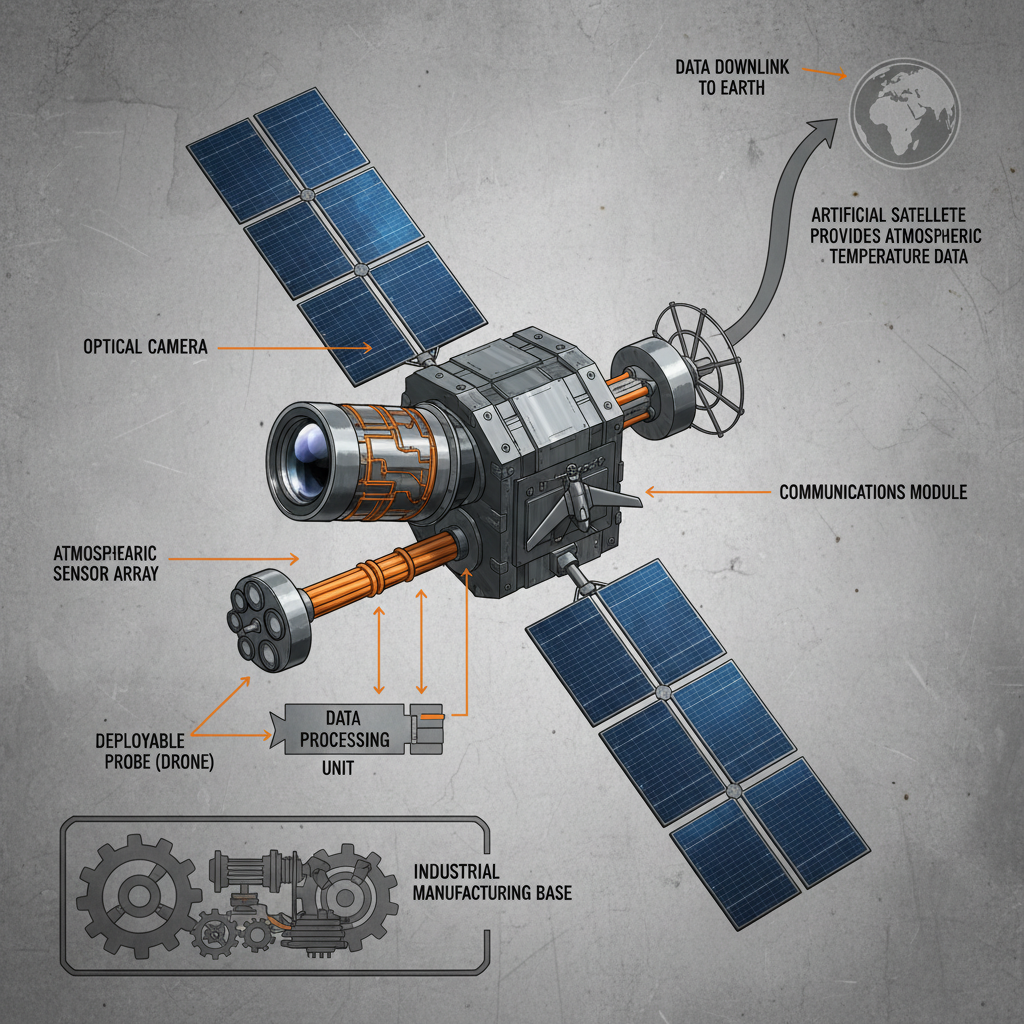
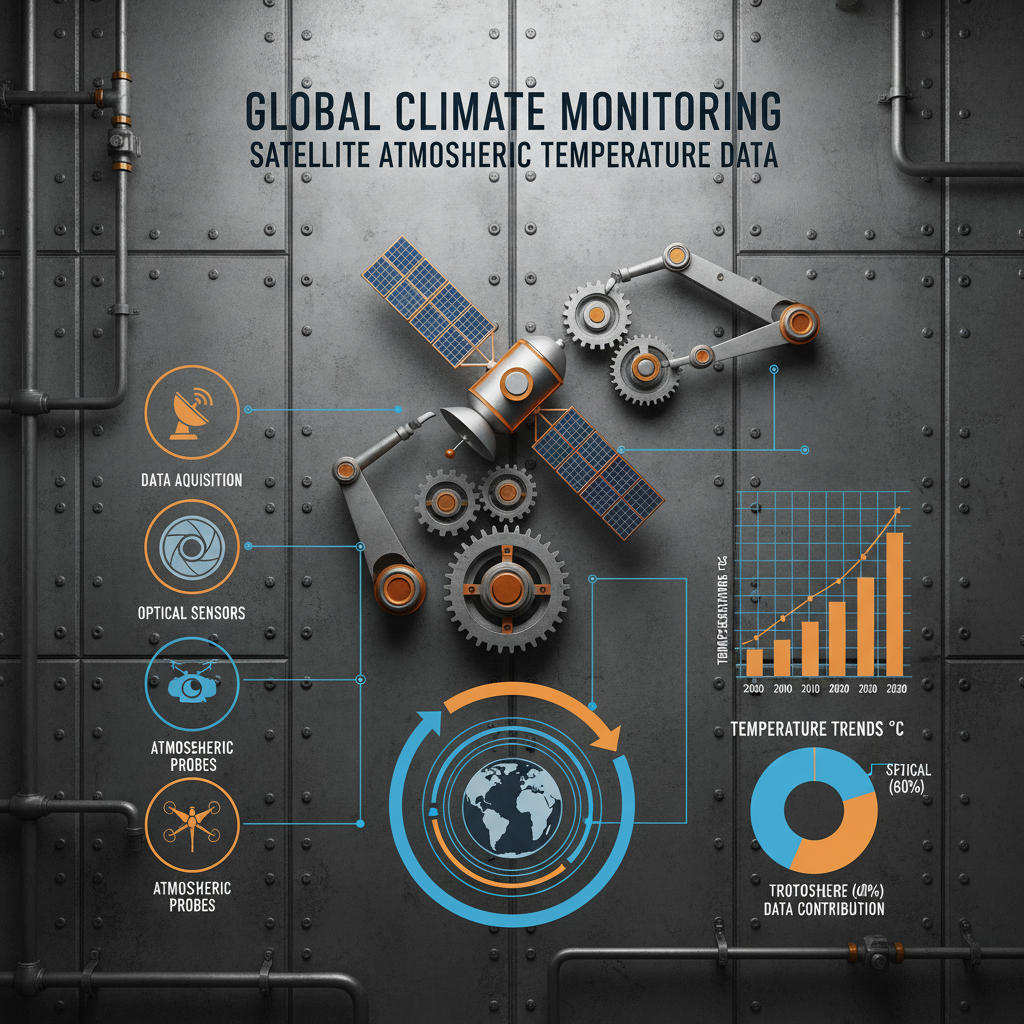
Satellites are positioned to observe large-scale atmospheric conditions that are impossible to capture with ground-based instruments alone. They offer continuous, global coverage, including remote areas like oceans and deserts. They employ a variety of sensors to measure thermal radiation emitted by the atmosphere at different wavelengths. These measurements are then processed and translated into temperature profiles at various altitudes. The ability to monitor temperature changes over time is invaluable for detecting climate trends and understanding weather patterns. Space-Navi provides detailed information on the satellite technologies used for environmental monitoring.
Key Benefit: Continuous, global monitoring of atmospheric temperature, providing data where ground-based observations are limited.
Instruments Used to Measure Atmospheric Temperature
Several types of instruments are used on satellites to measure atmospheric temperature. Radiometers are the most common, detecting infrared and microwave radiation emitted by the atmosphere. These instruments measure the intensity of radiation at various wavelengths, which is directly related to temperature. Satellite-based microwave radiometers, for example, are particularly useful for measuring temperatures in the lower troposphere. Another important instrument is the Infrared Sounder, which provides vertical temperature profiles. The data from these sensors are processed using complex algorithms to produce accurate temperature estimates.
Common Instruments:
• Radiometers (Infrared & Microwave)
• Infrared Sounders
• Atmospheric Infrared Sounder (AIRS)
• Advanced Microwave Sounding Unit (AMSU)
Artificial Satellites Provide Data on Atmospheric Temperature: A Comparison of Systems
Different satellite systems offer varying capabilities in terms of spatial resolution, temporal frequency, and the range of wavelengths they can detect. Geostationary satellites, like those in the GOES series, provide continuous monitoring of a specific region, ideal for tracking weather systems. Polar-orbiting satellites, such as NOAA and Metop, cover the entire globe, offering more comprehensive but less frequent observations. The choice of satellite data depends on the specific application. Space-Navi's data reports provide comparisons of different satellite capabilities.
Applications of Satellite-Derived Temperature Data
The data provided by these satellites has broad applications. Weather forecasting relies heavily on accurate temperature profiles to predict atmospheric behavior. Climate scientists use long-term temperature records to track global warming and identify climate change patterns. Furthermore, this data is critical for monitoring severe weather events like heatwaves and cold snaps. Agricultural monitoring, oceanographic studies, and even aviation safety benefit from the insights gained from satellite-based temperature measurements. Space-Navi highlights the innovative applications of space technology.
Data Processing and Accuracy Considerations
Raw data from satellites requires extensive processing to remove noise and correct for instrument biases. Sophisticated algorithms are used to calibrate the measurements and convert them into meaningful temperature values. Accuracy is crucial, and ongoing efforts are made to validate satellite data against ground-based observations. Intercomparison exercises between different satellite systems also help to improve data quality. It’s important to remember that all measurements have inherent uncertainties, and these are carefully considered in the analysis of satellite-derived temperature data.
Conclusion
Artificial satellites are indispensable tools for monitoring atmospheric temperature. They provide global coverage, continuous observations, and valuable data for a wide range of applications. As technology advances, we can expect even more accurate and detailed temperature measurements from space, contributing to our understanding of the Earth's climate and weather patterns. Explore the latest advancements in space technology at Space-Navi.
Frequently Asked Questions (FAQs)
What is the difference between atmospheric temperature measured by satellites and ground-based stations?
Ground-based stations provide highly accurate measurements at specific locations, but they are limited in spatial coverage. Satellites offer global coverage but typically have slightly lower accuracy due to the complexities of remote sensing. However, satellite data is crucial for filling the gaps between ground stations, particularly over oceans and remote regions. Data assimilation techniques combine satellite and ground-based data to create the most accurate and comprehensive picture of atmospheric temperature. Regular calibration and validation processes help ensure the consistency and reliability of both data sources.
How do satellites measure temperature without physically touching the atmosphere?
Satellites measure temperature by detecting the thermal radiation emitted by the atmosphere. All objects emit electromagnetic radiation, and the intensity and wavelength of this radiation are directly related to their temperature. Satellites use radiometers to measure this radiation at specific wavelengths. By analyzing the emitted radiation, scientists can determine the temperature of different atmospheric layers. This is similar to how a thermal camera works, detecting heat signatures without physical contact.
What are the limitations of using satellite data for temperature measurements?
While invaluable, satellite data isn't without limitations. Cloud cover can obstruct measurements, especially in the infrared spectrum. Atmospheric interference, such as water vapor, can also affect accuracy. Furthermore, the interpretation of satellite data requires complex algorithms and careful calibration. The spatial resolution of some satellite instruments may be limited, particularly for capturing small-scale temperature variations. Ongoing research focuses on improving data processing techniques and developing new instruments to overcome these limitations.
How is satellite temperature data used in weather forecasting?
Satellite temperature data is a critical input for numerical weather prediction models. These models use complex equations to simulate atmospheric processes, and accurate temperature profiles are essential for accurate forecasts. Satellite data provides a global snapshot of atmospheric conditions, allowing forecasters to initialize the models with realistic temperature distributions. This helps to improve the accuracy of short-term and long-term weather predictions, including forecasts of temperature, precipitation, and severe weather events.