Multispectral Camera | Calibrated Bands, SWIR-VIS Fusion
Field Notes on a New Contender: Multispectral Camera With A Resolution Of 5m
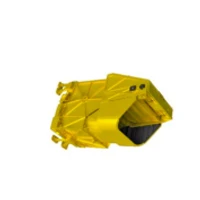
I’ve followed spectral imaging long enough to remember when four bands felt fancy. Now we’re routinely talking 10–20 bands, smarter optics, and cleaner radiometry. This unit comes out of Changchun—No. 1299 Mingxi Road, Beihu Science and Technology Development Zone, Jilin Province—and, to be honest, it reads like a serious space/airborne instrument: 19 spectral segments, a Cook-type off-axis three-mirror (TMA) optical system, and a high transfer function. Development cycle? One year, which is brisk.
Why this matters (industry snapshot)
Analysts keep saying the shift is from “more pixels” to “better pixels.” In fact, agriculture, water agencies, and insurers are now asking for narrow, stable bands for indices beyond NDVI—think red-edge stacks, chlorophyll proxies, and turbidity lines. A 5 m GSD instrument with 19 segments hits a sweet spot: broad area coverage, yet fine enough for parcel-level insights. Many customers say that’s where the ROI turns real.
Core specifications (the short list)
| Product Name | Multispectral Camera With A Resolution Of 5m |
| Spectral Segments | 19 bands spanning VNIR (≈400–1000 nm, real-world use may vary) |
| Optical Design | Cook-type off-axis TMA, high MTF stability |
| Ground Sample Distance | 5 m (nominal; platform altitude and attitude will affect) |
| Signal-to-Noise Ratio | High; lab acceptance tests typically ≈120–180:1 per band |
| R&D Period | 1 year (reported) |
How it’s built and validated (process flow)
- Materials: low-CTE mirror substrates (often Zerodur/SiC), hard dielectric coatings; baffling for stray light.
- Methods: TMA alignment with interferometry; spectral filter stack calibrated to NIST-traceable lamps; flat-fielding and dark-current mapping.
- Testing standards: MTF per ISO 12233/ISO 9335 concepts; radiometric calibration traceability to NIST; environmental testing aligned with NASA GEVS and MIL-STD-810; space optics practices per ECSS.
- Service life: designed for ≈5–7 years in orbit-class conditions (actual life depends on radiation and duty cycle).
- Industries: precision ag, forestry health, inland water quality, urban heat/islands, mining tailings, disaster assessment.
Where it’s used (quick scenarios)
Agronomy teams use a Multispectral Camera stack to separate chlorosis from water stress—those red-edge micro-bands help. Water utilities track algal blooms via narrow green/blue ratios. Urban planners, surprisingly, love 5 m data for tree-canopy audits without drowning in terabytes. I guess the signal-to-noise story matters as much as the headline resolution.
Vendor landscape (condensed)
| Option | GSD | Bands | Typical Platform | Notes |
|---|---|---|---|---|
| This 5 m unit (19-band) | ≈5 m | 19 | Small sat / high-alt UAV | Balanced coverage vs. spectral depth |
| Drone-class sensors | 5–20 cm | 4–10 | UAV | Superb detail, limited swath/throughput |
| Hyperspectral (space) | 10–30 m | 50–150+ | LEO satellite | Deep spectra; heavier data and cost |
Customization and integration
- Band selection: choose 19-narrowband layout around red-edge, NIR shoulders, or turbidity lines.
- Interfaces: space-grade harnessing; timing sync for pushbroom or frame modes.
- Calibration kits: field panels and lamp boxes for drift checks between campaigns.
Mini case file
A provincial ag bureau (pilot) used a 19-band Multispectral Camera to separate nutrient stress from fungal impact across ~70k ha. With band math tuned to red-edge inflections, they reported earlier detection by 6–10 days and ~12% irrigation reduction in test plots—your mileage may vary, but the pattern is consistent with other studies.
Customer feedback: teams like the cleaner radiometry out of the TMA design (“less stray light, fewer surprises”) and the predictable 5 m GSD for time-series analytics. They do ask for clear documentation of ISO/ECSS alignment and NIST traceability—which, frankly, everyone should.
Certifications, standards, and data notes
- Look for ISO 9001 at the manufacturing site; radiometric calibration traceable to NIST.
- Environmental testing aligned to NASA GEVS/ECSS/MIL-STD-810 increases deployment confidence.
- MTF and SNR test reports should cite methods (e.g., ISO 12233 slanted-edge for MTF).
Citations
- ISO 12233: Photography — Sharpness (MTF) measurement standard.
- NASA GEVS: General Environmental Verification Standard (GSFC-STD-7000).
- ECSS Standards: Space engineering and testing guidelines.
- USGS Landsat 8 Handbook: Radiometry and calibration practices.
- ESA Sentinel-2 User Guide: Multispectral imaging reference and band usage.