Quality-Assured Component for Star Sensor & Satellite Parts
The Quiet Workhorses of Attitude Control: Star Sensor Lenses
If you’ve ever wondered why some satellites just “hold still” better than others, the answer often hides in the optics. To be honest, I didn’t fully appreciate how much the lens—yes, the lens—matters until I sat through a late-night thermal-vac test years ago and watched guidance drift tighten the instant the optics stabilized.
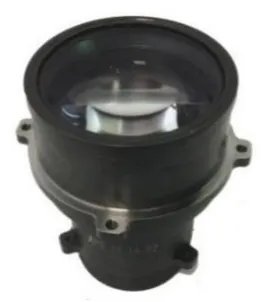
From their base at No. 1299 Mingxi Road, Beihu Science and Technology Development Zone, Changchun, Jilin Province, the team behind these Star Sensor Lenses has quietly built a flight record that many customers say is “boringly reliable.” Large field of view, wide relative aperture, low chromatic aberration, low distortion, and surprisingly high stray-light suppression—those are not brochure words; they’re the reasons data pipelines stay clean on orbit.
Industry trends (what’s actually happening)
Miniaturized star trackers for CubeSats, higher radiation environments for proliferated LEO, and faster cadence production are reshaping optics. In fact, programs are asking for broader spectral response (≈450–900 nm), flatter MTF across the field, and baffles that tame mega-constellation glints. The better Star Sensor Lenses respond with aspheres, low-dispersion glass (think fused silica, CaF₂), and coatings tuned for low out‑of‑band reflectance.
Typical specifications (representative)
| Parameter | Spec (≈, real-world use may vary) |
|---|---|
| Field of View (diagonal) | 20°–40° |
| Relative Aperture | f/1.8–f/2.8 |
| Spectral Range | 450–900 nm (custom coatings available) |
| Distortion | ≤0.1% over full FOV |
| MTF @ 30 lp/mm | ≥0.25 on-axis, ≥0.18 edge |
| Wavefront Error (RMS) | ≤0.05λ @ 632.8 nm |
| Stray Light Suppression | PSNIR |
| Operating Temp | −40 to +60 °C (TVAC verified) |
| Radiation Tolerance | Design practices for LEO/GEO; materials screening on request |
Process flow (how they actually build it)
- Materials: fused silica, CaF₂, low-TK optical glass; anodized Al or Invar barrels.
- Methods: CNC/aspheric polishing, ion-beam figuring, AR/BBAR coatings, edge blackening, baffling.
- Assembly: cleanroom ISO 7; centration and air‑spaced alignment to arc-sec tolerances.
- Testing: ISO 10110 surface specs, interferometry, MTF benches, TVAC, random vibe and shock per NASA GEVS/MIL‑STD‑810; stray-light photometry.
- Service life: ≈5–8 years LEO; ≥10 years GEO, depending on orbit and radiation.
- Industries: Earth observation, telecom, deep-space tech demos, defense ISR, university CubeSats.
Vendor comparison (snapshot)
| Criterion | Space-Navi Star Sensor Lenses | Vendor A (generic) | Vendor B (generic) |
|---|---|---|---|
| FOV options | 20–40° standard, custom on request | Mostly 20–30° | Fixed 25° |
| Stray-light suppression | Optimized baffles + coatings; flight-validated | Standard baffle set | Coating-only approach |
| Customization lead time | ≈10–14 weeks | ≈16–24 weeks | ≈12–20 weeks |
| Flight heritage | Multiple in-orbit satellites | Limited public record | Program-dependent |
Applications and quick case notes
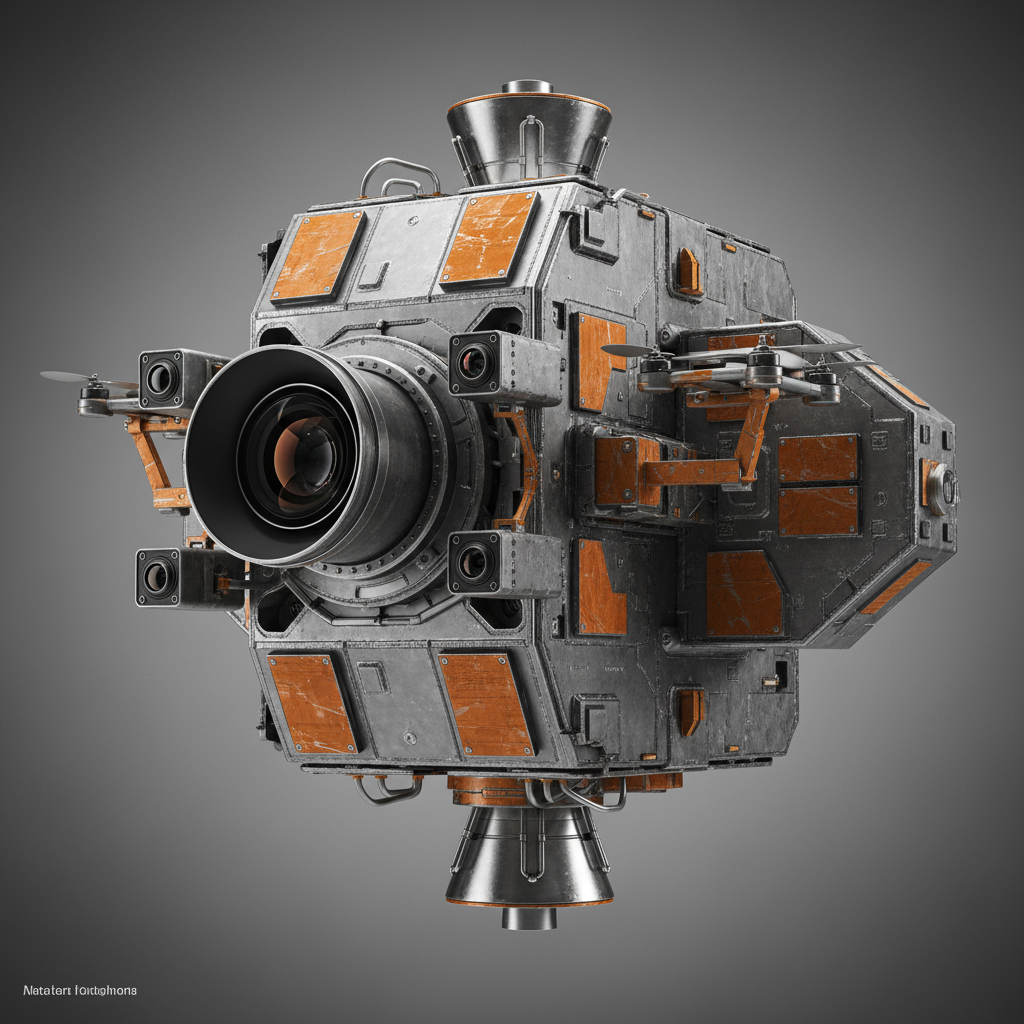
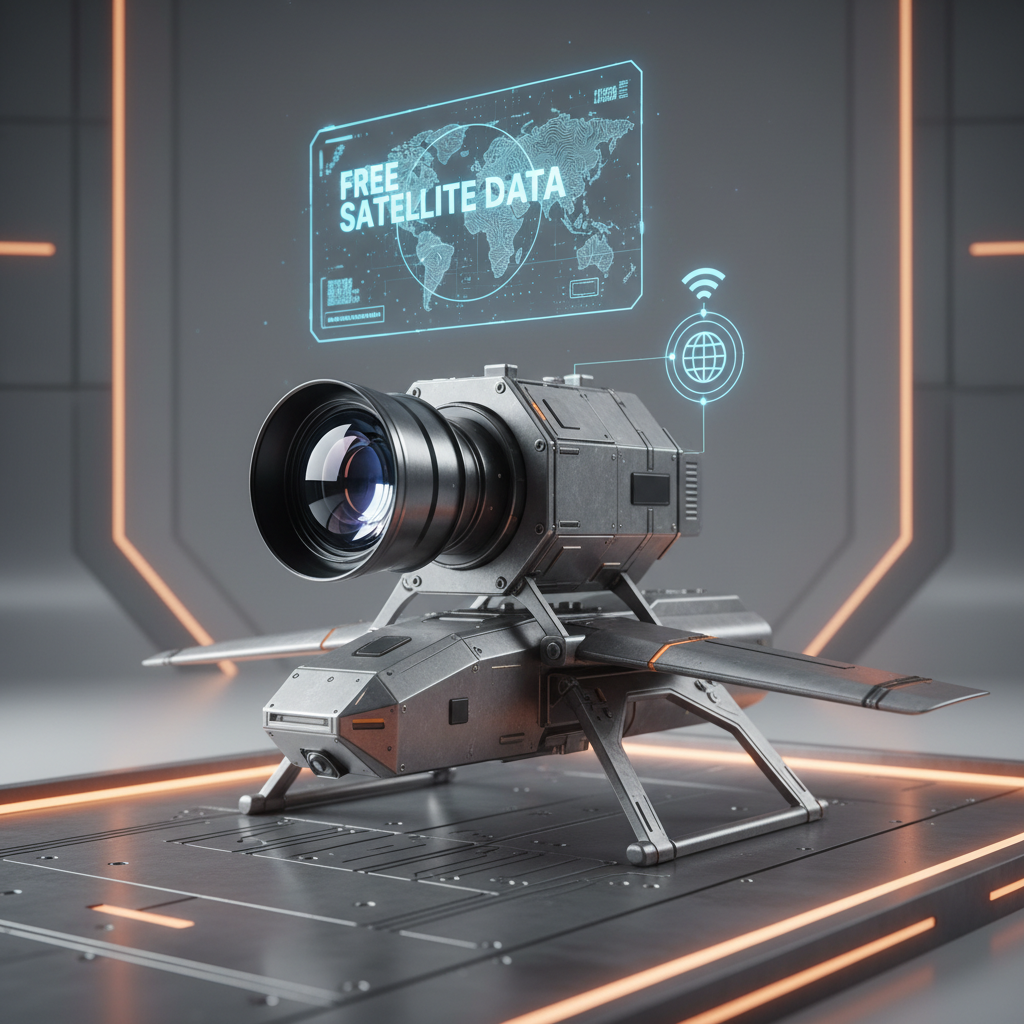
Star Sensor Lenses serve as the front end of star trackers: they gather light, suppress flare, and present a clean, low-distortion star field to the detector. A few anonymized highlights:
- LEO imaging satellite (2023): improved centroid SNR by ≈18% after custom BBAR coating; attitude knowledge tightened to 8–12 arcsec (1σ).
- Cubesat tech demo (2024): ultra-compact f/2.0 variant survived 9.5 gRMS vibe and −35/55 °C TVAC cycling with no focus shift beyond 3 µm.
Customization and feedback
Options include aspheric groups for wider FOV, radiation-screened glass, custom edge blackening, and detector-matched chief-ray angles. Many customers say the big win is “low ghosting near the Sun exclusion angle,” which, I guess, is why tasking planners sleep better.
Certifications, tests, and standards referenced
- Optical drawings and tolerances: ISO 10110.
- Surface quality: MIL‑PRF‑13830B scratch/dig, interferometry for WFE.
- Environmental: NASA GEVS (GSFC‑STD‑7000) vibe/shock/TVAC; MIL‑STD‑810 profiles as applicable.
- Cleanliness and handling: ECSS Q‑ST‑70 series practices.
Note: Specs are representative; final performance depends on detector format, filter stack, and mission thermal gradients.
Authoritative citations
- ISO 10110 Series – Optics and photonics — Preparation of drawings for optical elements and systems.
- MIL‑PRF‑13830B – Optical Components, Surface Quality, Requirement for.
- NASA GSFC‑STD‑7000 (GEVS) – General Environmental Verification Standard for GSFC Flight Programs and Projects.
- MIL‑STD‑810H – Environmental Engineering Considerations and Laboratory Tests.
- ECSS Q‑ST‑70 Series – Space product assurance: materials, processes and cleanliness.