
Expert Fault Detection for Mechanical Equipment Reliability
Introduction to Advanced Fault Detection in Industrial Operations
In the complex landscape of modern industrial operations, the integrity and continuous performance of mechanical equipment are paramount. Unforeseen failures can lead to catastrophic downtime, significant financial losses, and compromised safety. This imperative drives the demand for sophisticated fault detection methodologies. Advanced fault detection systems are no longer a luxury but a fundamental requirement for maintaining operational efficiency, ensuring safety, and extending the service life of critical assets across diverse sectors.
This article delves into the intricacies of modern fault detection, exploring the systematic approaches, technical specifications, and broad application scenarios that define its role in safeguarding industrial infrastructure. We will examine how precise monitoring and diagnostic tools prevent failures, optimize maintenance schedules, and contribute to overall operational excellence, particularly for complex mechanical structure components.
Industry Trends in Fault Detection Technology
The field of fault detection is undergoing rapid transformation, driven by advancements in digital technologies. Key trends include:
- Artificial Intelligence (AI) and Machine Learning (ML): AI/ML algorithms are revolutionizing fault diagnosis by enabling systems to learn from historical data, identify complex patterns indicative of impending failures, and predict maintenance needs with high accuracy. This paradigm shift from reactive to predictive maintenance significantly reduces unplanned downtime.
- Internet of Things (IoT) Integration: The proliferation of IoT sensors allows for real-time data collection from virtually every component of mechanical equipment. This continuous stream of data, encompassing vibration, temperature, pressure, and acoustic signatures, provides an unprecedented level of visibility into equipment health.
- Digital Twin Technology: Creating virtual replicas of physical assets, digital twins enable comprehensive monitoring and simulation of equipment performance. This allows for testing various scenarios and predicting how changes or faults might manifest in the real world, enhancing diagnostic capabilities.
- Advanced Sensor Technologies: Miniaturization, improved sensitivity, and wireless capabilities of sensors, including fiber optics and high-resolution optical systems, are expanding the scope and precision of data acquisition for fault diagnosis.
These trends collectively pave the way for more proactive and intelligent asset management strategies, optimizing operational lifecycles and enhancing safety profiles across industries.
The Process Flow of Advanced Fault Detection
The systematic implementation of fault detection involves several critical stages, forming a robust pipeline for proactive asset management. While "manufacturing" a fault detection process isn't literal, its implementation and workflow are meticulously designed, often leveraging specialized components and adhering to stringent standards. For instance, in optical inspection systems used for detecting minute structural faults, components like high-precision lenses and mirrors, such as those found in an Off-Axis Collimator, are manufactured using advanced processes like CNC machining, optical grinding, and thin-film coating, ensuring exceptional accuracy and durability.
1. Data Acquisition
This initial phase involves collecting raw data from mechanical equipment using an array of sensors. Materials used in these sensors (e.g., piezoelectric ceramics for vibration, platinum for RTDs, silicon for optical detectors) are chosen for their robustness, sensitivity, and resistance to harsh industrial environments. For precise optical inspections, instruments like an Off-Axis Collimator provide highly accurate, unvignetted images over a wide field, critical for detecting subtle surface defects or alignment issues in complex mechanical structure components. Testing standards for these components often include ISO 9001 for quality management and specific optical performance standards like ISO 10110.
2. Data Pre-processing and Feature Extraction
Raw data is often noisy and redundant. Pre-processing involves filtering, normalization, and segmentation to prepare data for analysis. Feature extraction identifies relevant characteristics (e.g., RMS values of vibration, spectral components, optical distortion parameters) that are indicative of specific fault types. This stage is crucial for reducing computational load and enhancing diagnostic accuracy.
3. Fault Diagnosis
This is the core of fault detection, where algorithms analyze extracted features to identify the presence, type, and location of faults. Techniques include statistical process control, pattern recognition, neural networks, and expert systems. For instance, deviations in optical alignment measured by a collimator can immediately signal structural anomalies.
4. Prognosis and Decision Making
Beyond identifying current faults, advanced systems aim to predict future failures and estimate remaining useful life (RUL). This prognostic capability allows for optimal scheduling of maintenance, reducing emergency repairs and maximizing asset uptime. Decisions are made based on predefined thresholds and operational parameters, often adhering to industry-specific guidelines such as ANSI/ISA S95 for enterprise-control system integration.
5. Corrective Action and Feedback
Once a fault is detected or predicted, appropriate maintenance actions are initiated. The results of these actions are fed back into the system, allowing for continuous improvement of the fault detection models and processes. The typical service life of such sophisticated systems and their components can range from 10 to 20 years, depending on the operational environment and maintenance protocols.
Technical Specifications and System Parameters
Effective fault detection systems are characterized by specific technical parameters that dictate their performance and applicability. The selection of appropriate sensors and analytical tools is critical. For high-precision applications, instruments like the Off-Axis Collimator offer superior optical performance, crucial for detecting minute structural faults or misalignments that are otherwise undetectable.
Table 1: Key Parameters of Advanced Fault Detection Technologies
| Parameter | Description | Typical Range/Value | Impact on FD System |
|---|---|---|---|
| Detection Accuracy | Probability of correctly identifying a fault. | 90-99.5% | Minimizes false positives/negatives, crucial for trust. |
| Response Time | Time taken to detect and alert after fault occurrence. | Milliseconds to seconds (real-time). | Critical for preventing progressive damage. |
| Fault Localization Precision | Ability to pinpoint the exact location of the fault. | <1% of component size to coarse region. | Reduces diagnostic time and repair costs. |
| Operating Temperature Range | Environmental temperature limits for sensors/system. | -40°C to +85°C (industrial grade). | Ensures reliability in harsh industrial settings. |
| Mean Time Between Failures (MTBF) | Expected operating time between system failures. | >100,000 hours | Indicates system reliability and longevity. |
These parameters are meticulously engineered and tested to meet or exceed industry standards such as IEC 61508 for functional safety, ensuring the dependability of mechanical equipment services.
Application Scenarios of Fault Detection
The versatility of modern fault detection systems enables their deployment across a broad spectrum of industries, each presenting unique challenges for mechanical equipment and infrastructure.
- Petrochemical Industry: In environments dealing with highly corrosive and flammable materials, the continuous monitoring of pumps, compressors, and pipelines is critical. Fault detection systems prevent leaks, material degradation, and catastrophic equipment failures, ensuring safety and compliance. Advantages here include enhanced corrosion resistance monitoring through specialized sensors and algorithms.
- Metallurgy: High-temperature and heavy-duty operations, such as those in steel mills or foundries, place immense stress on machinery. Detecting faults in rolling mills, furnaces, and casting equipment prevents costly breakdowns and maintains production quality. Optical inspection, utilizing high-precision tools, can detect surface cracks or deformities on metal components, ensuring product integrity and machine longevity.
- Water Supply & Drainage: Maintaining extensive networks of pumps, valves, and purification systems requires vigilant monitoring. Fault detection helps in identifying blockages, pump inefficiencies, and structural integrity issues in pipelines, leading to significant energy saving through optimized pump operation and reduced water loss.
- Aerospace and Defense: For mission-critical components, precision is paramount. Optical metrology and other advanced inspection techniques are used to detect micro-cracks, material stresses, or geometric deviations in aircraft structures and propulsion systems. An Off-Axis Collimator, for instance, can be crucial for verifying the alignment and optical performance of complex sighting systems or for non-destructive testing (NDT) applications where highly precise imaging is required to identify subtle internal or surface defects in structural components.
- Manufacturing: In automated production lines, the smallest anomaly can halt operations. Fault detection ensures the continuous performance of robotics, CNC machines, and assembly lines, reducing defects and improving throughput.
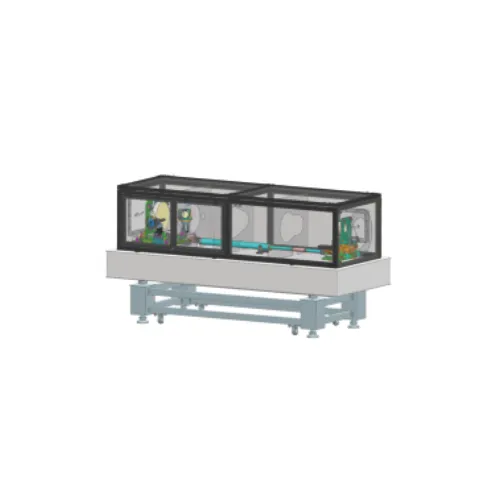
These applications highlight the adaptability and necessity of robust fault detection solutions for maintaining operational integrity and efficiency.
Technical Advantages of Advanced Fault Detection
Investing in cutting-edge fault detection technologies yields substantial technical and operational advantages:
- Enhanced Energy Saving: By optimizing the performance of mechanical equipment and preventing inefficient operation caused by minor faults, energy consumption can be significantly reduced. For example, detecting subtle bearing wear early can prevent increased friction and energy waste.
- Superior Corrosion Resistance: Specialized sensors and analytical techniques allow for early detection of corrosion initiation or acceleration in pipelines and structural components, especially in harsh chemical environments. This proactive approach ensures timely interventions, extending asset life and bolstering safety.
- Reduced Downtime and Maintenance Costs: Predictive fault detection enables planned maintenance, eliminating emergency repairs and reducing the associated costs of expedited parts, overtime labor, and lost production. Data indicates that predictive maintenance can reduce maintenance costs by 25-30% and increase uptime by 10-15% (Source: Deloitte).
- Improved Operational Safety: Early detection of potential failures in critical systems prevents catastrophic incidents, protecting personnel, assets, and the environment. This is especially vital in industries like petrochemicals and nuclear power.
- Extended Asset Lifespan: By proactively addressing minor issues before they escalate, equipment wear and tear are mitigated, significantly extending the operational lifespan of expensive machinery and mechanical structure components.
- Data-Driven Decision Making: The wealth of data generated by fault detection systems provides invaluable insights for optimizing operational strategies, design improvements, and future investment decisions.
Vendor Comparison: Fault Detection Technologies
When selecting a fault detection system, understanding the nuances of various technologies and vendor capabilities is crucial. Different approaches offer distinct advantages depending on the application.
Table 2: Comparison of Common Fault Detection Technologies
| Technology | Primary Detection Method | Typical Application | Key Advantages | Limitations |
|---|---|---|---|---|
| Vibration Analysis | Accelerometer data, FFT analysis. | Rotating machinery (bearings, gears, motors, pumps). | Early detection of mechanical faults, widely adopted. | Can be sensitive to external vibrations, complex interpretation. |
| Thermal Imaging (Infrared) | Infrared camera detects temperature anomalies. | Electrical systems, insulation, fluid levels, friction points. | Non-contact, safe, identifies hot spots quickly. | Affected by emissivity, reflected radiation, line of sight. |
| Acoustic Emission (AE) | Detects transient elastic waves from active faults. | Bearing wear, crack propagation, cavitation, leaks. | Very early detection of defect initiation, high sensitivity. | Sensitive to background noise, signal attenuation. |
| Oil Analysis | Analyzes wear particles, contaminants, lubricant condition. | Engines, gearboxes, hydraulic systems. | Detects wear, contamination, lubricant degradation. | Batch process, not real-time, requires specialized labs. |
| Optical Inspection | High-resolution imaging, laser scanning, interferometry. | Precision components, surface defects, alignment, micro-cracks. | Non-contact, extremely high precision for minute faults. | Requires clear line of sight, sensitive to dust/vibration. |
Our company specializes in integrating these cutting-edge technologies, with a strong focus on high-precision optical solutions where accuracy and reliability are paramount, often exceeding industry benchmarks through rigorous R&D and adherence to ISO 17025 standards for testing and calibration.
Customized Solutions for Complex Mechanical Equipment Services
Recognizing that no two industrial operations are identical, we offer highly customized fault detection solutions. Our approach begins with a comprehensive assessment of existing mechanical equipment services, operational environment, specific challenges, and regulatory requirements. This includes:
- Tailored Sensor Arrays: Designing and deploying bespoke sensor configurations, including optical, acoustic, vibration, and thermal sensors, to capture the most relevant data for specific machinery and mechanical structure.
- Algorithm Development: Custom machine learning models are trained on client-specific historical data and operational profiles to enhance detection accuracy and reduce false alarms, ensuring robust predictive capabilities.
- Integration with Existing Systems: Seamless integration with SCADA, DCS, ERP, and CMMS platforms ensures that fault detection insights are actionable and flow directly into maintenance workflows.
- Scalable Infrastructure: Solutions are designed to be scalable, allowing for incremental expansion and adaptation as operational needs evolve, safeguarding initial investments.
- Compliance and Certification: All customized solutions are developed with strict adherence to relevant industry standards and certifications (e.g., ATEX for explosive atmospheres, SIL ratings for safety functions), ensuring reliable and compliant operation. Our company holds multiple industry certifications, including ISO 9001 and CE marking, reflecting over 15 years of dedicated service in B2B industrial solutions.
Our engineering team collaborates closely with clients from conceptualization to deployment, providing ongoing support and optimization to ensure maximum value.
Application Case Studies
Case Study 1: Petrochemical Plant Pump Optimization
A major petrochemical client faced recurring unscheduled downtime due to bearing failures in critical process pumps. Our integrated fault detection system, combining vibration analysis with thermal imaging, was deployed across 30 high-priority pumps. Within six months, the system accurately predicted 12 bearing failures with an average lead time of three weeks. This enabled scheduled maintenance during planned outages, reducing emergency repairs by 85% and increasing overall pump uptime by 18%. The client reported a 25% reduction in maintenance costs for these assets, validating the system's effectiveness in preventing costly failures and enhancing the reliability of their mechanical equipment.
Case Study 2: Precision Manufacturing Line Quality Assurance
In a facility manufacturing high-precision optical components, micro-defects on finished surfaces led to significant scrap rates. We implemented a custom optical inspection system leveraging high-resolution cameras and advanced image processing, similar to the precision offered by an Off-Axis Collimator for inspecting surface quality and alignment. This system was integrated into the production line to perform real-time surface defect detection. The solution achieved a defect detection accuracy of 98.5% for defects as small as 5 microns. This resulted in a 40% reduction in scrap material and a 15% increase in production throughput by identifying issues earlier in the process, proving the immense value of precise optical fault detection in ensuring product quality and efficiency for delicate mechanical structure components.
Trustworthiness and Support
Frequently Asked Questions (FAQ)
- Q: What types of faults can your system detect?
A: Our systems are designed to detect a wide range of faults including mechanical wear (bearings, gears), electrical anomalies (overheating, insulation breakdown), structural defects (cracks, deformation), and process inefficiencies. The specific capabilities depend on the customized solution and deployed sensors.
- Q: Is your system compatible with our existing legacy equipment?
A: Yes, our solutions are highly adaptable. We specialize in integrating with diverse legacy systems and modern platforms through various communication protocols (Modbus, OPC UA, MQTT, etc.) to ensure seamless data flow and control.
- Q: How long does implementation take?
A: Implementation timelines vary based on the complexity and scale of the project, typically ranging from 4 to 12 weeks for pilot deployments, followed by scalable rollout plans. We provide detailed project schedules post-assessment.
Lead Time & Fulfillment
Our standard lead time for off-the-shelf components is 2-4 weeks. For custom-engineered fault detection systems, lead times are quoted on a project-specific basis, considering design, manufacturing, and integration complexities. We maintain a robust supply chain and efficient production processes to ensure timely fulfillment and deployment.
Warranty Commitments
All our fault detection systems and hardware components come with a standard 2-year warranty covering manufacturing defects and performance issues under normal operating conditions. Extended warranty options and service level agreements (SLAs) are available to provide additional peace of mind and long-term operational support.
Customer Support
We offer comprehensive after-sales support, including 24/7 technical assistance, remote diagnostics, and on-site service by certified engineers. Our dedicated support team ensures your fault detection systems operate at peak performance, minimizing any potential disruptions to your mechanical equipment services. Training programs for client personnel are also available to ensure effective system utilization and maintenance.
Conclusion
The evolution of fault detection represents a critical advancement in industrial asset management. By embracing intelligent, data-driven approaches, businesses can move beyond reactive maintenance to proactive, predictive strategies that enhance safety, improve efficiency, and significantly reduce operational costs. From the rigorous process of data acquisition with specialized sensors and optical instruments like the Off-Axis Collimator, through advanced AI-powered diagnostics, the future of industrial operations hinges on robust and reliable fault detection. Partnering with experienced providers who prioritize customized solutions and unwavering support ensures that your investments in mechanical equipment and infrastructure are safeguarded for sustained success.
References
- Deloitte. "Predictive Maintenance: The Next Frontier." Accessed via https://www2.deloitte.com/content/dam/Deloitte/us/Documents/manufacturing/us-mfg-predictive-maintenance.pdf
- ISO (International Organization for Standardization). Official website: https://www.iso.org
- IEC (International Electrotechnical Commission). Official website: https://www.iec.ch
- ANSI (American National Standards Institute). Official website: https://www.ansi.org











