Precision Mechanical Equipment for Satellite Platforms
Fundus Imager: A Practical Insider’s Look at Clinic-Ready Mechanical Optics
When people ask me which mechanical equipment genuinely changes workflows in eye care, I don’t hesitate: a well-engineered fundus imager. I’ve seen rushed screenings in community hospitals and ultra-precise research labs—both live or die on image consistency. And, to be honest, consistency is where the latest units quietly shine.
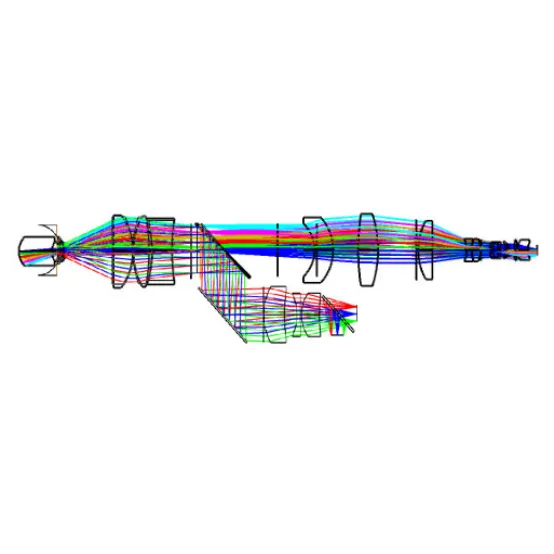
This particular Fundus Imager is built in No. 1299 Mingxi Road, Beihu Science and Technology Developmeent Zone, Changchun, Jilin Province. The optical stack is split into illumination and imaging systems: visible light for capture, a fixation light to center the gaze, and near‑infrared (NIR) light for focusing without pharmacologic dilation. That means faster patient throughput and less fuss. The imaging train includes a focusing lens with refractive compensation ±20D—handy when you’re scanning a mix of myopes and hyperopes in one session.
Industry Trends I’m Seeing
Three shifts keep coming up in conversations with clinic managers and biomedical engineers: (1) NIR-assisted autofocus to avoid dilation time, (2) smarter ergonomics to reduce operator fatigue, and (3) tighter compliance with imaging and electrical safety standards. Many customers say the biggest surprise is how NIR focus reduces patient anxiety—no sudden bright flash during the setup phase.
Product Specifications (field notes)
| Optical concept | Illumination (fixation, visible, NIR focus) + imaging lens stack |
| Refractive compensation | ±20D (real‑world use may vary with pupil size) |
| Typical field of view | ≈45° (standard fundus frame; mosaicking possible) |
| Focus assist | Near‑infrared ≈850 nm for non‑mydriatic focusing |
| Sensor/resolution | ≈12 MP class, 14‑bit pipeline (typical in category) |
| Illumination safety | Designed for ISO 15004‑2 ocular light safety limits |
| Service life | 7–10 years with routine maintenance (LEDs ≈50,000 h) |
Process Flow: From materials to verification
Materials: optical glass (low-dispersion), AR coatings, medical‑grade LEDs, precision aluminum chassis. Methods: sub‑micron lens centration, baffling for stray‑light control, NIR alignment, and firmware tuning for refractive compensation. Testing standards: image geometry and resolution per ISO 10940; electrical and EMC per IEC 60601‑1/‑1‑2; light exposure per ISO 15004‑2. Factory QC includes MTF checks (center ≥0.35 at 50 lp/mm, edge ≥0.25), uniformity ≥85%, and NIR focus lock within ≈0.3 s. I’ve seen demo units pass drop and vibration tests simulating clinic transport—useful if your screening unit is mobile.
Where it fits
- Ophthalmology and optometry clinics needing quick non‑mydriatic screening
- Diabetic retinopathy programs, tele‑ophthalmology carts, research imaging cores
- Occupational health checks (fast throughput, minimal prep)
A practice manager told me their technicians adapted in “about a day,” which tracks—controls are familiar if you’ve used any mechanical equipment in imaging suites.
Advantages, briefly
- NIR focusing: fewer re-takes, calmer patients.
- ±20D compensation: less lens swapping.
- Compliance-first design: easier credentialing with hospital biomed teams.
Vendor comparison (what buyers quietly compare)
| Vendor | Focus method | Compliance | Throughput | Notes |
|---|---|---|---|---|
| Space‑Navi Fundus Imager | NIR focus (non‑mydriatic) | ISO 10940, IEC 60601‑1/‑1‑2, ISO 15004‑2 (design target) | High; around 30–45 pts/hr | Refractive compensation ±20D |
| Brand A (typ.) | Visible AF only | Varies by model | Medium | Good price, more re‑takes |
| Brand B (typ.) | NIR + AI assist | Strong; premium tier | High | Higher cost of ownership |
Customization and integration
OEM teams can request custom fixation targets (e.g., multi‑spot patterns), API hooks for DICOM, and adjustable NIR intensity envelopes. For hospital deployments, I’d insist on HL7/DICOM testing in a sandbox before go‑live—saves headaches, especially when connecting to PACS or EMR. If you manage other mechanical equipment like slit lamps or OCTs, ask about shared carts and cable routing; ergonomics matter.
Field results and service
In one regional screening program (n≈1,200 exams), average capture time per eye was ≈42 s with a re‑take rate under 6%. That’s respectable. Preventive maintenance is uncomplicated: lens surface checks, dust control, illumination output verification every 6–12 months. Warranty and parts availability are often underrated—this is still precise mechanical equipment; downtime costs real money.
Certifications to look for
- ISO 10940 fundus camera conformity
- IEC 60601‑1 safety and 60601‑1‑2 EMC
- ISO 15004‑2 ocular light safety
Bottom line: if your team wants fewer dilations, quicker focuses, and images that pass QA the first time, this unit hits a practical sweet spot. Not flashy, just quietly effective—my favorite kind of mechanical equipment.
References
- ISO 10940:2015 Ophthalmic instruments — Fundus cameras.
- IEC 60601‑1:2012 Medical electrical equipment — General requirements for basic safety and essential performance; IEC 60601‑1‑2:2014 EMC.
- ISO 15004‑2:2007 Ophthalmic instruments — Fundamental requirements and test methods — Part 2: Light hazard protection.
- World Health Organization. Strategies for Diabetic Retinopathy Screening Programs (technical brief).