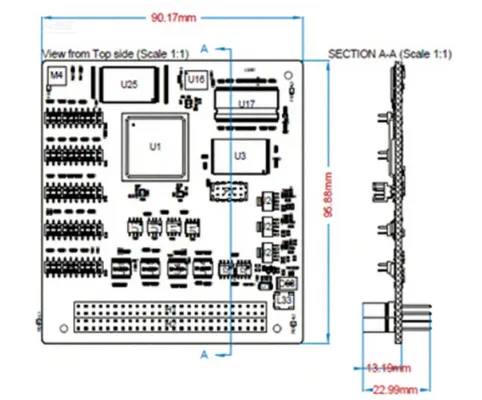
Satellites have strict weight and size limitations (e.g., nanosatellites ≤ 10kg). As the core component of a satellite, the OBC’s weight and size must fully match the specifications of the satellite platform (nanosatellite, microsatellite, minisatellite); otherwise, it will affect the satellite’s orbit control, payload capacity, and launch costs.
Different types of satellite platforms have significantly varying constraints on OBC weight and size. The specific requirements are as follows:
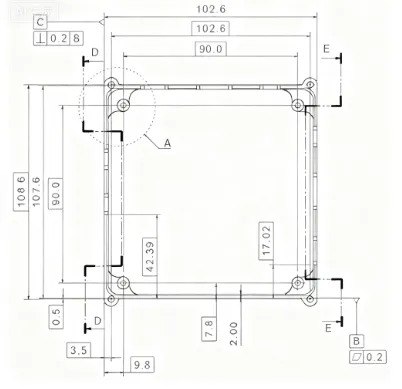
To meet the weight and size limitations of satellite platforms, OBC design must follow these principles:
- Material Selection: Use lightweight composite materials (e.g., carbon fiber, aluminum alloy) for the housing instead of traditional heavy metals (e.g., steel) to reduce weight while ensuring structural strength. For example, MICROSATPRO’s housing adopts carbon fiber composite, which reduces weight by 30% compared to traditional aluminum alloy housings.
- Integrated Design: Reduce the number of discrete components and adopt "System-in-Package (SiP)" technology — integrating core components such as processors, FPGAs, and memory into a single chip or module to minimize the overall OBC size. For example, OBCs for nanosatellites often integrate processors and FPGAs on the same PCB to reduce space occupied by inter-board connections.
- Interface Standardization: Comply with general aerospace interface standards (e.g., PC104, SpaceWire) to avoid size redundancy caused by customized interfaces. Standardized interfaces also simplify connections between the OBC and other subsystems, reducing wiring weight.
- Electromagnetic Compatibility (EMI) Consideration: Lightweight design must simultaneously ensure EMI shielding performance. For example, add a thin shielding layer (e.g., copper foil) inside the housing to prevent the OBC’s electromagnetic signals from interfering with other subsystems and to protect the OBC from external interference.
In short, the OBC’s weight and size are not "the smaller and lighter the better." Instead, they must strictly adapt to the satellite platform specifications, striking a balance between "lightweight," "miniaturization," "reliability," and "expandability.