- Afrikaans
- Albanian
- Amharic
- Arabic
- Armenian
- Azerbaijani
- Basque
- Belarusian
- Bengali
- Bosnian
- Bulgarian
- Catalan
- Cebuano
- China
- Corsican
- Croatian
- Czech
- Danish
- Dutch
- English
- Esperanto
- Estonian
- Finnish
- French
- Frisian
- Galician
- Georgian
- German
- Greek
- Gujarati
- Haitian Creole
- hausa
- hawaiian
- Hebrew
- Hindi
- Miao
- Hungarian
- Icelandic
- igbo
- Indonesian
- irish
- Italian
- Japanese
- Javanese
- Kannada
- kazakh
- Khmer
- Rwandese
- Korean
- Kurdish
- Kyrgyz
- Lao
- Latin
- Latvian
- Lithuanian
- Luxembourgish
- Macedonian
- Malgashi
- Malay
- Malayalam
- Maltese
- Maori
- Marathi
- Mongolian
- Myanmar
- Nepali
- Norwegian
- Norwegian
- Occitan
- Pashto
- Persian
- Polish
- Portuguese
- Punjabi
- Romanian
- Russian
- Samoan
- Scottish Gaelic
- Serbian
- Sesotho
- Shona
- Sindhi
- Sinhala
- Slovak
- Slovenian
- Somali
- Spanish
- Sundanese
- Swahili
- Swedish
- Tagalog
- Tajik
- Tamil
- Tatar
- Telugu
- Thai
- Turkish
- Turkmen
- Ukrainian
- Urdu
- Uighur
- Uzbek
- Vietnamese
- Welsh
- Bantu
- Yiddish
- Yoruba
- Zulu
Space-Grade Component for Thermal Control Systems
component,component use,thermal control system,thermal vacuum testing is a key solution in the Aerospace industry, specifically within Spacecraft and satellite manufacturing and Spacecraft thermal control system components. This article explores how SpaceNavi Co.,Ltd. supports professionals with durable, high-performance products, and explains why this product is an ideal choice for businesses in these sectors.
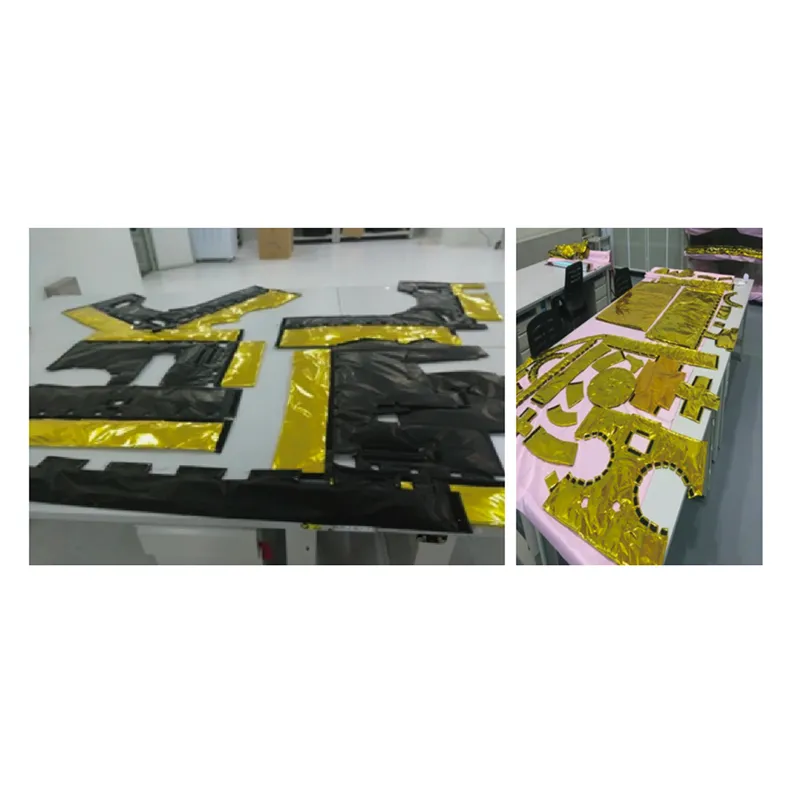
Table of Contents
- component,component use,thermal control system,thermal vacuum testing Overview
- Benefits & Use Cases of component,component use,thermal control system,thermal vacuum testing in Spacecraft thermal control system components
- Cost, Maintenance & User Experience
- Sustainability & Market Trends in Aerospace industry
- Conclusion on component,component use,thermal control system,thermal vacuum testing from SpaceNavi Co.,Ltd.
component,component use,thermal control system,thermal vacuum testing Overview
In spacecraft thermal engineering, the multi-layer thermal insulation cover (MLI blanket) is a mission-critical component that reduces radiative heat transfer and stabilizes on-orbit temperatures across instruments, buses, and propulsion modules. As a spacecraft thermal control system component, its component use spans hot-case attenuation, cold-case retention, and environmental protection from launch through end of life. SpaceNavi Co.,Ltd. designs and manufactures highly conformal MLI covers that are custom patterned to 3D geometries, integrating seams, cutouts, venting paths, and fastening interfaces for straightforward installation and reliable performance.
Technically, MLI blankets are constructed from alternating low-emissivity reflective films (e.g., aluminized polyimide/PET) and low-conductivity spacer layers to minimize both radiation and conduction. Typical designs may range from a handful to dozens of layers, with effective emissivity engineered down to low values when properly installed. Materials are selected for space compatibility with low outgassing per standards such as ASTM E595 and ECSS guidelines. SpaceNavi supports qualification activities with documentation, traceability, and thermal vacuum testing readiness, ensuring that the component, component use, thermal control system, thermal vacuum testing workflow is efficient from prototype through flight build.
Benefits & Use Cases of component,component use,thermal control system,thermal vacuum testing in Spacecraft thermal control system components
SpaceNavi’s MLI covers deliver measurable advantages across LEO constellations, GEO communications platforms, deep-space probes, and lunar missions. Typical applications include instrument bays, propellant tanks, battery packs, payload radiators, star trackers, and avionics compartments—anywhere the thermal control system must manage steep gradients without adding mass or power. Precision patterning and repeatable fabrication help maintain blanket compression, seam integrity, and venting to prevent trapped gas during ascent and to streamline thermal vacuum testing.
Competitive differentiators include lightweight layups tailored to target absorptivity/emissivity, robust edge treatments for handling, and integration features such as labeled zones, quick-reference installation drawings, and flight-like fit-check kits. For NewSpace programs prioritizing speed to orbit, SpaceNavi Co.,Ltd. aligns engineering support, CAD-to-cut workflows, and responsive manufacturing to reduce lead times while preserving quality. For heritage-class missions, detailed materials data, process control, and well-documented acceptance test plans de-risk the component, component use, thermal control system, thermal vacuum testing continuum and help teams meet thermal balance and performance margins with confidence.
Cost, Maintenance & User Experience
Total cost of ownership improves when insulation performance reduces heater duty cycles, enabling smaller power budgets and contributing to mass savings that cascade into launch cost efficiencies. The durability of SpaceNavi’s MLI covers—via reinforced edges, controlled stitching or bonding, and careful spacer selection—supports repeated handling during AIT while preserving thermal performance. Routine “maintenance” is limited mainly to inspection for FOD, crease management, and verification of attachment points before environmental testing.
B2B decision makers in spacecraft and satellite manufacturing value predictability and integration ease. Customers report that clear part marking, structured packing, and straightforward installation guides shorten fit-checks and reduce rework during AIT and thermal vacuum testing. Over multiple campaigns, consistent blanket quality supports stable thermal balance results, reducing iterative test cycles and improving schedule adherence. The net ROI stems from lower risk in the thermal control system, minimized power overhead for temperature regulation, and fewer delays during qualification and acceptance—key drivers for both flagship missions and high-rate constellation programs.
Sustainability & Market Trends in Aerospace industry
Sustainability in space hardware is evolving from materials compliance to system-level efficiency. By improving thermal stability, MLI components reduce heater energy consumption in orbit, contributing to longer battery life and smaller solar array demands. On the manufacturing side, SpaceNavi Co.,Ltd. emphasizes efficient material nesting to reduce scrap, supports low-outgassing and REACH/RoHS-compliant material selections where applicable, and promotes documentation practices that streamline reuse of qualification data across product lines.
Market trends point to continued growth in small satellites, commercial space stations, and cislunar infrastructure—each demanding reliable, lightweight thermal control system components validated through credible thermal vacuum testing. Concurrently, interest is rising in hybrid thermal architectures that pair MLI with variable-emittance surfaces, heat pipes, and deployable radiators. SpaceNavi participates in this shift by delivering adaptable blanket designs and engineering collaboration that fit both rapid NewSpace cycles and more rigorous heritage program baselines. This forward-looking approach helps buyers future-proof their thermal control investments while meeting evolving environmental and regulatory expectations.
Conclusion on component,component use,thermal control system,thermal vacuum testing from SpaceNavi Co.,Ltd.
For spacecraft and satellite manufacturers, a well-engineered MLI cover is a foundational component that optimizes component use, enhances the thermal control system, and streamlines thermal vacuum testing. SpaceNavi Co.,Ltd. combines application-driven design, reliable materials, and responsive support to deliver consistent thermal performance from prototype to flight. If you are ready to strengthen mission assurance while controlling cost and schedule risk, our team is here to help.
Contact us: email: jl1sales02@space-navi.com
Visit our website: https://www.space-navi.com