- Afrikaans
- Albanian
- Amharic
- Arabic
- Armenian
- Azerbaijani
- Basque
- Belarusian
- Bengali
- Bosnian
- Bulgarian
- Catalan
- Cebuano
- China
- Corsican
- Croatian
- Czech
- Danish
- Dutch
- English
- Esperanto
- Estonian
- Finnish
- French
- Frisian
- Galician
- Georgian
- German
- Greek
- Gujarati
- Haitian Creole
- hausa
- hawaiian
- Hebrew
- Hindi
- Miao
- Hungarian
- Icelandic
- igbo
- Indonesian
- irish
- Italian
- Japanese
- Javanese
- Kannada
- kazakh
- Khmer
- Rwandese
- Korean
- Kurdish
- Kyrgyz
- Lao
- Latin
- Latvian
- Lithuanian
- Luxembourgish
- Macedonian
- Malgashi
- Malay
- Malayalam
- Maltese
- Maori
- Marathi
- Mongolian
- Myanmar
- Nepali
- Norwegian
- Norwegian
- Occitan
- Pashto
- Persian
- Polish
- Portuguese
- Punjabi
- Romanian
- Russian
- Samoan
- Scottish Gaelic
- Serbian
- Sesotho
- Shona
- Sindhi
- Sinhala
- Slovak
- Slovenian
- Somali
- Spanish
- Sundanese
- Swahili
- Swedish
- Tagalog
- Tajik
- Tamil
- Tatar
- Telugu
- Thai
- Turkish
- Turkmen
- Ukrainian
- Urdu
- Uighur
- Uzbek
- Vietnamese
- Welsh
- Bantu
- Yiddish
- Yoruba
- Zulu
Reflective Fiber Collimator: Precision For Modern Optics
The reflective fiber collimator is one of the most significant innovations in optical engineering, combining the power of reflective technology with the precision of fiber optics. Unlike traditional lens-based systems, the reflective fiber collimator relies on mirrors to align beams, eliminating chromatic aberrations while ensuring minimal signal loss. This combination makes it indispensable in high-speed communications, laser delivery systems, spectroscopy, and biomedical imaging. By working alongside related technologies such as the off axis collimator and the reflective collimator, the reflective fiber collimator has become a cornerstone in next-generation optical systems that require clarity, durability, and efficiency.
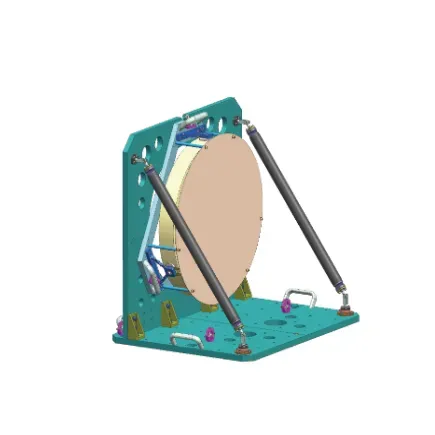
Understanding The Reflective Fiber Collimator
At its core, the reflective fiber collimator is designed to collimate light as it exits an optical fiber, aligning the beam into parallel rays. Unlike lens collimators that bend light differently across wavelengths, the mirror-based design of the reflective fiber collimator ensures that every wavelength is treated equally. This allows for broadband applications where multiple channels of light must be transmitted without distortion. In telecommunications, for example, the reflective fiber collimator is used to minimize divergence and guarantee efficient signal transfer across long distances. In laboratory research, it supports instruments that require both high sensitivity and precision. By bridging the gap between reflective optics and fiber optics, the reflective fiber collimator offers flexibility that neither technology could achieve on its own.
Comparing With Off Axis Collimator And Reflective Collimator
While the reflective fiber collimator excels in fiber optic applications, it is closely related to other devices in the optical family. The off axis collimator is designed to reduce obstructions and aberrations by shifting beams away from the central optical path, which makes it useful for imaging systems and spectrographs. The reflective collimator, on the other hand, eliminates chromatic distortion by using mirrors instead of lenses, making it ideal for broadband applications in spectroscopy and astronomy. When integrated together, the off axis collimator, reflective collimator, and reflective fiber collimator provide a complete set of tools for modern optical design. Each serves a unique role, but together they create systems that are accurate, stable, and efficient.
Applications Of Reflective Fiber Collimator Systems
The reflective fiber collimator has applications across many industries where precision and low signal loss are essential. In telecommunications, it ensures that light signals transmitted through fiber networks remain sharp and aligned, supporting faster and more reliable data exchange. In laser systems, the reflective fiber collimator allows beams to be directed with minimal distortion, improving stability for research, manufacturing, and medical applications. In spectroscopy, it ensures that light exiting a fiber is collimated correctly for measurement, improving data accuracy. In biomedical imaging, the reflective fiber collimator helps deliver high-quality signals for diagnostic systems. In all these cases, the strength of the reflective fiber collimator lies in its ability to maintain efficiency across multiple wavelengths while avoiding the weaknesses of traditional lens-based designs.
Design Advantages Of Reflective Fiber Collimator
The reflective fiber collimator has several unique advantages over other collimation systems. First, it eliminates chromatic aberrations because mirrors reflect light uniformly, regardless of wavelength. This is particularly valuable in systems that use broad-spectrum signals. Second, the reflective fiber collimator is highly stable against temperature changes and mechanical stress, making it more reliable than lens collimators in demanding environments. Third, because it is directly integrated with optical fibers, the reflective fiber collimator minimizes insertion loss and divergence, ensuring that optical signals remain strong and consistent. When compared to the off axis collimator, which primarily reduces obstruction, and the reflective collimator, which optimizes broadband alignment, the reflective fiber collimator stands out as the most efficient choice for fiber optic systems.
Future Potential Of Reflective Fiber Collimator
As industries continue to demand faster communication, sharper imaging, and more compact optical systems, the reflective fiber collimator will play an increasingly important role. Advances in mirror coating technology will make the reflective fiber collimator even more durable and reflective, enhancing its performance in challenging environments. In the telecommunications sector, where networks must handle enormous amounts of data, the reflective fiber collimator will ensure low-loss transmission across multiple channels. In scientific research, it will support instruments that require higher sensitivity and accuracy. Hybrid systems that combine the reflective fiber collimator with the off axis collimator and the reflective collimator are also emerging, offering even greater flexibility and performance. This evolution ensures that the reflective fiber collimator will remain central to the development of optical technology.
Conclusion
The reflective fiber collimator is one of the most advanced optical devices available today, combining the strengths of reflective optics with the efficiency of fiber systems. It provides unmatched accuracy, eliminates chromatic aberrations, and supports applications ranging from telecommunications to spectroscopy and biomedical imaging. When used alongside the off axis collimator and the reflective collimator, it creates a comprehensive set of tools that enhance modern optical systems. As technology continues to evolve, the reflective fiber collimator will remain a driving force in achieving precision, efficiency, and reliability in light-based technologies across industries worldwide.