- Afrikaans
- Albanian
- Amharic
- Arabic
- Armenian
- Azerbaijani
- Basque
- Belarusian
- Bengali
- Bosnian
- Bulgarian
- Catalan
- Cebuano
- China
- Corsican
- Croatian
- Czech
- Danish
- Dutch
- English
- Esperanto
- Estonian
- Finnish
- French
- Frisian
- Galician
- Georgian
- German
- Greek
- Gujarati
- Haitian Creole
- hausa
- hawaiian
- Hebrew
- Hindi
- Miao
- Hungarian
- Icelandic
- igbo
- Indonesian
- irish
- Italian
- Japanese
- Javanese
- Kannada
- kazakh
- Khmer
- Rwandese
- Korean
- Kurdish
- Kyrgyz
- Lao
- Latin
- Latvian
- Lithuanian
- Luxembourgish
- Macedonian
- Malgashi
- Malay
- Malayalam
- Maltese
- Maori
- Marathi
- Mongolian
- Myanmar
- Nepali
- Norwegian
- Norwegian
- Occitan
- Pashto
- Persian
- Polish
- Portuguese
- Punjabi
- Romanian
- Russian
- Samoan
- Scottish Gaelic
- Serbian
- Sesotho
- Shona
- Sindhi
- Sinhala
- Slovak
- Slovenian
- Somali
- Spanish
- Sundanese
- Swahili
- Swedish
- Tagalog
- Tajik
- Tamil
- Tatar
- Telugu
- Thai
- Turkish
- Turkmen
- Ukrainian
- Urdu
- Uighur
- Uzbek
- Vietnamese
- Welsh
- Bantu
- Yiddish
- Yoruba
- Zulu
Optical Camera with Super Resolution & Spectral Imaging?
Large Swath Camera with Width of 150km: Field Notes from a Fast-Moving Market
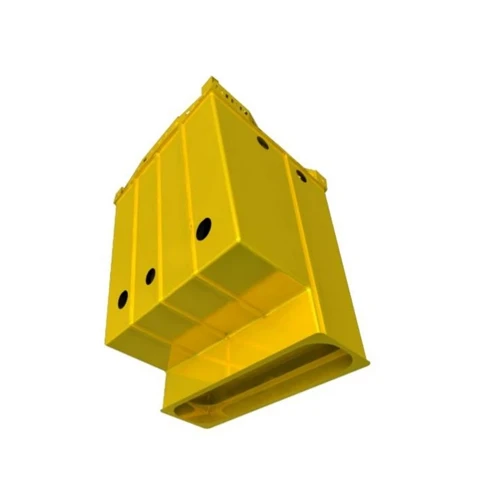
If you’ve been watching Earth observation lately, you’ve probably noticed the quiet shift from “sharper” to “wider and smarter.” That’s exactly where this optical camera lands: a Large Swath Camera with a 150 km footprint using an off‑axis three‑mirror system. It’s built in Changchun (No. 1299 Mingxi Road, Beihu Science and Technology Development Zone, Jilin), a city that, frankly, has become a small powerhouse for precision optics.
Why a 150 km Swath Actually Matters
The off‑axis three‑mirror (TMA) architecture is a bit of an insider favorite: high resolution, low aberrations, and no central obscuration. Add a 150 km swath and, suddenly, revisit times drop, mosaics simplify, and your ground segment team smiles. Many customers say the biggest surprise isn’t just coverage—it’s how consistent the edge-to-edge sharpness feels on real datasets.
Product Snapshot
| Product Name | Ikhamera ye-Swath Enkulu enobubanzi obungu-150km |
| Optical Design | Off‑axis three‑mirror (TMA), high-resolution, super-wide width |
| Swath Width | 150 km (nominal) |
| Spectral Options | Panchromatic + Multispectral (configurable bands; real‑world use may vary) |
| Detector / Pixel | CMOS or CCD, pixel pitch per mission profile (≈ 3–10 µm typical ranges) |
| Radiometry | 12–14 bit typical; absolute/relative calibration supported |
| Interfaces | SpaceWire / LVDS / custom payload interfaces |
Materials, Methods, and Testing (Short Version)
Mirrors are typically low‑CTE substrates (Zerodur or SiC), coated with high‑reflectivity multilayers. The optical train is aligned interferometrically; baffles and black coatings handle stray light. Assembly follows cleanroom protocols (ISO Class 5–7), with calibration benches running ISO 12233 SFR/MTF, radiometric linearity, PRNU/DSNU, and spectral response checks. Environmental tests usually reference ISO 9022 and MIL‑STD‑810H profiles; space customers often add TVAC, random vibration, and acoustic loads. Service life? Designed for multi‑year duty; in LEO, planning assumptions are often 3–7 years depending on orbit and thermal management.
Where It’s Used
- Nationwide mapping and land administration (fast, low-seam mosaics).
- Disaster response and insurance triage—post‑event sweeps in one pass.
- Agriculture and forestry—consistent coverage for large AOIs.
- Pipeline, mining, and maritime monitoring—broad situational awareness.
Case Notes (Composite Example)
A regional emergency bureau combined a 150 km‑swath optical camera with a rapid tasking scheme. They cut post‑flood mapping from days to hours, largely because tiling complexity dropped. Feedback was blunt but telling: “less stitching, fewer surprises, faster action.”
Customization Path
Typical knobs: spectral bands (VIS–NIR), detector format, pixel pitch, frame rate, onboard compression, interface, and radiation tolerance. For some missions, a dual‑mode PAN/MS design balances detail and coverage. To be honest, the earlier you lock orbit altitude and pointing constraints, the better your GSD vs. swath trade will be.
Vendor Landscape (Quick Take)
| Vendor | Swath (≈) | Optical Approach | Customization | Lead Time | Certs / Standards |
|---|---|---|---|---|---|
| Space‑Navi (Changchun) | 150 km | Off‑axis TMA | High (bands, detector, interface) | Project‑based (ask) | ISO 12233, ISO 9022, MIL‑STD‑810H (as applicable) |
| GlobalSat OEM | 60–120 km | On‑axis / Off‑axis mix | Medium | 12–18 months | ISO 9022 focus |
| AeroImaging Labs | 100–140 km | TMA + catadioptric | Medium–High | 9–15 months | MIL‑STD‑810H emphasis |
Testing, Data, and Certifications
Factory acceptance commonly uses ISO 12233 SFR/MTF, radiometric linearity and PRNU mapping, spectral response, stray‑light (PST) checks, plus environmental runs per ISO 9022 or MIL‑STD‑810H. Space programs may add TVAC and random vibration to launcher profiles. Compliance targets often include RoHS (EU 2011/65/EU) for electronics. Ask for anonymized MTF plots and calibration reports—teams appreciate seeing real curves, not just bullet points.
Bottom line: a 150 km‑swath optical camera changes your operations tempo. Less stitching, more coverage, and—if you spec it right—no compromise on image quality.
- ISO 12233:2017 — Photography — Electronic still picture imaging — Resolution and SFR.
- ISO 9022 — Optics and photonics — Environmental test methods for optical instruments.
- MIL‑STD‑810H — Environmental Engineering Considerations and Laboratory Tests.
- ECSS‑Q‑ST‑70‑01 — Cleanliness and contamination control for space projects.