- Afrikaans
- Albanian
- Amharic
- Arabic
- Armenian
- Azerbaijani
- Basque
- Belarusian
- Bengali
- Bosnian
- Bulgarian
- Catalan
- Cebuano
- China
- Corsican
- Croatian
- Czech
- Danish
- Dutch
- English
- Esperanto
- Estonian
- Finnish
- French
- Frisian
- Galician
- Georgian
- German
- Greek
- Gujarati
- Haitian Creole
- hausa
- hawaiian
- Hebrew
- Hindi
- Miao
- Hungarian
- Icelandic
- igbo
- Indonesian
- irish
- Italian
- Japanese
- Javanese
- Kannada
- kazakh
- Khmer
- Rwandese
- Korean
- Kurdish
- Kyrgyz
- Lao
- Latin
- Latvian
- Lithuanian
- Luxembourgish
- Macedonian
- Malgashi
- Malay
- Malayalam
- Maltese
- Maori
- Marathi
- Mongolian
- Myanmar
- Nepali
- Norwegian
- Norwegian
- Occitan
- Pashto
- Persian
- Polish
- Portuguese
- Punjabi
- Romanian
- Russian
- Samoan
- Scottish Gaelic
- Serbian
- Sesotho
- Shona
- Sindhi
- Sinhala
- Slovak
- Slovenian
- Somali
- Spanish
- Sundanese
- Swahili
- Swedish
- Tagalog
- Tajik
- Tamil
- Tatar
- Telugu
- Thai
- Turkish
- Turkmen
- Ukrainian
- Urdu
- Uighur
- Uzbek
- Vietnamese
- Welsh
- Bantu
- Yiddish
- Yoruba
- Zulu
Collimator Types: Understanding Applications And Innovations
In the world of optics and precision instruments, the role of a collimator is vital. A collimator ensures that light or other forms of radiation travel in parallel paths, improving the accuracy and efficiency of various devices. From scientific instruments to industrial applications, collimator types have evolved to meet the growing demand for precision. Whether it is an adjustable collimator, a beam collimator, or the collimator of a spectrometer, these devices shape the way light is directed, measured, and analyzed.
This article explores different collimator types, highlights their applications, and explains how innovations such as the adjustable fiber collimator are pushing boundaries in optical science.
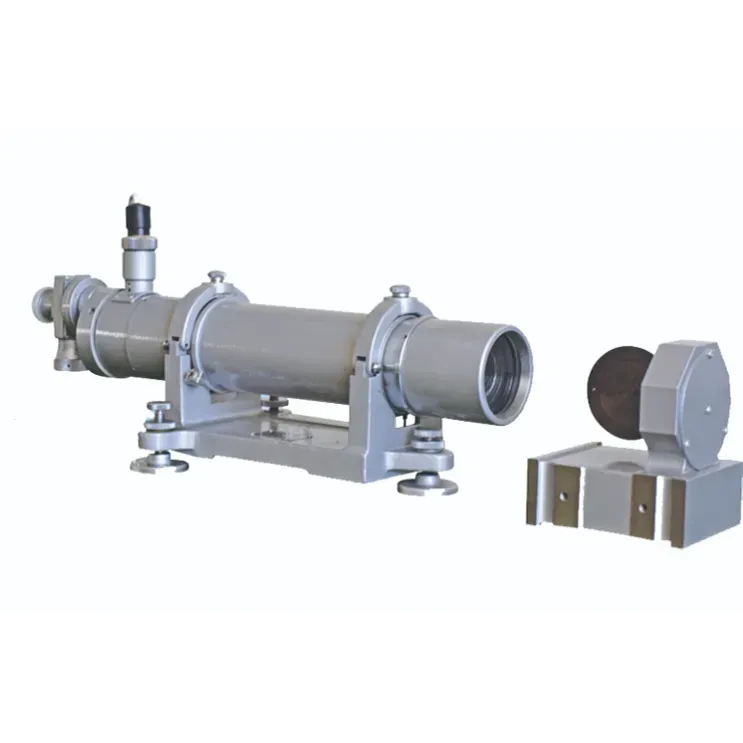
A Collimator: The Core Of Optical Precision
At its simplest, a collimator is a device that narrows a beam of particles or waves into parallel rays. This ensures that measurements taken are accurate and unaffected by beam divergence. In optics, a collimator typically uses a lens or mirror to align the light source into a straight, narrow beam.
The precision provided by a collimator makes it indispensable in laboratories, medical imaging, and spectroscopy. In scientific research, even the smallest misalignment of light can lead to major errors. By introducing a collimator, researchers can reduce uncertainty, making experiments and observations more reliable.
Modern industries have expanded their reliance on a collimator beyond the lab. For example, in telecommunications, a collimator aligns fiber optic signals for more efficient data transfer. The versatility of a collimator shows why it is considered the foundation of optical alignment.
Collimator Types: Exploring Variations And Uses
Over time, engineers have developed many collimator types, each designed for specific applications. Some of the most common include:
Beam collimator: Focuses and directs beams, ensuring that they remain parallel for tasks such as laser alignment or radiation therapy.
Adjustable collimator: Offers flexibility by allowing users to modify the aperture or focus, adapting to different optical tasks.
Adjustable fiber collimator: Designed for fiber optic systems, ensuring efficient signal transmission with minimal loss.
Collimator of a spectroscope: Essential in spectroscopy, where accurate analysis of light spectra depends on precise beam collimation.
Collimator of spectrometer: Similar to the spectroscope version but integrated into spectrometers for analyzing light intensity and wavelength.
Each of these collimator types addresses a unique need. For example, a beam collimator is often used in physics experiments requiring long-distance light projection, while an adjustable fiber collimator is critical in telecom networks.
Understanding these collimator types is key to selecting the right tool for a given application.
Adjustable Collimator And Fiber Collimator: Versatility In Practice
The adjustable collimator represents a step forward in adaptability. Unlike fixed designs, an adjustable collimator allows users to change settings depending on the task. For example, researchers working with different light sources may adjust the aperture to achieve the ideal beam width. This flexibility saves time and ensures higher precision.
Building on this concept, the adjustable fiber collimator caters specifically to optical fiber systems. In telecommunications, signal loss can severely impact data quality. By integrating an adjustable fiber collimator, engineers can fine-tune signal alignment, reducing losses and enhancing overall performance.
The demand for high-speed internet and reliable data transfer has made the adjustable fiber collimator a valuable tool. It allows industries to optimize their networks without replacing entire systems, making it both cost-effective and efficient.
Collimator Of A Spectroscope And Spectrometer: Essential For Science
In scientific instruments, precision is everything. The collimator of a spectroscope plays a crucial role in splitting light into its spectral components. Without accurate collimation, the spectral lines would blur, reducing the accuracy of analysis.
Similarly, the collimator of spectrometer ensures that light entering the instrument is properly aligned. Spectrometers are used in chemistry, physics, and environmental science to measure light intensity and wavelength. The reliability of these measurements depends heavily on the collimator of spectrometer, making it an essential component.
These scientific collimator types highlight how even the most advanced instruments rely on simple but powerful concepts of beam alignment.
Collimator For Sale: Meeting Industry Demand
As industries expand, the availability of collimator for sale has grown significantly. Companies now provide a wide range of options, from simple beam collimator designs to sophisticated adjustable fiber collimator systems. The diversity of collimator for sale reflects the broad applications across medicine, research, and telecommunications.
Organizations seeking precision tools often look for collimator for sale that match their specific requirements. For laboratories, an adjustable collimator or collimator of a spectroscope might be ideal, while telecom companies may prioritize an adjustable fiber collimator. This variety ensures that every field has access to the exact collimator types needed.
Conclusion
The evolution of collimator types demonstrates how critical these devices are in modern science and industry. From the simplicity of a collimator to the sophistication of the adjustable fiber collimator, each type serves a unique purpose. Whether it is the beam collimator used in physics, the collimator of a spectroscope in scientific research, or the collimator of spectrometer in analytical labs, these tools ensure accuracy and reliability.
With increasing demand, the market for collimator for sale continues to grow, offering solutions for a wide range of applications. The combination of innovation and accessibility ensures that collimator types will remain indispensable in advancing science, industry, and technology.