- Afrikaans
- Albanian
- Amharic
- Arabic
- Armenian
- Azerbaijani
- Basque
- Belarusian
- Bengali
- Bosnian
- Bulgarian
- Catalan
- Cebuano
- China
- Corsican
- Croatian
- Czech
- Danish
- Dutch
- English
- Esperanto
- Estonian
- Finnish
- French
- Frisian
- Galician
- Georgian
- German
- Greek
- Gujarati
- Haitian Creole
- hausa
- hawaiian
- Hebrew
- Hindi
- Miao
- Hungarian
- Icelandic
- igbo
- Indonesian
- irish
- Italian
- Japanese
- Javanese
- Kannada
- kazakh
- Khmer
- Rwandese
- Korean
- Kurdish
- Kyrgyz
- Lao
- Latin
- Latvian
- Lithuanian
- Luxembourgish
- Macedonian
- Malgashi
- Malay
- Malayalam
- Maltese
- Maori
- Marathi
- Mongolian
- Myanmar
- Nepali
- Norwegian
- Norwegian
- Occitan
- Pashto
- Persian
- Polish
- Portuguese
- Punjabi
- Romanian
- Russian
- Samoan
- Scottish Gaelic
- Serbian
- Sesotho
- Shona
- Sindhi
- Sinhala
- Slovak
- Slovenian
- Somali
- Spanish
- Sundanese
- Swahili
- Swedish
- Tagalog
- Tajik
- Tamil
- Tatar
- Telugu
- Thai
- Turkish
- Turkmen
- Ukrainian
- Urdu
- Uighur
- Uzbek
- Vietnamese
- Welsh
- Bantu
- Yiddish
- Yoruba
- Zulu
Phased Roadmap for Precision Prediction: Technological Evolution from Hour-Level to Second-Level Accuracy
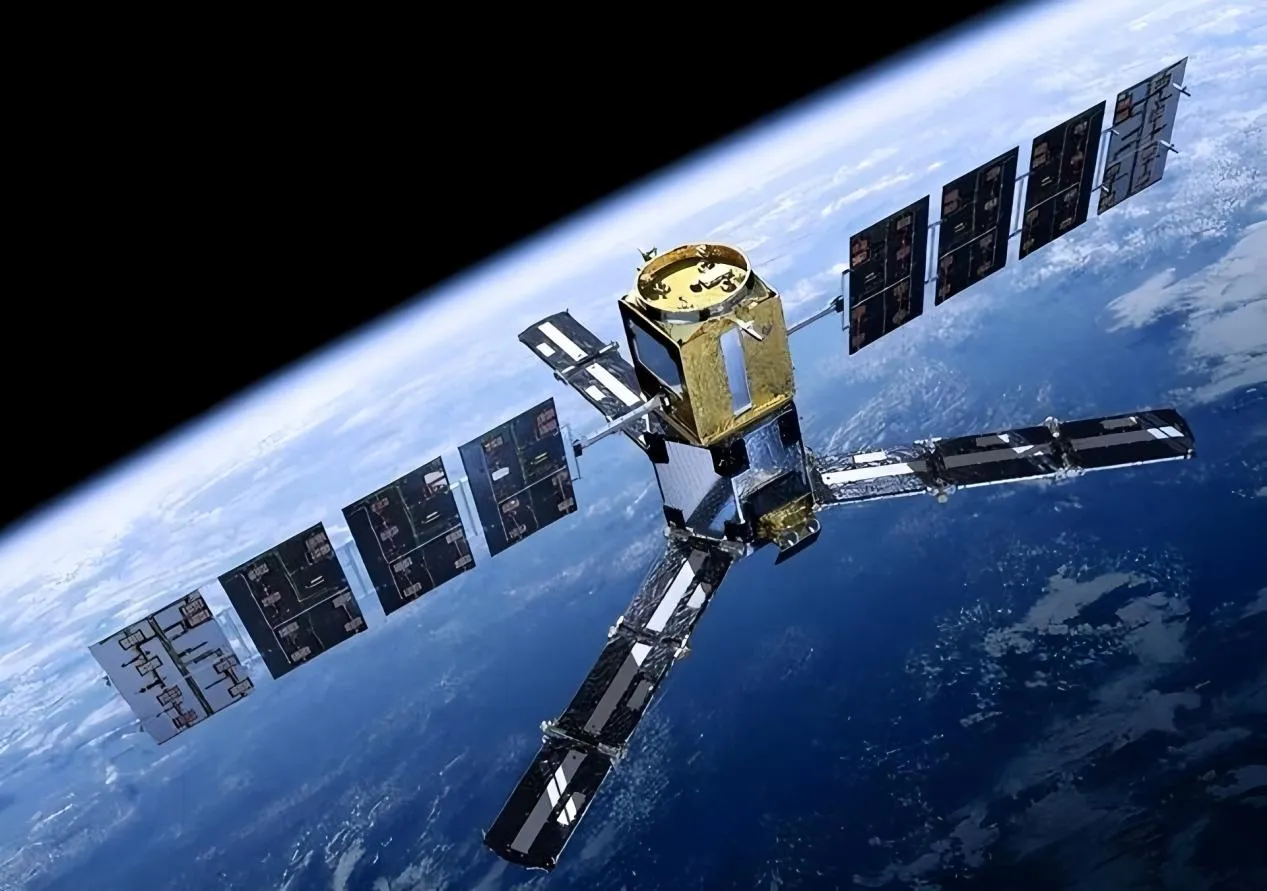
Improvements in LEO satellite reentry prediction accuracy follow a progressive pathway. Based on current technological trends and research advances, a phased implementation roadmap has been developed: advancing from near-term breakthroughs in hour-level accuracy, through mid-term leaps to minute-level accuracy, to the long-term ultimate goal of second-level accuracy. This will gradually upgrade prediction technology from “operable” to “precision” and “intelligent,” providing comprehensive technical support for the safe operation of commercial space.
I. Near-Term Goal (2025–2027): Breakthrough to Hour-Level Accuracy
2025–2027 represents a critical period for major breakthroughs in LEO satellite reentry prediction. Building on existing technological foundations, achieving hour-level accuracy is highly feasible, supported by three core pillars:
-
Rapid maturation of machine learningEarly 2025 research shows that LSTM neural network models for uncontrolled reentry time prediction have achieved <8% accuracy for 30-day forecasts at 95% confidence. At the current rate of progress, 30-day prediction accuracy is expected to improve to within 5% by late 2026, corresponding to an error window of approximately 7 hours.
-
Enhanced space weather monitoring capabilitiesNOAA’s Space Weather Prediction Center is implementing new monitoring programs. By 2026, more solar observatory satellites and ground stations will be deployed, increasing geomagnetic storm forecast lead time from under 12 hours to 24–48 hours, providing more accurate boundary conditions for atmospheric density prediction.
-
Accelerated open sharing of commercial space dataSpaceX, Blue Origin, and other operators have begun releasing partial orbital and reentry data. By 2027, reentry event records available for model training are expected to grow from the current 934 to thousands, supplying valuable real-world data for model validation and optimization.
Expected Accuracy by End of 2027 (for large LEO satellites at 300–500 km, >100 kg):
- 30 days ahead: ±12 hours
- 7 days ahead: ±6 hours
- 24 hours ahead: ±2 hours
- 10 hours ahead: ±1 hour
This will largely satisfy risk management requirements in routine operations.
II. Mid-Term Goal (2028–2030): Leap to Minute-Level Accuracy
After 2028, LEO reentry prediction will undergo a qualitative transformation, driven by mature quantum computing applications, a completed global atmospheric monitoring network, and continued optimization of machine learning models.
-
Breakthrough quantum computing applicationsNASA and Planette’s QubitCast system is expected to complete prototype validation in 2028 and enter trial operation in 2029. Its ability to model extreme space weather events will far exceed traditional methods. Quantum algorithms can reduce computation time for Monte Carlo uncertainty analysis — which requires tens to hundreds of thousands of orbit propagations — to 1/1000 of the original, enabling true real-time risk assessment.
-
Completed global atmospheric monitoring networkBy 2030, the global LEO meteorological satellite constellation will exceed 100 satellites, including follow-on Metop series and commercial meteorological platforms, forming a dense monitoring network with 50 km × 50 km spatial resolution and 1-hour temporal resolution, delivering unprecedented data support for high-precision forecasting.
-
Further optimized deep learning modelsBy 2030, the mean absolute percentage error (MAPE) of atmospheric density prediction will drop from the current ~20% to **below 5%. Combined with precise satellite characterization and real-time data assimilation, reentry time prediction will achieve a qualitative leap.
Expected Accuracy by 2030 (typical LEO satellites):
- 7 days ahead: ±2 hours
- 24 hours ahead: ±30 minutes
- 10 hours ahead: ±10 minutes
- 2 hours ahead: ±2 minutes
This will meet stricter regulatory requirements and risk management in complex scenarios.
III. Long-Term Vision (Post-2030): Ultimate Second-Level Accuracy
After 2030, LEO reentry prediction will advance toward the ultimate goal of second-level accuracy, characterized by the full integration of fully quantum computing architectures, real-time adaptive modeling, and intelligent decision-support systems.
-
Full commercialization of quantum computingPractical quantum computers by 2035 will complete analysis of complex reentry scenarios with hundreds of uncertain variables in milliseconds, enabling large-scale Monte Carlo simulations and real-time updates of predictions, achieving true dynamic tracking forecasting.
-
Self-evolving adaptive machine learningAdaptive ML systems will automatically optimize model parameters and structure by comparing predictions with actual outcomes. By 2040, reentry time prediction errors for well-characterized satellites are expected to drop to second-level.
-
Mature real-time data assimilationSecond-level model updates will be achieved by integrating real-time observations from satellites, ground stations, and reentry events, forming a closed-loop “observation–prediction–validation–optimization” system that replaces traditional open-loop forecasting.
-
Intelligent decision-support systemsGoing beyond pure prediction, these systems will automatically generate risk assessments, emergency plans, and seamlessly interface with ground safety management, enabling full automation from prediction → decision → action.
IV. Technology Readiness Assessment & Milestones
Based on NASA Technology Readiness Levels (TRL), key technologies for LEO reentry prediction are assessed and milestones planned as follows:
| Technology Domain | Current TRL (2025) | Expected Full Maturity | Key Milestones |
|---|---|---|---|
| ML Atmospheric Models | 6–7 | 2026 (TRL 8) | Error reduced to <10% |
| Quantum Computing Algorithms | 4–5 | 2028 (TRL 7) | Practical quantum acceleration realized |
| Global Monitoring Network | 7–8 | 2027 (TRL 9) | Global real-time monitoring coverage |
| Real-Time Data Assimilation | 5–6 | 2027 (TRL 8) | Minute-level update capability |
| Intelligent Decision Systems | 4–5 | 2030 (TRL 9) | Fully automated risk management |
It should be emphasized that maturity timelines are affected by R&D investment, critical breakthroughs, international cooperation, data sharing, regulatory policies, and commercial demand. Based on historical aerospace transition cycles (typically 10–15 years) — and given the current rapid growth phase of reentry prediction — the above timeline is conservative and highly achievable.