- Afrikaans
- Albanian
- Amharic
- Arabic
- Armenian
- Azerbaijani
- Basque
- Belarusian
- Bengali
- Bosnian
- Bulgarian
- Catalan
- Cebuano
- China
- Corsican
- Croatian
- Czech
- Danish
- Dutch
- English
- Esperanto
- Estonian
- Finnish
- French
- Frisian
- Galician
- Georgian
- German
- Greek
- Gujarati
- Haitian Creole
- hausa
- hawaiian
- Hebrew
- Hindi
- Miao
- Hungarian
- Icelandic
- igbo
- Indonesian
- irish
- Italian
- Japanese
- Javanese
- Kannada
- kazakh
- Khmer
- Rwandese
- Korean
- Kurdish
- Kyrgyz
- Lao
- Latin
- Latvian
- Lithuanian
- Luxembourgish
- Macedonian
- Malgashi
- Malay
- Malayalam
- Maltese
- Maori
- Marathi
- Mongolian
- Myanmar
- Nepali
- Norwegian
- Norwegian
- Occitan
- Pashto
- Persian
- Polish
- Portuguese
- Punjabi
- Romanian
- Russian
- Samoan
- Scottish Gaelic
- Serbian
- Sesotho
- Shona
- Sindhi
- Sinhala
- Slovak
- Slovenian
- Somali
- Spanish
- Sundanese
- Swahili
- Swedish
- Tagalog
- Tajik
- Tamil
- Tatar
- Telugu
- Thai
- Turkish
- Turkmen
- Ukrainian
- Urdu
- Uighur
- Uzbek
- Vietnamese
- Welsh
- Bantu
- Yiddish
- Yoruba
- Zulu
Need Sun Sensors with High Accuracy and Low Power?
[sun sensors,solar panel,satellite parts,power system] is a key solution in the aerospace industry, specifically within Satellite manufacturing and Satellite attitude sensor. This article explores how SpaceNavi Co.,Ltd. supports professionals with durable, high-performance products, and explains why this product is an ideal choice for businesses in these sectors.
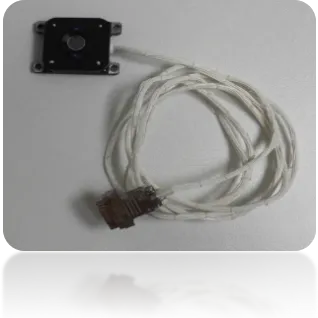
Table of Contents
- [sun sensors,solar panel,satellite parts,power system] Overview
- Benefits & Use Cases of [sun sensors,solar panel,satellite parts,power system] in Satellite attitude sensor
- Cost, Maintenance & User Experience
- Sustainability & Market Trends in aerospace
- Conclusion on [sun sensors,solar panel,satellite parts,power system] from SpaceNavi Co.,Ltd.
[sun sensors,solar panel,satellite parts,power system] Overview
In modern spacecraft, sun sensors are foundational satellite parts used for attitude determination. By measuring the Sun vector relative to the spacecraft body, these compact instruments provide reliable orientation data that complements star trackers and inertial sensors. Their role connects directly to the power system: accurate sun-pointing ensures the solar panel operates at peak efficiency, sustaining payloads and onboard computing. For B2B decision makers balancing performance, risk, and cost, sun sensors deliver a high-value signal for safe-mode acquisition, coarse pointing, and continuous power-positive attitudes.
SpaceNavi Co.,Ltd. manufactures digital sun sensors engineered for orbit. Typical features include wide field-of-view options for rapid Sun capture, sub-degree measurement precision, low power draw, and radiation-tolerant electronics with robust thermal stability. Interfaces commonly used in satellite manufacturing—such as I2C, RS-422/485, or CAN—streamline integration into the ADCS and avionics stack. SpaceNavi validates performance through environmental test regimes (vibration, TVAC) and provides calibration data to shorten commissioning. Whether for microsats or larger platforms, SpaceNavi’s design philosophy emphasizes dependable accuracy, simple harnessing, and lifecycle value.
Benefits & Use Cases of [sun sensors,solar panel,satellite parts,power system] in Satellite attitude sensor
Across LEO constellations, GEO communications platforms, and interplanetary missions, sun sensors underpin multiple attitude modes. They enable safe-mode Sun acquisition after launch, provide coarse pointing when star trackers are blinded or unavailable, and maintain power-positive attitudes to protect the power system and batteries. For spacecraft with deployable solar panel assemblies, sun sensors help confirm deployment success and support array steering logic, ensuring maximum energy harvesting and thermal balance.
SpaceNavi Co.,Ltd. focuses on integration flexibility and system-level reliability. Advantages include compact, low-mass construction to suit tight volume budgets; digital outputs for clean integration with flight software; high immunity to stray light; and temperature-compensated calibration. Wide field-of-view variants accelerate Sun capture during detumbling, while higher-precision units support fine control in tandem with reaction wheels or magnetorquers. These attributes reduce operational risk and shorten commissioning timelines—key priorities for satellite manufacturers seeking schedule certainty, scalable production, and compatibility with modern satellite parts architectures.
Cost, Maintenance & User Experience
Total cost of ownership in orbit hinges on reliability, ease of integration, and operational efficiency. SpaceNavi’s sun sensors are designed for low power consumption and minimal mass—attributes that translate to savings across the power system and launch budget. Their digital interfaces reduce custom electronics, while standardized mounting patterns and harness options speed installation. Because in-orbit maintenance is impractical, SpaceNavi emphasizes pre-flight calibration, qualification testing, and robust enclosures to mitigate degradation over mission life.
Customer feedback from the satellite manufacturing community highlights faster ADCS acquisition, stable performance across thermal cycles, and straightforward software integration using well-documented protocols. Teams report fewer design iterations thanks to comprehensive ICDs and calibration certificates, improving ROI by cutting engineering hours and lowering program risk. Over multi-year missions, durable sensing and consistent bias characteristics reduce attitude errors that can otherwise erode solar panel output, proving the long-term economic value of a well-engineered sun sensor.
Sustainability & Market Trends in aerospace
The aerospace sector is aligning with sustainability goals, emphasizing longer-lived spacecraft, reduced debris risk, and higher energy efficiency. Accurate sun sensors support these aims by protecting the power system, optimizing solar panel exposure, and preserving battery health—extending mission life and reducing the need for replacement launches. Compliance with established standards and test protocols (e.g., ECSS, NASA GEVS practices) supports responsible design and predictable performance across thermal and radiation environments.
Market trends show rapid growth in small satellites and high-throughput platforms, driving demand for modular satellite parts that are cost-effective yet robust. Digital sun sensors are evolving with better thermal stability, improved radiation tolerance, and smarter onboard processing for noise rejection. SpaceNavi Co.,Ltd. invests in advanced calibration, responsible material selection where applicable, and manufacturing practices that reduce waste. The result is a forward-leaning product roadmap aligned with industry needs: scalable production, dependable performance, and system efficiency that advances both mission success and sustainability.
Conclusion on [sun sensors,solar panel,satellite parts,power system] from SpaceNavi Co.,Ltd.
For B2B leaders in satellite manufacturing, high-quality sun sensors are a proven lever for attitude reliability, energy yield, and overall mission assurance. By bridging attitude sensing with the power system, they safeguard solar panel performance and streamline operations. SpaceNavi Co.,Ltd. stands out with dependable engineering, thorough testing, and integration-friendly interfaces that reduce risk and accelerate schedules. Ready to optimize your next spacecraft build?
Contact us: email: jl1sales02@space-navi.com
Visit our website: https://www.space-navi.com