- Afrikaans
- Albanian
- Amharic
- Arabic
- Armenian
- Azerbaijani
- Basque
- Belarusian
- Bengali
- Bosnian
- Bulgarian
- Catalan
- Cebuano
- China
- Corsican
- Croatian
- Czech
- Danish
- Dutch
- English
- Esperanto
- Estonian
- Finnish
- French
- Frisian
- Galician
- Georgian
- German
- Greek
- Gujarati
- Haitian Creole
- hausa
- hawaiian
- Hebrew
- Hindi
- Miao
- Hungarian
- Icelandic
- igbo
- Indonesian
- irish
- Italian
- Japanese
- Javanese
- Kannada
- kazakh
- Khmer
- Rwandese
- Korean
- Kurdish
- Kyrgyz
- Lao
- Latin
- Latvian
- Lithuanian
- Luxembourgish
- Macedonian
- Malgashi
- Malay
- Malayalam
- Maltese
- Maori
- Marathi
- Mongolian
- Myanmar
- Nepali
- Norwegian
- Norwegian
- Occitan
- Pashto
- Persian
- Polish
- Portuguese
- Punjabi
- Romanian
- Russian
- Samoan
- Scottish Gaelic
- Serbian
- Sesotho
- Shona
- Sindhi
- Sinhala
- Slovak
- Slovenian
- Somali
- Spanish
- Sundanese
- Swahili
- Swedish
- Tagalog
- Tajik
- Tamil
- Tatar
- Telugu
- Thai
- Turkish
- Turkmen
- Ukrainian
- Urdu
- Uighur
- Uzbek
- Vietnamese
- Welsh
- Bantu
- Yiddish
- Yoruba
- Zulu
Precision Agriculture Satellite Imagery and the Future of Smart Farming
Agriculture has always been shaped by technological progress, from the invention of mechanized tools to modern biotechnology. Today, one of the most important advancements is precision agriculture satellite imagery, which allows farmers to manage their fields with unprecedented accuracy. By using data collected from space, growers can monitor soil conditions, crop health, and environmental factors in real time. The integration of satellite imagery for agriculture, farm satellite imagery, and satellite data for agriculture enables smarter decision-making, reduces waste, and boosts sustainability. As farming by satellite becomes a standard practice, the role of agricultural satellite technology is expanding rapidly across the world.
The Advantages Of Precision Agriculture Satellite Imagery
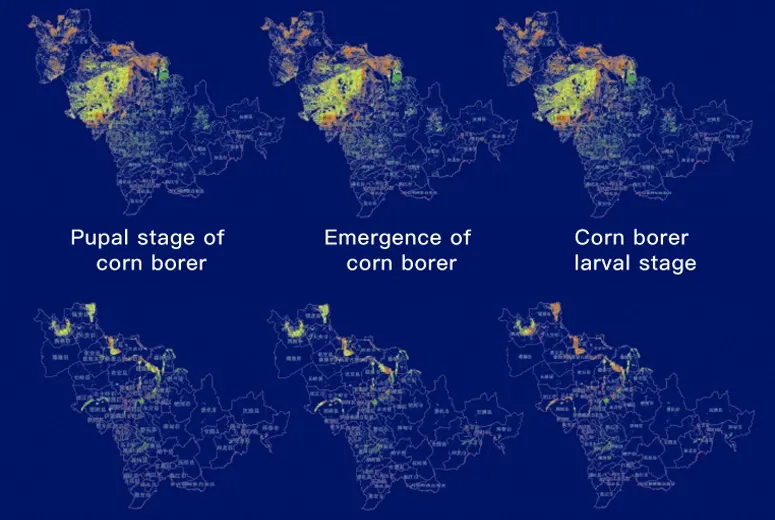
The main value of precision agriculture satellite imagery lies in its ability to provide detailed insights into crop conditions. Unlike traditional ground inspections, which cover limited areas and are time-consuming, agriculture satellite data offers a complete picture of large fields. Farmers can detect issues such as soil moisture imbalance, nutrient deficiency, and pest infestations before they cause significant damage.
For instance, using satellite imagery for agriculture allows farmers to identify stressed crops based on subtle changes in color and growth patterns. This targeted approach ensures that interventions such as irrigation, fertilization, or pest control are applied only where necessary. The result is greater efficiency, reduced costs, and less environmental impact. When combined with historical records from programs like Landsat agriculture, farm satellite imagery also provides a long-term view of land performance, helping farmers plan sustainable strategies.
Furthermore, the integration of satellite imagery for agriculture with modern digital platforms allows farmers to receive instant updates on their mobile devices. This makes decision-making faster and more precise, ensuring better crop outcomes and higher yields.
Using Precision Agriculture Satellite Imagery For Sustainable Farming
One of the most promising benefits of precision agriculture satellite imagery is its contribution to sustainability. Agriculture consumes significant amounts of water and chemicals, but with farm satellite imagery, these inputs can be applied in a targeted way. By analyzing satellite data for agriculture, farmers can determine exactly where irrigation is needed, preventing overuse of water resources.
Similarly, farming by satellite reduces unnecessary use of fertilizers and pesticides. With the help of agriculture satellite data, nutrient levels can be monitored field by field, and corrective measures can be implemented with accuracy. This not only cuts costs but also prevents soil degradation and chemical runoff into nearby ecosystems.
In addition, free agriculture satellite imagery available from sources like Landsat agriculture makes sustainability more accessible to small and medium-sized farms. Farmers who cannot afford commercial services can still utilize satellite data to improve productivity while protecting the environment. This democratization of technology is vital for ensuring that sustainability efforts are implemented globally, not just in wealthier regions.
The Future Of Farming By Satellite And Precision Imagery
Looking forward, the role of precision agriculture satellite imagery will continue to expand as technology advances. With the improvement of resolution and the use of machine learning, analysis of agriculture satellite data will become more automated and predictive. Farmers will soon receive real-time alerts about crop stress, pest infestations, or water shortages directly on their devices, enabling rapid responses.
Moreover, the combination of satellite imagery for agriculture with artificial intelligence will allow for predictive farming. This means farmers will not only react to problems but also anticipate them before they occur. For example, long-term data from Landsat agriculture and other satellites can be combined with weather models to predict how climate change will affect specific crops. This helps in developing adaptive strategies to secure food production.
The role of agricultural satellite systems in global food security is becoming increasingly clear. By making use of farm satellite imagery, countries can monitor national food supplies, predict shortages, and improve resource allocation. On a local scale, using satellite imagery for agriculture ensures that farmers adopt smarter practices while safeguarding natural resources.
Ultimately, farming by satellite will become the backbone of modern agriculture. With continuous improvements in precision agriculture satellite imagery, farmers will be better equipped to meet the demands of a growing global population while minimizing their environmental footprint. This fusion of technology, data, and sustainable practices ensures that agriculture remains productive, resilient, and capable of feeding future generations.