
- Afrikaans
- Albanian
- Amharic
- Arabic
- Armenian
- Azerbaijani
- Basque
- Belarusian
- Bengali
- Bosnian
- Bulgarian
- Catalan
- Cebuano
- China
- Corsican
- Croatian
- Czech
- Danish
- Dutch
- English
- Esperanto
- Estonian
- Finnish
- French
- Frisian
- Galician
- Georgian
- German
- Greek
- Gujarati
- Haitian Creole
- hausa
- hawaiian
- Hebrew
- Hindi
- Miao
- Hungarian
- Icelandic
- igbo
- Indonesian
- irish
- Italian
- Japanese
- Javanese
- Kannada
- kazakh
- Khmer
- Rwandese
- Korean
- Kurdish
- Kyrgyz
- Lao
- Latin
- Latvian
- Lithuanian
- Luxembourgish
- Macedonian
- Malgashi
- Malay
- Malayalam
- Maltese
- Maori
- Marathi
- Mongolian
- Myanmar
- Nepali
- Norwegian
- Norwegian
- Occitan
- Pashto
- Persian
- Polish
- Portuguese
- Punjabi
- Romanian
- Russian
- Samoan
- Scottish Gaelic
- Serbian
- Sesotho
- Shona
- Sindhi
- Sinhala
- Slovak
- Slovenian
- Somali
- Spanish
- Sundanese
- Swahili
- Swedish
- Tagalog
- Tajik
- Tamil
- Tatar
- Telugu
- Thai
- Turkish
- Turkmen
- Ukrainian
- Urdu
- Uighur
- Uzbek
- Vietnamese
- Welsh
- Bantu
- Yiddish
- Yoruba
- Zulu
Core Technologies for LEO Ride‑Sharing Launches: Upper Stage Systems and Orbital Maneuver Capability
The large-scale deployment of low Earth orbit (LEO) satellite constellations has driven ride‑sharing launches to become the mainstream launch model in the global commercial space industry. Ride‑sharing enables the deployment of multiple satellites in a single mission, drastically reducing the launch cost per satellite and improving the adaptability and utilization efficiency of launch vehicles. As the core carrier for ride‑sharing missions, the upper stage system directly determines the success, performance limits and boundary conditions of ride‑sharing launches through its propulsion performance, multiple-restart capability, orbital maneuverability and guidance, navigation and control (GNC) precision, serving as the key technical enabler for multi‑satellite and multi‑orbit deployment.
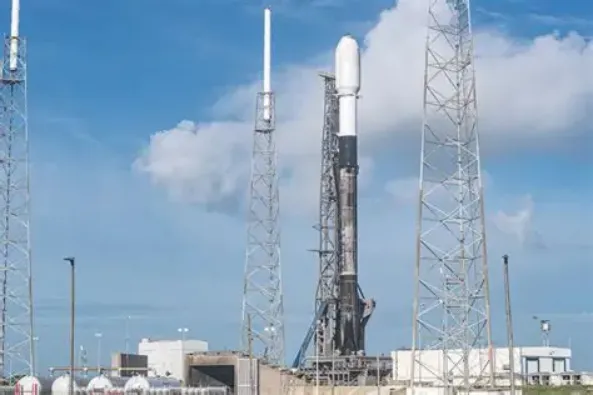
Core Technologies of Upper Stage Propulsion Systems and Multiple Restarts
The upper stage is an independent flight stage mounted atop the basic launch vehicle, equipped with complete guidance, navigation and control capabilities, and serves as the core equipment for multi‑orbit deployment in ride‑sharing launches. Its primary function is to continue on‑orbit flight using its own propulsion system after the basic booster stage completes its flight, delivering multiple payload satellites into distinct target orbits. Among its capabilities, the propulsion system and multiple‑restart technology form the fundamental foundation.
Upper stage propulsion systems mainly fall into two categories to suit different mission requirements:
- Storable Propellant Systems: Typically using dinitrogen tetroxide / hydrazine‑based propellants, they feature long‑term stowage at ambient temperature and hypergolic ignition upon contact with oxidizers. Adopting a simple pressure‑fed cycle, they require no complex ignition mechanisms or thermal insulation, making them ideal for multiple ignitions and long‑duration on‑orbit coasting.
- Cryogenic Propellant Systems: Mostly using cryogenic propellants such as liquid oxygen / liquid hydrogen, their key advantage lies in higher specific impulse performance. With the same propellant mass, they deliver stronger orbital maneuverability, suitable for heavy‑payload and complex missions demanding high ΔV.
Multiple‑restart technology represents the core capability for multi‑orbit deployment and a major technical threshold for ride‑sharing launches. On‑orbit multiple ignition capability defines the number of orbital maneuvers and distinct orbital deployments an upper stage can perform. For instance, Russia’s Briz‑M upper stage has a main engine thrust of 19.62 kN and supports up to 8 on‑orbit starts, supported by a backup ignition system to ensure reliability in complex missions.
The practical application of multiple‑restart technology faces several critical challenges, mainly including propellant management during long on‑orbit coasting phases, reliable engine reignition, and long‑term on‑orbit propellant storage. During extended orbital coasting, propellant stratification and vaporization must be prevented to guarantee dependable reignition across different flight phases. The industry’s dominant solution is the pressure‑fed propellant supply system, valued for its simple structure, stable combustion chamber pressure, absence of high‑temperature or high‑pressure moving parts, and compatibility with multiple restarts.
Orbital Maneuver Capability and ΔV Budget Design
Orbital maneuver capability underpins the differentiated multi‑satellite orbit deployment in ride‑sharing launches. The upper stage must provide sufficient velocity increment (ΔV) to precisely adjust orbital altitude, inclination and phase to meet the injection requirements of various satellites. Depending on mission complexity, upper stage ΔV capabilities are typically designed in the range of 1,500 m/s to 6,700 m/s, covering full scenarios from multi‑satellite deployment in the same orbit to differentiated deployment across multiple orbital planes.
Four major orbital maneuver strategies are employed for diverse ride‑sharing mission needs:
- Orbital Altitude Adjustment: Using multiple on‑orbit burns to deliver satellites into target orbits at different altitudes, the most common maneuver in ride‑sharing launches — for example, deploying one satellite group at 500 km and another at 800 km.
- Orbital Inclination Adjustment: Changing orbital inclination via plane‑crossing maneuvers, which consumes large amounts of propellant and is generally only implemented for primary mission requirements.
- Orbital Phase Adjustment: Positioning satellites at different phase positions within the same orbital altitude through precise flight‑time control, supporting constellation deployment with multiple satellites in a single orbital shell.
- Multi‑Plane Deployment: Injecting satellites into orbital planes of different inclinations, the most technically demanding mode that imposes extreme requirements on ΔV reserve, GNC performance and on‑orbit endurance.
ΔV budget design is a central part of upper stage system engineering, accounting for target orbit parameters, initial launch orbit deviations, on‑orbit atmospheric drag, propellant margins and other factors. Common industry practice reserves a 10%–20% propellant margin to counteract orbital errors, equipment anomalies and other contingencies, ensuring emergency maneuver capability and overall mission reliability.
Key Technologies of Autonomous Navigation and Guidance & Control
Upper stage guidance and control technology is essential for complex orbital maneuvers and precise satellite injection. Modern advanced upper stages are equipped with highly integrated autonomous navigation and guidance systems that can autonomously execute sophisticated orbital maneuvers and multi‑satellite deployment without ground intervention, greatly enhancing mission flexibility and reliability.
High‑precision attitude and orbit determination relies on the coordinated operation of multiple core sensors:
- Star Trackers: The primary device for attitude determination, which identifies stars by capturing celestial images and computes spatial attitude via image‑matching algorithms. Modern star trackers achieve arcsecond‑ to sub‑arcsecond‑level attitude accuracy (1 arcsecond ≈ 1/3600 degree), laying the foundation for precise orbital control.
- GNSS Receivers: Provide real‑time position and velocity data, working with star trackers to achieve high‑precision orbit determination.
- Inertial Measurement Units (IMUs): Deliver short‑term high‑precision attitude and acceleration data via accelerometers and gyroscopes, maintaining stable system operation when other sensors are disturbed and improving overall robustness.
For guidance algorithms, modern upper stages widely adopt iterative guidance, which continuously adjusts thrust direction and magnitude through real‑time on‑orbit computation to follow an optimal trajectory, counteracting injection errors and in‑flight disturbances to deliver satellites accurately into target orbits. Advanced upper stages further feature intelligent capabilities including autonomous trajectory planning, autonomous flight state determination and on‑orbit fault management. They can autonomously adapt flight plans in response to injection errors, equipment malfunctions and other contingencies to ensure successful multi‑satellite deployment.
ဆက်စပ်ထုတ်ကုန်များ






ဆက်စပ်သတင်း





