
- Afrikaans
- Albanian
- Amharic
- Arabic
- Armenian
- Azerbaijani
- Basque
- Belarusian
- Bengali
- Bosnian
- Bulgarian
- Catalan
- Cebuano
- China
- Corsican
- Croatian
- Czech
- Danish
- Dutch
- English
- Esperanto
- Estonian
- Finnish
- French
- Frisian
- Galician
- Georgian
- German
- Greek
- Gujarati
- Haitian Creole
- hausa
- hawaiian
- Hebrew
- Hindi
- Miao
- Hungarian
- Icelandic
- igbo
- Indonesian
- irish
- Italian
- Japanese
- Javanese
- Kannada
- kazakh
- Khmer
- Rwandese
- Korean
- Kurdish
- Kyrgyz
- Lao
- Latin
- Latvian
- Lithuanian
- Luxembourgish
- Macedonian
- Malgashi
- Malay
- Malayalam
- Maltese
- Maori
- Marathi
- Mongolian
- Myanmar
- Nepali
- Norwegian
- Norwegian
- Occitan
- Pashto
- Persian
- Polish
- Portuguese
- Punjabi
- Romanian
- Russian
- Samoan
- Scottish Gaelic
- Serbian
- Sesotho
- Shona
- Sindhi
- Sinhala
- Slovak
- Slovenian
- Somali
- Spanish
- Sundanese
- Swahili
- Swedish
- Tagalog
- Tajik
- Tamil
- Tatar
- Telugu
- Thai
- Turkish
- Turkmen
- Ukrainian
- Urdu
- Uighur
- Uzbek
- Vietnamese
- Welsh
- Bantu
- Yiddish
- Yoruba
- Zulu
Free Agriculture Satellite Imagery and Its Benefits for Modern Farming
The agricultural industry is experiencing a revolution driven by advanced technology and digital tools. Among these innovations, free agriculture satellite imagery has emerged as a powerful resource that is transforming the way farmers monitor and manage their land. By offering access to agriculture satellite data, farmers can make better decisions about irrigation, fertilization, and crop health without relying solely on costly commercial services. With systems like Landsat agriculture and the rise of farming by satellite, even small and medium-sized farms are gaining access to tools that were once reserved for large agribusinesses. The increasing use of satellite imagery for agriculture, especially when it comes at no cost, is democratizing precision farming and enabling sustainable practices across the globe.
The Importance Of Free Agriculture Satellite Imagery
The availability of free agriculture satellite imagery is a game-changer because it reduces barriers to entry for farmers and agricultural organizations. Farmers who once relied only on personal observation or expensive private services now have access to high-quality satellite data for agriculture at no charge. This allows them to study crop health, soil conditions, and vegetation growth with tools that are accessible from anywhere in the world.
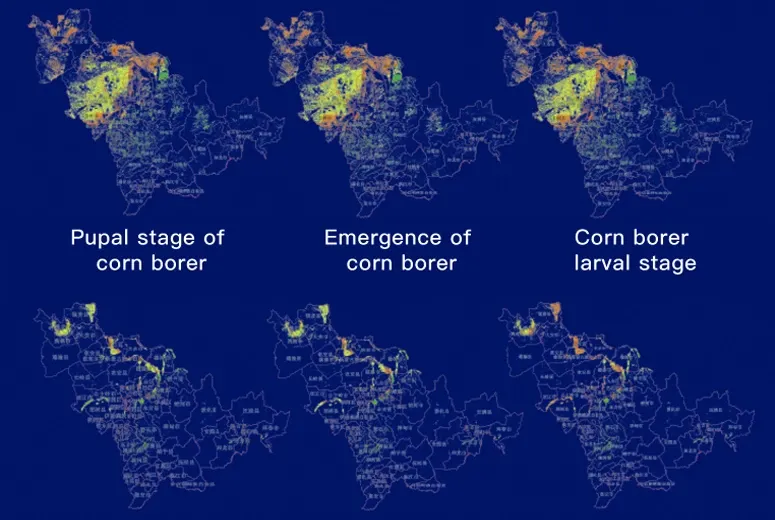
amin'ny precision agriculture satellite imagery, farmers can detect subtle changes in crop color, soil moisture, and plant vigor before problems become visible to the naked eye. Free resources like Landsat agriculture provide decades of historical data as well as current imagery, helping researchers and farmers track long-term trends. The ability to compare farm satellite imagery across seasons or years provides invaluable insights into climate patterns, crop rotation, and land use.
Most importantly, using satellite imagery for agriculture ensures that decisions are based on accurate, scientific data rather than guesswork. This improves productivity, reduces waste, and allows for more sustainable use of natural resources such as water and fertilizers.
Practical Applications Of Free Agriculture Satellite Imagery
The use of free agriculture satellite imagery goes far beyond simple crop observation. Farmers can apply agriculture satellite data to optimize almost every aspect of production. For example, when combined with weather forecasts, farming by satellite allows growers to plan irrigation schedules more efficiently. Fields showing signs of water stress on farm satellite imagery can be prioritized, while areas with sufficient moisture can be left untouched, conserving water resources.
Similarly, satellite imagery for agriculture helps in identifying pest infestations and disease outbreaks. Subtle variations in plant health detected through precision agriculture satellite imagery can alert farmers to the presence of pests even before visible damage occurs. Early intervention saves crops and prevents the spread of disease across entire fields.
Another major benefit is land management. With the support of satellite data for agriculture, farmers can assess soil fertility and identify nutrient-deficient areas. Targeted fertilization reduces chemical use and improves overall soil health. The historical records from Landsat agriculture also allow long-term monitoring of land-use changes, making it possible to evaluate whether farming practices are improving soil productivity over time.
Even smallholder farmers in developing regions now use free agriculture satellite imagery to strengthen food security. With mobile applications and easy-to-use software, they can access agriculture satellite data that was once unavailable to them. This levels the playing field between small farms and large commercial agricultural operations.
The Future Of Farming By Satellite With Free Data
Looking to the future, the role of free agriculture satellite imagery will only grow stronger. As new satellites are launched, the resolution of images will improve, making precision agriculture satellite imagery more effective for identifying detailed crop variations. This will enable farmers to make even more targeted and efficient decisions.
The integration of artificial intelligence with satellite imagery for agriculture will also enhance how data is processed. Automated analysis of agriculture satellite data can provide real-time alerts to farmers about crop stress, nutrient deficiencies, or irrigation needs. By combining AI with farm satellite imagery, agriculture will become increasingly data-driven, helping farmers adapt quickly to environmental challenges.
Another promising area is climate monitoring. Through Landsat agriculture and other satellite programs, governments and organizations can use satellite data for agriculture to study long-term climate trends and their effects on crop yields. This will help develop strategies for combating climate change, ensuring global food supply remains stable even under shifting weather patterns.
Finally, the democratization of data through free agriculture satellite imagery encourages collaboration. Farmers, researchers, and policymakers can all work from the same data sets, improving communication and decision-making. This shared approach enhances agricultural resilience, ensuring that farming communities can withstand the pressures of population growth, climate variability, and limited natural resources.











