- Afrikaans
- Albanian
- Amharic
- Arabic
- Armenian
- Azerbaijani
- Basque
- Belarusian
- Bengali
- Bosnian
- Bulgarian
- Catalan
- Cebuano
- China
- Corsican
- Croatian
- Czech
- Danish
- Dutch
- English
- Esperanto
- Estonian
- Finnish
- French
- Frisian
- Galician
- Georgian
- German
- Greek
- Gujarati
- Haitian Creole
- hausa
- hawaiian
- Hebrew
- Hindi
- Miao
- Hungarian
- Icelandic
- igbo
- Indonesian
- irish
- Italian
- Japanese
- Javanese
- Kannada
- kazakh
- Khmer
- Rwandese
- Korean
- Kurdish
- Kyrgyz
- Lao
- Latin
- Latvian
- Lithuanian
- Luxembourgish
- Macedonian
- Malgashi
- Malay
- Malayalam
- Maltese
- Maori
- Marathi
- Mongolian
- Myanmar
- Nepali
- Norwegian
- Norwegian
- Occitan
- Pashto
- Persian
- Polish
- Portuguese
- Punjabi
- Romanian
- Russian
- Samoan
- Scottish Gaelic
- Serbian
- Sesotho
- Shona
- Sindhi
- Sinhala
- Slovak
- Slovenian
- Somali
- Spanish
- Sundanese
- Swahili
- Swedish
- Tagalog
- Tajik
- Tamil
- Tatar
- Telugu
- Thai
- Turkish
- Turkmen
- Ukrainian
- Urdu
- Uighur
- Uzbek
- Vietnamese
- Welsh
- Bantu
- Yiddish
- Yoruba
- Zulu
Satellite Radar Altimeter And Its Role In Global Observation
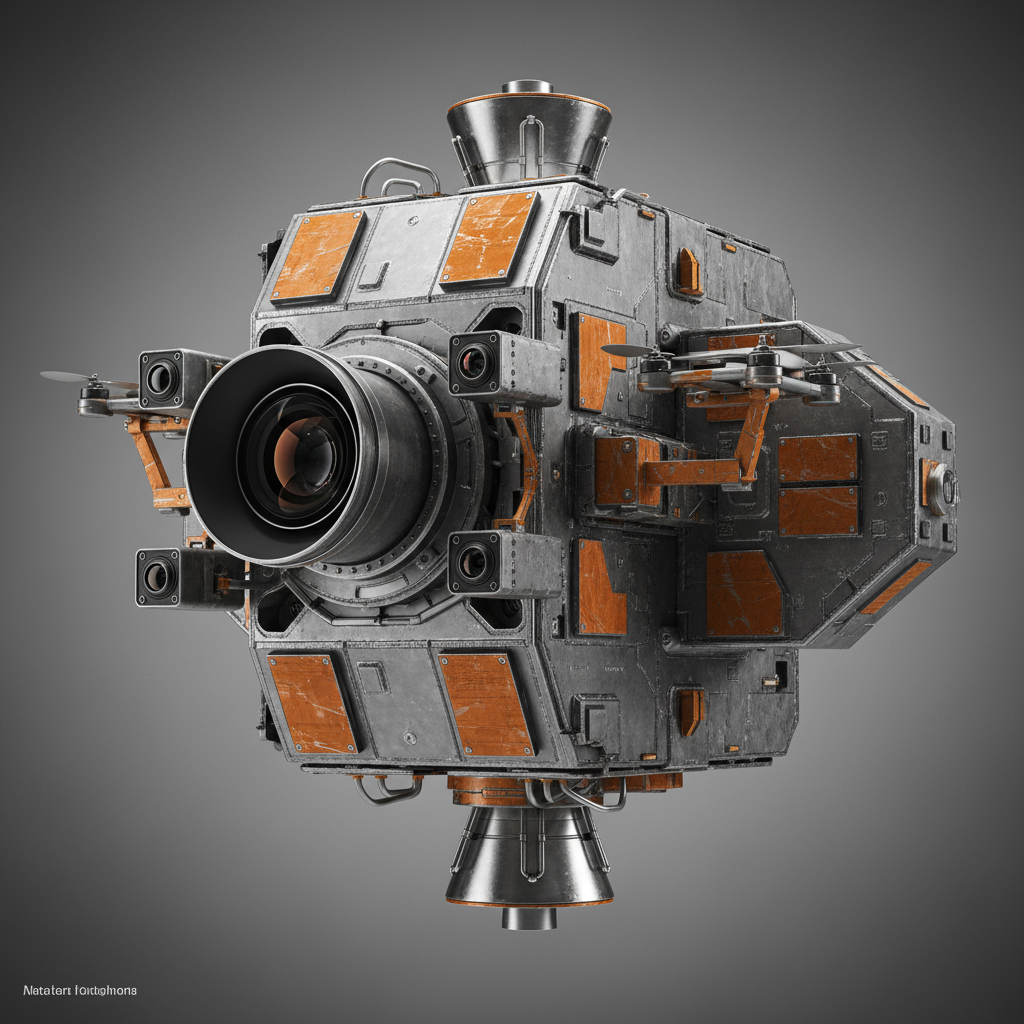
The satellite radar altimeter is a highly specialized instrument designed to measure surface elevation and distance with extreme precision. Unlike traditional sensors, it uses radar waves to determine the exact distance between the satellite and Earth’s surface. This technology is central to the broader field of radar altimetry, which has become a cornerstone of environmental monitoring, oceanography, and climate research. Both the radar altimeter satellite and the altimeter satellite are key contributors to long-term datasets that help scientists understand the dynamic processes of our planet.
Understanding How A Satellite Radar Altimeter Works
The principle of a satellite radar altimeter is straightforward yet powerful. It transmits a radar signal to Earth and records the time it takes for the echo to return. This measurement, when adjusted for signal speed and atmospheric effects, reveals surface height with centimeter-level accuracy.
Through this process, radar altimetry allows researchers to observe oceans, land, and ice continuously. Unlike optical instruments, a radar altimeter satellite functions day and night, unaffected by cloud cover. This reliability makes altimeter satellites indispensable for global monitoring.
The satellite radar altimeter is not limited to scientific use; it also supports navigation, aviation, and disaster response. Its precision makes it a trusted tool across industries.
Applications Of Radar Altimeter Satellites In Ocean Studies
One of the most impactful uses of the satellite radar altimeter lies in oceanography. By measuring sea surface height, a radar altimeter satellite provides insights into tides, currents, and wave patterns. These data are crucial for shipping routes, offshore operations, and coastal protection.
More importantly, radar altimetry enables accurate monitoring of sea-level rise. Long-term records from altimeter satellites show how global warming accelerates melting ice and thermal expansion of oceans. Without the precision of the satellite radar altimeter, such subtle changes would go unnoticed.
Additionally, the data collected by radar altimeter satellites assist in predicting extreme weather events. By tracking ocean circulation, scientists can forecast hurricanes and storm surges with greater accuracy, improving public safety.
Monitoring Polar Ice With Satellite Radar Altimeters
The polar regions are undergoing dramatic changes, and satellite radar altimeters provide crucial measurements. These instruments can detect variations in ice sheet thickness, helping researchers assess melting rates. An altimeter satellite records seasonal changes, revealing how glaciers expand or shrink over time.
By applying radar altimetry to Antarctica and Greenland, scientists estimate the contribution of melting ice to global sea-level rise. A radar altimeter satellite can also detect the formation of melt ponds and surface cracks, offering early warnings about structural instability in ice shelves.
The precision of satellite radar altimeters makes them indispensable for climate studies and environmental planning.
Land Applications Of Radar Altimetry
Beyond oceans and ice, satellite radar altimeters also play a vital role on land. Ground subsidence caused by groundwater extraction, mining, or tectonic activity can be monitored with centimeter accuracy. An altimeter satellite provides continuous updates, which are essential for infrastructure safety and urban planning.
In volcanic regions, radar altimetry detects surface uplift, allowing early identification of magma movement. Similarly, after earthquakes, data from a radar altimeter satellite can reveal shifts in land elevation, helping assess damage and recovery needs.
These land-based applications highlight the versatility of the satellite radar altimeter, extending its impact far beyond traditional oceanography.
The Future Of Satellite Radar Altimetry
The next generation of satellite radar altimeters promises even greater precision and broader coverage. Engineers are working on systems that combine radar with optical and thermal sensors, creating a more comprehensive monitoring platform.
Future radar altimeter satellites will also provide faster data transmission, enabling near real-time analysis for disaster response. As global cooperation expands, networks of altimeter satellites will ensure that no region of Earth remains unobserved.
Integration with artificial intelligence will enhance the interpretation of radar altimetry data, improving predictions of sea-level rise, polar melting, and tectonic activity. This advancement ensures that the satellite radar altimeter will remain a cornerstone of global observation.
Conclusion
The satellite radar altimeter is far more than a scientific instrument—it is a gateway to understanding Earth’s changing systems. Through radar altimetry, it provides precise and reliable measurements of oceans, land, and ice. Supported by both the radar altimeter satellite and the altimeter satellite, this technology delivers data critical for climate research, disaster management, and navigation. As future innovations emerge, the role of the satellite radar altimeter will only expand, ensuring humanity has the tools needed to monitor, predict, and adapt to the challenges of a rapidly changing world.