Sophie Lee
Environmental Scientist, South Korea

Perovskite Solar Arrays
Cov khoom piv txwv
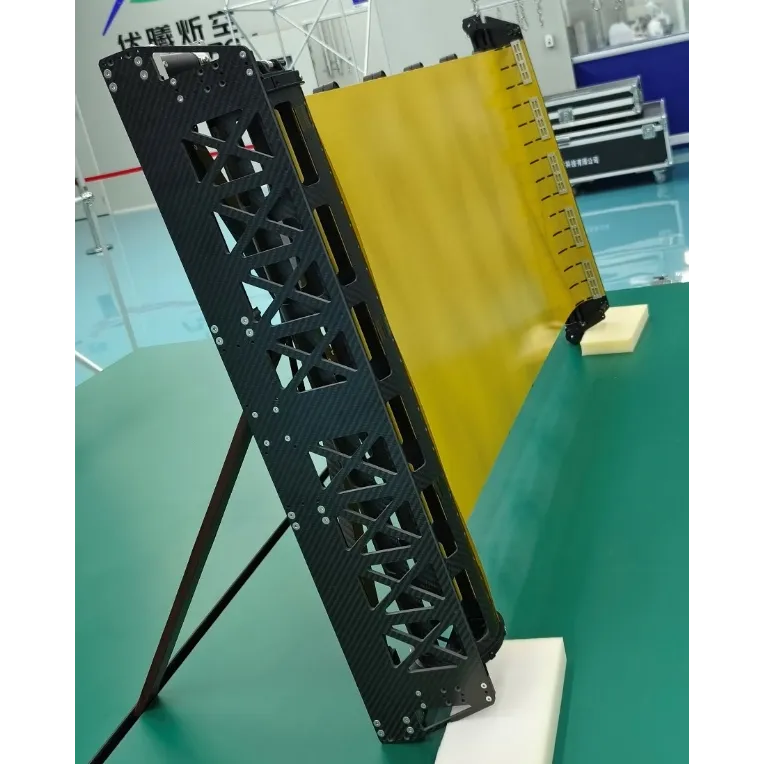
Tsau Rigid Solar Vaj Huam Sib Luag
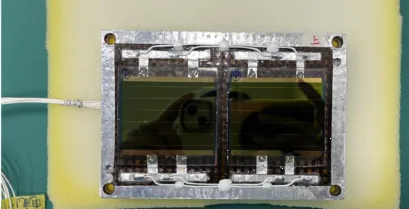
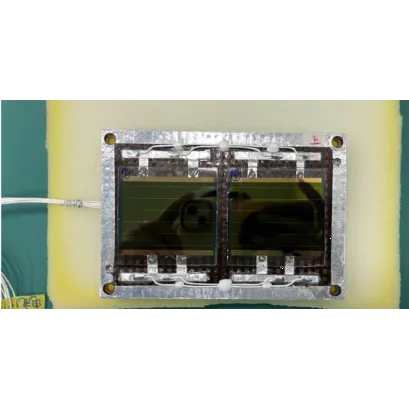
20% kev ua tau zoo (kev ntsuas tiag tiag @ AM1.5) ib leeg-txheej Calcium-titanium-mineral solar cell;
PCB boards, carbon fiber aluminium honeycomb substrates, PI films, thiab lwm yam;
-100 ℃ ~ + 100 ℃ ua haujlwm kub;
Kev ntsuas lub neej ncua ntawm 3 xyoos lossis tsawg dua.
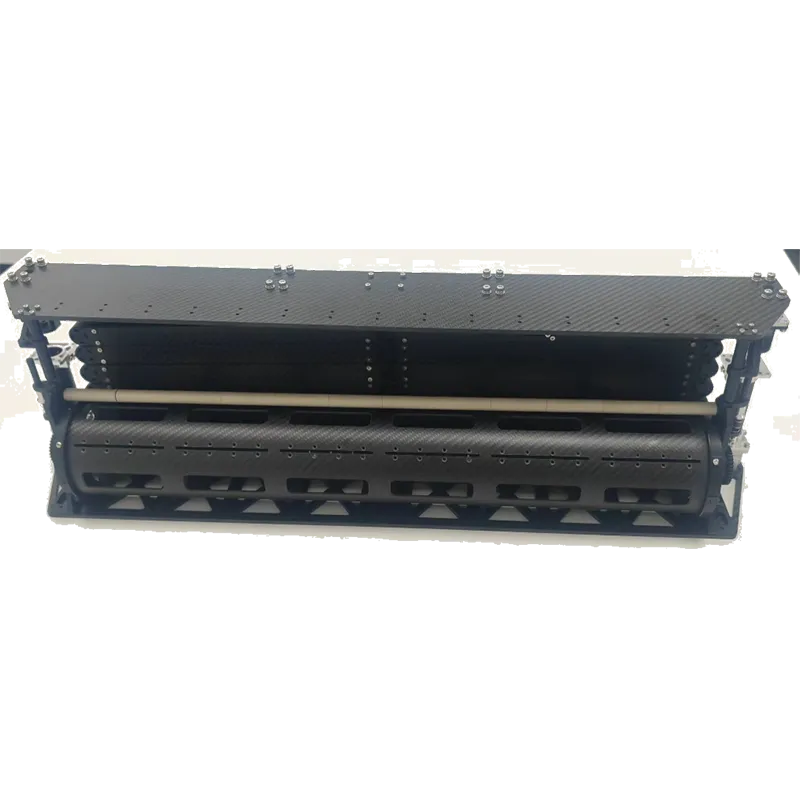
Reel Flex Vaj Huam Sib Luag
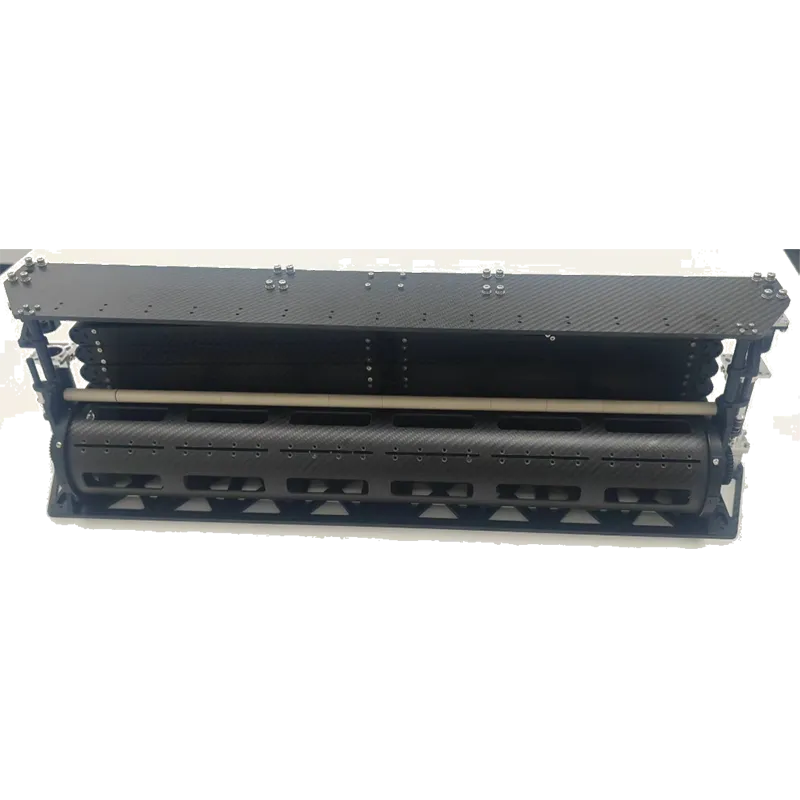
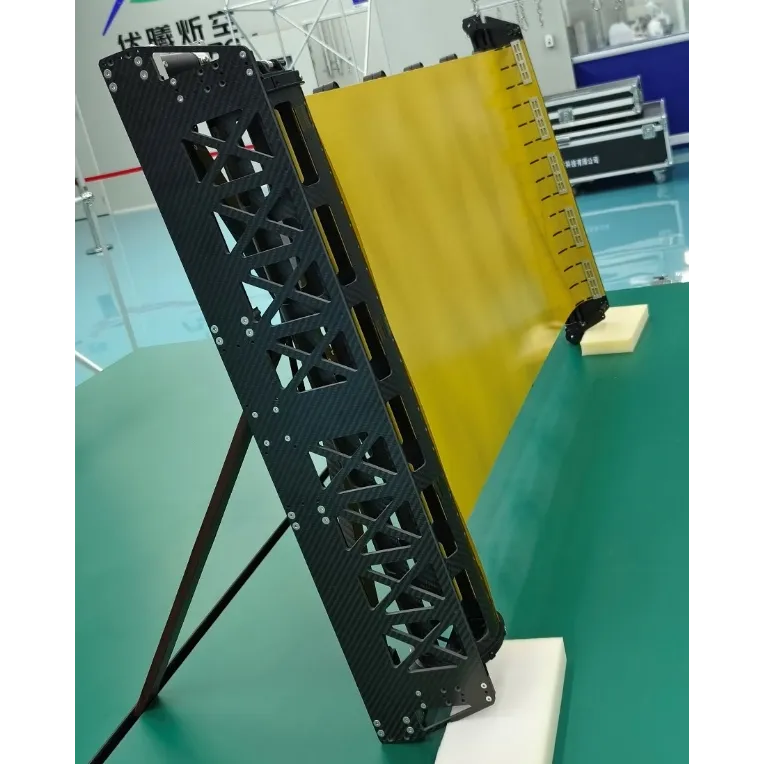
Calcium-titanium-mineral nyias-zaj duab xis hnub ci hlwb tau npaj ua ke ntawm PI membranes;
-100 ℃ ~ + 100 ℃ ua haujlwm kub;
Kev ntsuas lub neej ncua ntawm 7 xyoo lossis tsawg dua.
Calcium-Titanium-Mineral Solar Arrays yog cov txheej txheem photovoltaic siab heev tsim los siv lub hnub ci zog kom zoo los ntawm kev siv cov khoom sib xyaw tshwj xeeb ntawm calcium, titanium, thiab cov khoom siv ntxhia hauv kev tsim kho lub hnub ci vaj huam sib luag. Cov arrays no yog engineered los muab cov kev ua tau zoo ntawm lub zog hloov dua siab tshiab nrog kev txhim kho durability, ua rau lawv tsim nyog rau ntau yam kev siv los ntawm thaj chaw hnub ci kev teeb tsa mus rau kev lag luam thiab chaw siv hluav taws xob. Cov ntaub ntawv calcium-titanium-mineral muaj kev txhim kho conductivity, thermal stability, thiab tsis kam mus degradation nyob rau hauv ib puag ncig huab cua, kom ntseeg tau ntev, txhim khu kev qha kev ua tau zoo. Cov hnub ci arrays no kuj suav nrog cov qauv hnyav thiab hloov tau yooj yim, uas yooj yim rau kev teeb tsa yooj yim thiab tuaj yeem hloov kho rau kev teeb tsa sib txawv. Nrog cov txheej txheem txheej txheej txheej txheem thiab cov txheej txheem tshiab ntawm tes, cov arrays no tau ua kom zoo rau ob qho tib si kev siv hluav taws xob thiab kev cuam tshuam ib puag ncig, muab cov kev daws teeb meem zoo rau kev tsim hluav taws xob.
perovskite solar
perovskite solar cell for sale
perovskite solar cells companies
perovskite solar efficiency
perovskite solar technology
perovskite solar
perovskite solar cell for sale
perovskite solar cells companies
perovskite solar efficiency
perovskite solar technology
tshawb nrhiav nws lub peev xwm rau kev daws teeb meem hluav taws xob tauj dua tshiab.
Tiv tauj pebA perovskite solar cell represents a revolutionary advancement in solar technology, characterized by its unique crystal structure that enables highly efficient light absorption and conversion. Unlike traditional silicon solar cells, perovskite cells utilize a material known as a perovskite structured compound, which is both lightweight and cost-effective. This breakthrough has paved the way for more flexible, efficient, and potentially lower-cost solar panels, making solar energy accessible to wider applications including remote sensing satellites, UAVs, and other high-tech equipment.
The perovskite solar cell efficiency is one of the primary reasons for its growing popularity. Perovskite cells have demonstrated rapid improvements, quickly rivaling or even surpassing conventional silicon cells in laboratory settings. This efficiency directly translates into better power output for smaller, lighter solar panels, an essential factor for aerospace and satellite applications. The potential for creating thin, flexible perovskite solar panels enables innovative designs that can be integrated into irregular surfaces, opening new avenues for clean energy deployment.
For those wondering, are perovskite solar cells commercially available? The answer is increasingly yes. While the technology is still emerging, leading perovskite solar cell manufacturers are beginning to scale production and refine stability challenges, making these cells more reliable for commercial use. When considering a purchase, it’s worth exploring the latest developments and products, many of which come with guarantees of performance and durability. Reputable suppliers, including firms with strong industrial and aerospace backgrounds like SpaceNavi, offer excellent options for buyers looking to invest in cutting-edge perovskite solar cell for sale.
In satellite technology and high-altitude UAV missions, maximizing energy conversion efficiency is vital. Perovskite solar cell efficiency is particularly beneficial in these applications because it enables greater power output from smaller solar arrays. This means satellites and long-endurance UAVs can be equipped with lighter and more compact power systems without sacrificing performance.
For satellites, every gram counts. The use of perovskite solar panels helps reduce payload weight, enabling the launch of more sophisticated instruments or increasing the satellite’s operational lifespan. Their ability to function in challenging environments, including high-altitude and space, makes perovskite cells a promising choice for next-generation remote sensing and communication satellites.
Furthermore, the rapid development by leading perovskite solar cell manufacturers has led to improved stability and longevity, addressing previous concerns about degradation. This progress means perovskite solar cells for sale are increasingly viable for commercial satellite applications. Their integration supports real-time data transmission and autonomous operation by providing reliable power, crucial for complex missions in space or stratosphere.
Autonomous and remote operation capabilities reduce the need for human intervention in UAV and satellite missions, making power reliability even more important. Perovskite solar cells provide a lightweight, efficient, and durable energy source that supports prolonged autonomous operation by continuously powering navigation systems, sensors, and communication devices.
The extended mission times made possible by perovskite solar cell efficiency help reduce operational costs by minimizing the frequency of landings or recharging cycles. This reliability also enhances safety by enabling missions in remote or hazardous environments without risking human operators.
When considering perovskite solar arrays for autonomous platforms, selecting perovskite solar cell manufacturers with experience in aerospace applications ensures the panels meet strict quality standards. Choosing from available perovskite solar cell for sale options designed for these demands means investing in technology that supports the future of remote sensing and unmanned missions.
The question of whether it is worth waiting for perovskite solar panels is a common one among energy professionals, tech enthusiasts, and commercial buyers alike. Perovskite solar technology is rapidly advancing, offering remarkable promises such as higher efficiency, lightweight design, and flexible application. However, the decision to wait or invest now depends on balancing current market availability, performance needs, and the technology’s ongoing maturation.
Perovskite solar cells have demonstrated impressive lab-scale efficiency improvements in recent years, often surpassing traditional silicon-based solar cells in converting sunlight into electricity. This means that, in theory, panels built with perovskite materials can generate more power from the same surface area—a crucial advantage for limited-space applications like rooftops, satellites, and UAVs. Moreover, their ability to be manufactured on flexible substrates offers design freedom that traditional panels lack. For users requiring cutting-edge performance, waiting for perovskite solar panels could unlock benefits such as increased energy yield and lighter equipment.
However, the technology is still in a phase of commercial scaling and durability enhancement. Many perovskite solar cell manufacturers are addressing challenges such as long-term stability, moisture sensitivity, and large-scale manufacturing consistency. While perovskite solar cells for sale are beginning to appear on the market, many early products cater to niche applications or are integrated as tandem cells combined with silicon. For users with immediate solar needs or those looking for proven, long-lasting solutions, existing silicon-based panels might remain preferable for now.
That said, waiting for next-generation perovskite solar panels may well be a smart choice if your application values weight reduction, flexibility, or ultra-high efficiency. Industries such as aerospace, remote sensing satellites, and high-end UAVs stand to benefit first, given their specific operational demands and the rapid pace of innovation in these fields. With companies actively improving manufacturing and stability, commercial availability is expanding steadily, making perovskite solar panels increasingly accessible.
In conclusion, whether to wait depends on your timeline and priorities. If you need reliable solar power solutions today, established silicon panels are a safe bet. But if you’re looking to leverage emerging perovskite solar technology for superior performance and can afford some patience, the evolving market of perovskite solar cells for sale promises exciting possibilities very soon.

Sophie Lee
Environmental Scientist, South Korea

Julia Schmidt
Environmental Engineer, Austria

Sofia Alvarez
Architect, Spain

Ahmed El-Sayed
Project Manager, Egypt