- Afrikaans
- Albanian
- Amharic
- Arabic
- Armenian
- Azerbaijani
- Basque
- Belarusian
- Bengali
- Bosnian
- Bulgarian
- Catalan
- Cebuano
- China
- Corsican
- Croatian
- Czech
- Danish
- Dutch
- English
- Esperanto
- Estonian
- Finnish
- French
- Frisian
- Galician
- Georgian
- German
- Greek
- Gujarati
- Haitian Creole
- hausa
- hawaiian
- Hebrew
- Hindi
- Miao
- Hungarian
- Icelandic
- igbo
- Indonesian
- irish
- Italian
- Japanese
- Javanese
- Kannada
- kazakh
- Khmer
- Rwandese
- Korean
- Kurdish
- Kyrgyz
- Lao
- Latin
- Latvian
- Lithuanian
- Luxembourgish
- Macedonian
- Malgashi
- Malay
- Malayalam
- Maltese
- Maori
- Marathi
- Mongolian
- Myanmar
- Nepali
- Norwegian
- Norwegian
- Occitan
- Pashto
- Persian
- Polish
- Portuguese
- Punjabi
- Romanian
- Russian
- Samoan
- Scottish Gaelic
- Serbian
- Sesotho
- Shona
- Sindhi
- Sinhala
- Slovak
- Slovenian
- Somali
- Spanish
- Sundanese
- Swahili
- Swedish
- Tagalog
- Tajik
- Tamil
- Tatar
- Telugu
- Thai
- Turkish
- Turkmen
- Ukrainian
- Urdu
- Uighur
- Uzbek
- Vietnamese
- Welsh
- Bantu
- Yiddish
- Yoruba
- Zulu
nuacht
Off Axis Collimator: Enhancing Optical Precision
In the field of optics and photonics, precision is everything. One of the most effective tools developed for improving light alignment is the off axis collimator. Unlike traditional collimators that align beams directly along a central optical axis, the off axis collimator operates at an angle, reducing optical aberrations and enhancing system flexibility. This design makes it especially valuable in advanced optical systems, research laboratories, and communication technologies.
By integrating modern innovations such as the reflective collimator and the reflective fiber collimator, the role of the off axis collimator has expanded, providing more options for industries that demand high accuracy. This article will explore how these collimators function, their differences, and their importance in today’s technological landscape.
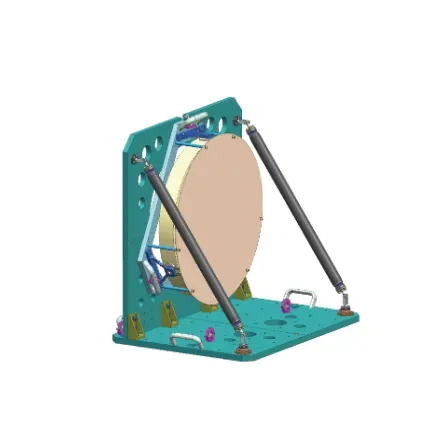
Understanding An Off Axis Collimator
An off axis collimator works by aligning incoming light into parallel beams without forcing the beam to travel directly along the central axis of the system. This configuration minimizes distortion, reduces unwanted reflections, and allows for more compact instrument design.
In astronomy, the off axis collimator is used in telescopes and spectrographs to improve image clarity. By eliminating central obstructions, it allows for a clearer field of view and enhanced resolution. Similarly, in scientific instruments, the off axis collimator reduces aberrations, ensuring that data collected is accurate and consistent.
The versatility of the off axis collimator makes it one of the most valuable tools in the broader family of optical collimation systems.
Reflective Collimator: Precision Through Reflection
Closely related to off-axis designs is the reflective collimator, which relies on mirrors rather than lenses. A reflective collimator eliminates chromatic aberrations caused by lenses because mirrors reflect all wavelengths equally. This feature makes it highly desirable in systems that deal with a broad spectrum of light.
For example, spectroscopic instruments often rely on the reflective collimator for high-precision measurements. In addition, laser systems use the reflective collimator to align beams without wavelength distortion. Its stability and accuracy make it one of the most important complements to the off axis collimator.
Reflective Fiber Collimator: Bridging Optics And Communication
The reflective fiber collimator combines the advantages of reflective optics with fiber optic technology. By collimating light directly from an optical fiber, the reflective fiber collimator ensures minimal signal loss and high transmission efficiency.
Telecommunication networks, medical imaging devices, and laser systems all benefit from the reflective fiber collimator. Its ability to handle broadband wavelengths while maintaining stability makes it ideal for next-generation communication systems.
When paired with an off axis collimator, the reflective fiber collimator contributes to highly adaptive designs that balance precision, efficiency, and versatility.
Applications Of Off Axis Collimator Systems
The off axis collimator is used in many industries due to its adaptability and precision. Common applications include:
Astronomy – Telescopes and observatories use the off axis collimator to improve image resolution while avoiding obstruction from central mirrors.
Spectroscopy – Instruments with the off axis collimator can measure wavelengths with higher accuracy.
Laser optics – Paired with a reflective collimator, these systems produce stable and precise beams.
Telecommunications – Combining the off axis collimator with the reflective fiber collimator ensures accurate signal transmission.
Each of these applications highlights how collimators improve scientific measurement, imaging, and communication systems.
Comparing Collimator Designs
While the off axis collimator provides angular flexibility and reduces central obstructions, the reflective collimator eliminates chromatic aberrations, and the reflective fiber collimator ensures efficient data transfer. Together, they represent three unique solutions within optical technology.
The off axis collimator: best for systems needing clear imaging and flexible alignment.
The reflective collimator: best for eliminating wavelength distortion across broad light spectrums.
The reflective fiber collimator: best for integrating collimation directly into fiber optic systems.
By understanding the strengths of each, engineers can select the most appropriate design for their application.
The Future Of Collimation Technology
As optical systems advance, collimation technology continues to evolve. The off axis collimator is being integrated into more compact devices, making it easier to achieve high performance in smaller systems. At the same time, the reflective collimator is seeing innovations in mirror coatings that improve durability and reflectivity.
Meanwhile, the reflective fiber collimator is becoming increasingly important as global communication systems expand. The demand for faster, more reliable internet and data transfer makes this design indispensable.
Future designs may combine features of all three—an off axis collimator that also uses reflective technology and integrates directly with fibers, offering maximum adaptability.
Conclusion
The off axis collimator represents a leap forward in optical alignment, minimizing distortion and enhancing accuracy in critical systems. Supported by the reflective collimator and the reflective fiber collimator, it forms a trio of powerful tools that serve industries from astronomy to telecommunications.
Each type has unique strengths, yet together they reflect a common goal: achieving precision in light management. As technology continues to progress, the importance of the off axis collimator, reflective collimator, and reflective fiber collimator will only increase, shaping the future of optical science and global communication.