- Afrikaans
- Albanian
- Amharic
- Arabic
- Armenian
- Azerbaijani
- Basque
- Belarusian
- Bengali
- Bosnian
- Bulgarian
- Catalan
- Cebuano
- China
- Corsican
- Croatian
- Czech
- Danish
- Dutch
- English
- Esperanto
- Estonian
- Finnish
- French
- Frisian
- Galician
- Georgian
- German
- Greek
- Gujarati
- Haitian Creole
- hausa
- hawaiian
- Hebrew
- Hindi
- Miao
- Hungarian
- Icelandic
- igbo
- Indonesian
- irish
- Italian
- Japanese
- Javanese
- Kannada
- kazakh
- Khmer
- Rwandese
- Korean
- Kurdish
- Kyrgyz
- Lao
- Latin
- Latvian
- Lithuanian
- Luxembourgish
- Macedonian
- Malgashi
- Malay
- Malayalam
- Maltese
- Maori
- Marathi
- Mongolian
- Myanmar
- Nepali
- Norwegian
- Norwegian
- Occitan
- Pashto
- Persian
- Polish
- Portuguese
- Punjabi
- Romanian
- Russian
- Samoan
- Scottish Gaelic
- Serbian
- Sesotho
- Shona
- Sindhi
- Sinhala
- Slovak
- Slovenian
- Somali
- Spanish
- Sundanese
- Swahili
- Swedish
- Tagalog
- Tajik
- Tamil
- Tatar
- Telugu
- Thai
- Turkish
- Turkmen
- Ukrainian
- Urdu
- Uighur
- Uzbek
- Vietnamese
- Welsh
- Bantu
- Yiddish
- Yoruba
- Zulu
nuacht
Beam Collimator: A Core Member Of Collimator Types
Optical systems across science and technology rely on precision, and at the center of this precision is a collimator. By aligning light or radiation into parallel paths, collimators reduce errors and enhance clarity in data collection and imaging. Among the many collimator types, the beam collimator is one of the most widely used and essential.
This article explores the function of the beam collimator, its relationship with the adjustable collimator and adjustable fiber collimator, and its role in advanced scientific tools like the collimator of a spectroscope and the collimator of spectrometer. It also examines the growing market for collimator for sale, reflecting how central these devices have become to modern applications.
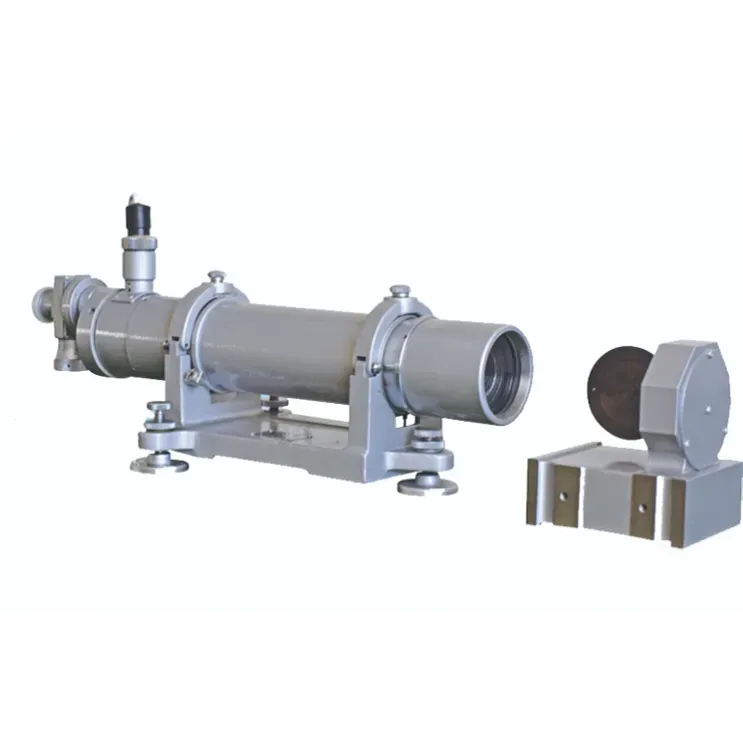
A Collimator: Understanding The Foundation
To appreciate the significance of the beam collimator, it is important first to understand what a collimator is. Simply put, a collimator ensures that light, X-rays, or other beams travel in parallel. This alignment is crucial in research, imaging, and communication, where even slight divergence can cause significant errors.
From medical diagnostics to physics laboratories, a collimator plays a foundational role in ensuring accuracy. Whether it is the collimator of spectrometer, the collimator of a spectroscope, or a general beam collimator, all serve the same purpose: controlling and refining beams for maximum precision.
Collimator Types: A Wide Spectrum Of Designs
Over time, engineers have created many different collimator types, each designed to meet specific requirements. Common examples include:
Beam collimator: Creates a stable, parallel beam for imaging, radiation studies, and lasers.
Adjustable collimator: Offers flexibility to alter beam size and focus as needed.
Adjustable fiber collimator: Designed for fiber optic systems to optimize data transmission.
Collimator of a spectroscope: Ensures that light enters the spectroscope in parallel for accurate analysis.
Collimator of spectrometer: A crucial part of spectrometers, maintaining measurement precision.
This variety of collimator types ensures that different industries and research fields can achieve the specific results they require.
Beam Collimator: Accuracy And Stability
The beam collimator stands out because of its ability to maintain highly stable and consistent beams. Unlike the adjustable collimator, which focuses on flexibility, the beam collimator is built for reliability.
In physics laboratories, the beam collimator is essential for experiments involving lasers or diffraction. Its parallel beams allow scientists to collect accurate data without distortion. In medical imaging, the beam collimator ensures that radiation beams are focused, producing clearer images that enhance diagnostic accuracy.
Because of its stability, the beam collimator is one of the most frequently used collimator types worldwide.
Adjustable Collimator: Supporting Versatility
While the beam collimator ensures consistency, the adjustable collimator offers versatility. The adjustable collimator allows scientists and engineers to alter beam size and focus, adapting to multiple experiments or applications.
In laboratories where conditions often change, the adjustable collimator provides an efficient solution. Instead of switching devices, researchers can rely on one instrument to achieve different beam configurations.
Together, the beam collimator and adjustable collimator provide a balance between stability and adaptability, both crucial to advancing optical research and applications.
Adjustable Fiber Collimator: Essential For Communication
Another closely related design is the adjustable fiber collimator, developed for fiber optics and telecommunications. High-speed data transfer relies on extremely accurate light alignment, and the adjustable fiber collimator ensures that light is coupled efficiently into fibers.
Unlike the general beam collimator, the adjustable fiber collimator can be tuned for different wavelengths and fibers, reducing signal loss. This makes it an indispensable tool in modern communication systems.
As the world becomes increasingly connected, the adjustable fiber collimator continues to gain importance, showing how collimator types evolve to meet new technological demands.
Collimator Of A Spectroscope: Scientific Precision
Spectroscopy is one of the oldest and most important fields that depends on collimators. The collimator of a spectroscope ensures that light entering the instrument is perfectly parallel, allowing scientists to separate and study spectral lines with high precision.
Without the collimator of a spectroscope, results would be distorted, and analysis would lose reliability. This type of collimator is vital in chemistry, physics, and astronomy, where precise light analysis is essential.
As one of the most specialized collimator types, the collimator of a spectroscope demonstrates the role collimation plays in advancing scientific knowledge.
Collimator Of Spectrometer: Key To Measurement Accuracy
Closely related to the spectroscope version, the collimator of spectrometer ensures the accuracy of spectrometers, which measure wavelength and light intensity. In laboratories around the world, the collimator of spectrometer is used for chemical analysis, material studies, and environmental monitoring.
The precision of the collimator of spectrometer directly impacts the reliability of research results. By maintaining parallel beams, this device ensures that data is accurate and reproducible.
The collimator of spectrometer is another reminder of how vital these instruments are across science and technology.
Collimator For Sale: Meeting Global Needs
With industries and research institutions recognizing the importance of collimators, the market for collimator for sale continues to expand. Companies offer a wide selection of products, from simple beam collimator designs to advanced adjustable fiber collimator models.
Researchers may look for the collimator of a spectroscope or collimator of spectrometer, while telecom providers prioritize the adjustable fiber collimator. This diversity ensures that every sector can find the right collimator for sale to match its requirements.
The steady growth in availability reflects the essential role collimators play in modern technology.
Conclusion
The beam collimator is a core instrument within the broad category of collimator types, offering stability and accuracy where they matter most. Alongside the adjustable collimator and adjustable fiber collimator, it ensures that light beams are aligned for precision across science, medicine, and communication.
Specialized devices such as the collimator of a spectroscope and the collimator of spectrometer further highlight how crucial collimation is to advancing knowledge and technology. At the same time, the growing range of collimator for sale makes these devices accessible to industries worldwide.
As innovation continues, the beam collimator will remain a fundamental tool, ensuring that optical systems perform with the highest possible accuracy and reliability.