- Afrikaans
- Albanian
- Amharic
- Arabic
- Armenian
- Azerbaijani
- Basque
- Belarusian
- Bengali
- Bosnian
- Bulgarian
- Catalan
- Cebuano
- China
- Corsican
- Croatian
- Czech
- Danish
- Dutch
- English
- Esperanto
- Estonian
- Finnish
- French
- Frisian
- Galician
- Georgian
- German
- Greek
- Gujarati
- Haitian Creole
- hausa
- hawaiian
- Hebrew
- Hindi
- Miao
- Hungarian
- Icelandic
- igbo
- Indonesian
- irish
- Italian
- Japanese
- Javanese
- Kannada
- kazakh
- Khmer
- Rwandese
- Korean
- Kurdish
- Kyrgyz
- Lao
- Latin
- Latvian
- Lithuanian
- Luxembourgish
- Macedonian
- Malgashi
- Malay
- Malayalam
- Maltese
- Maori
- Marathi
- Mongolian
- Myanmar
- Nepali
- Norwegian
- Norwegian
- Occitan
- Pashto
- Persian
- Polish
- Portuguese
- Punjabi
- Romanian
- Russian
- Samoan
- Scottish Gaelic
- Serbian
- Sesotho
- Shona
- Sindhi
- Sinhala
- Slovak
- Slovenian
- Somali
- Spanish
- Sundanese
- Swahili
- Swedish
- Tagalog
- Tajik
- Tamil
- Tatar
- Telugu
- Thai
- Turkish
- Turkmen
- Ukrainian
- Urdu
- Uighur
- Uzbek
- Vietnamese
- Welsh
- Bantu
- Yiddish
- Yoruba
- Zulu
nuus
Adjustable Collimator: Expanding The Possibilities Of Collimator Types
The science of optics relies on precise instruments, and at the heart of many systems lies a collimator. By ensuring that light or radiation beams travel in parallel, collimators reduce measurement errors and increase efficiency. Among the many collimator types, the adjustable collimator has gained prominence for its flexibility and adaptability.
This article explains the significance of the adjustable collimator, compares it with other important devices such as the beam collimator and the adjustable fiber collimator, and highlights scientific applications involving the collimator of spectrometer and the collimator of a spectroscope. It also explores the growing demand for collimator for sale across industries.
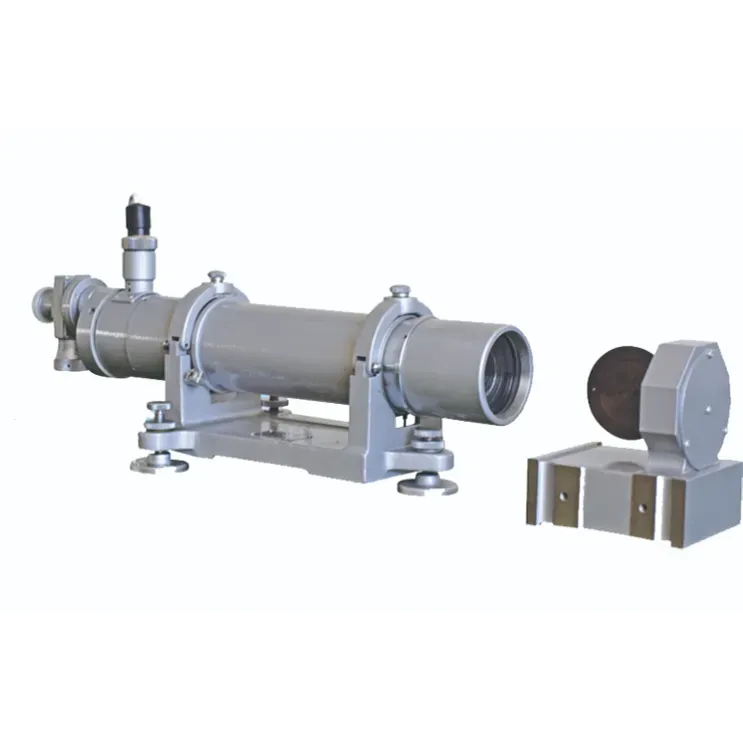
A Collimator: Defining The Basics
Before exploring advanced collimator types, it is important to understand the role of a collimator. Simply put, a collimator aligns waves or particles into a straight, parallel beam. This reduces divergence and enhances accuracy in experiments, imaging, or communication systems.
In everyday use, a collimator can be as simple as a lens system in an optical instrument or as sophisticated as the collimator of spectrometer used in scientific analysis. Regardless of complexity, the goal of a collimator is always the same: precision and control.
From telecommunications to laboratory research, a collimator serves as the foundation of optical precision.
Collimator Types: A Range Of Solutions
Over time, engineers and scientists have created many collimator types, each suited for different needs. Among them:
Beam collimator: Directs light or radiation into parallel beams, ideal for experiments and imaging.
Adjustable collimator: Allows users to modify aperture size and beam alignment for different tasks.
Adjustable fiber collimator: Optimized for fiber optics to ensure efficient data transmission.
Collimator of a spectroscope: Provides precise collimation for spectral analysis.
Collimator of spectrometer: Essential in spectrometry for accurate wavelength and intensity measurement.
Each of these collimator types fulfills a unique role. The beam collimator excels in laser experiments, while the adjustable fiber collimator improves telecommunications. The collimator of spectrometer and the collimator of a spectroscope remain critical for scientific research.
Adjustable Collimator: Adaptability And Control
The adjustable collimator stands out among collimator types because of its versatility. Unlike fixed designs, an adjustable collimator allows the user to change parameters such as beam size, shape, and direction.
This adaptability makes the adjustable collimator indispensable in laboratories where different experiments require varied settings. For example, in optics research, scientists may switch between narrow and wide beams depending on the study. Instead of using multiple fixed devices, they can rely on one adjustable collimator to cover all scenarios.
The design of the adjustable collimator often includes mechanisms for fine adjustments, giving users precise control over alignment. This precision reduces errors and improves the reliability of data.
Adjustable Fiber Collimator: Precision In Communication Systems
Building on the same principle of flexibility, the adjustable fiber collimator focuses on fiber optic technology. In modern telecommunications, even slight signal loss can result in reduced data quality. The adjustable fiber collimator addresses this by enabling precise coupling of signals into fiber systems.
Unlike standard designs, the adjustable fiber collimator can be tuned to match different fibers and signal requirements. This adaptability ensures efficient transmission and minimizes signal degradation. With the growing demand for faster and more reliable communication, the adjustable fiber collimator has become an essential tool.
Together, the adjustable collimator and adjustable fiber collimator represent a major step forward in optical technology, offering unmatched versatility.
Beam Collimator: Stability And Focus
While the adjustable collimator offers flexibility, the beam collimator is unmatched in stability. The beam collimator is designed to maintain parallel beams over long distances, making it ideal for laser research, imaging, and other applications requiring consistent alignment.
For example, in experimental physics, the beam collimator ensures that light remains stable during diffraction and interference studies. In medical imaging, the beam collimator focuses radiation beams to achieve clear and accurate results.
Although less adaptable than the adjustable collimator, the beam collimator is crucial when stability and precision are the highest priorities.
Collimator Of A Spectroscope And Spectrometer: Essential To Science
Spectroscopy and spectrometry depend on precise optical alignment. The collimator of a spectroscope ensures that light entering the instrument is parallel, enabling accurate analysis of spectral lines. Without this component, results would be blurred or distorted.
The collimator of spectrometer plays a similar role but focuses on intensity and wavelength measurements. Spectrometers are used across fields such as chemistry, physics, and environmental studies. The accuracy of these measurements is directly linked to the quality of the collimator of spectrometer.
These scientific collimator types underline how crucial collimation is in producing reliable research data.
Collimator For Sale: Meeting Industry Needs
With the increasing demand for optical precision, the market for collimator for sale has grown rapidly. Today, companies offer everything from basic beam collimator designs to advanced adjustable fiber collimator systems.
Industries select collimator for sale based on their needs. A research laboratory may require the adjustable collimator or the collimator of a spectroscope, while telecom providers often prioritize the adjustable fiber collimator. This wide availability ensures that every sector can access the right collimator types for their applications.
The availability of collimator for sale reflects how critical these devices have become in modern technology.
Conclusion
The adjustable collimator represents the perfect balance of precision and flexibility in optical science. Alongside the beam collimator and the adjustable fiber collimator, it ensures that beams of light and radiation are aligned for maximum accuracy.
Scientific instruments such as the collimator of a spectroscope and the collimator of spectrometer rely entirely on accurate collimation to function effectively. Meanwhile, industries continue to benefit from the growing range of collimator for sale, making these tools more accessible than ever.
As innovation continues, the role of the adjustable collimator and related collimator types will expand even further. These devices will remain essential to advancing research, improving communications, and ensuring precision across countless fields.