- Afrikaans
- Albanian
- Amharic
- Arabic
- Armenian
- Azerbaijani
- Basque
- Belarusian
- Bengali
- Bosnian
- Bulgarian
- Catalan
- Cebuano
- China
- Corsican
- Croatian
- Czech
- Danish
- Dutch
- English
- Esperanto
- Estonian
- Finnish
- French
- Frisian
- Galician
- Georgian
- German
- Greek
- Gujarati
- Haitian Creole
- hausa
- hawaiian
- Hebrew
- Hindi
- Miao
- Hungarian
- Icelandic
- igbo
- Indonesian
- irish
- Italian
- Japanese
- Javanese
- Kannada
- kazakh
- Khmer
- Rwandese
- Korean
- Kurdish
- Kyrgyz
- Lao
- Latin
- Latvian
- Lithuanian
- Luxembourgish
- Macedonian
- Malgashi
- Malay
- Malayalam
- Maltese
- Maori
- Marathi
- Mongolian
- Myanmar
- Nepali
- Norwegian
- Norwegian
- Occitan
- Pashto
- Persian
- Polish
- Portuguese
- Punjabi
- Romanian
- Russian
- Samoan
- Scottish Gaelic
- Serbian
- Sesotho
- Shona
- Sindhi
- Sinhala
- Slovak
- Slovenian
- Somali
- Spanish
- Sundanese
- Swahili
- Swedish
- Tagalog
- Tajik
- Tamil
- Tatar
- Telugu
- Thai
- Turkish
- Turkmen
- Ukrainian
- Urdu
- Uighur
- Uzbek
- Vietnamese
- Welsh
- Bantu
- Yiddish
- Yoruba
- Zulu
Mainstream Models and Commercial Practices of LEO Satellite Ride‑Sharing Launches
With the large‑scale construction of global low Earth orbit (LEO) satellite constellations, ride‑sharing launches have become a core launch model in the commercial space industry. By sharing launch vehicle capacity and 分摊 launch costs, this model has significantly lowered the launch barrier for small satellites and driven the explosive growth of the commercial space sector. To date, three mature ride‑sharing models have emerged in the global commercial space market: multi‑satellite launch on a single rocket, market‑oriented shared launch services, and clustered CubeSat deployment. Each model serves distinct application scenarios and together form the commercial system for rideshare launches in commercial space.

Core Technical Model of Multi‑Satellite Launch on a Single Rocket
Multi‑satellite launch on a single rocket represents the basic form of rideshare launches. Its core lies in delivering multiple satellites into space in one launch mission. Depending on deployment methods, it can be divided into two categories: multi‑satellite launch into the same orbit and multi‑satellite launch into different orbits, each matching distinct mission requirements.
1. Multi‑Satellite Launch into the Same Orbit
This model deploys all hosted satellites into a single orbit or different phase positions within the same orbital plane. It features relatively low technical complexity and is the most widely applied multi‑satellite launch scheme. Its key advantages include low implementation difficulty and simplified operational procedures, enabling rapid large‑scale constellation deployment suitable for constellation replenishment and massive CubeSat networking.
The main technical challenge lies in extremely high requirements for satellite separation timing and orbital injection accuracy. Deviation in the separation of any single satellite may affect the entire constellation’s in‑orbit operation. A typical global application is India’s PSLV‑C37 mission, which set a world record by placing 104 satellites into a designated sun‑synchronous orbit using the same‑orbit deployment scheme, verifying the maturity of large‑scale same‑orbit multi‑satellite technology.
2. Multi‑Satellite Launch into Different Orbits
This model delivers separate satellites to their respective target orbits within a single mission and is far more technically demanding than same‑orbit deployment. It requires the launch vehicle to be equipped with a high‑performance upper stage, which performs multiple in‑orbit ignitions and orbital maneuvers to reach different target orbits sequentially and deploy corresponding satellites. It simultaneously satisfies the differentiated orbital needs of multiple customers and satellites, greatly improving mission flexibility and launch vehicle utilization efficiency.
As a high‑end technical form of commercial rideshare launches, this model supports multi‑satellite deployment at varied orbital altitudes and inclinations, providing customized injection services for commercial satellite customers without waiting for dedicated orbital launch opportunities, thus significantly shortening satellite launch lead times.
Systematic Operation of Market‑Oriented Shared Launch Services
Shared launch services represent a mature rideshare model driven by the marketization of commercial space. Its core operational logic is that launch service providers first define the launch vehicle type and fixed launch schedule, then solicit satellite “passengers” on the market. Similar to airlines selling flight tickets, they standardize the sale of launch vehicle capacity quotas, making it the dominant commercial model for small satellite launches worldwide.
The core commercial characteristics and advantages are reflected in four dimensions:
- Full‑process market‑oriented operation: Providers establish a standardized launch service system. Customers can flexibly select suitable launch opportunities based on their satellite’s mass, size and orbital requirements to purchase capacity quotas without bearing the full cost of a dedicated launch, greatly lowering barriers for small satellites.
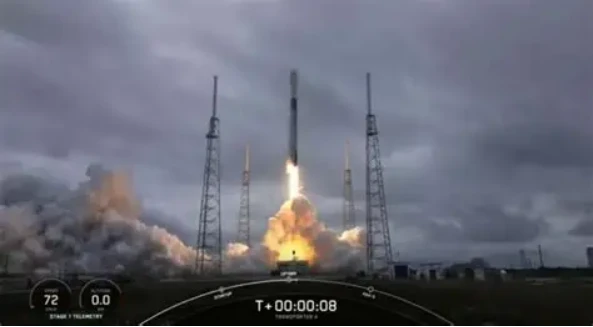
- Fixed and regular launch schedules: Major providers offer periodic launch plans offering predictable launch windows. For example, SpaceX’s dedicated Transporter rideshare missions maintain a frequency of approximately once every four months, forming a stable and normalized shared launch service system.
- Standardized service system: Providers supply standardized satellite interfaces, compatible adapters, separation systems and full‑process integration services, significantly reducing customers’ satellite integration difficulty and adaptation costs, shortening launch preparation cycles and enabling rapid satellite‑rocket mating.
- Transparent pricing system: The industry has established an open and transparent standardized pricing structure. For instance, under SpaceX’s small satellite rideshare program, the starting price for a 50‑kg payload is $325,000, with an additional charge of $6,500 per kilogram beyond that limit. Customers can clearly calculate launch costs to suit commercial satellite projects of various scales.
In the shared launch service chain, launch service integrators act as central hubs. Taking Europe’s leading integrator Exolaunch as an example, it not only matches customers with launch opportunities but also provides full‑process technical services including satellite integration, environmental testing, separation system support and in‑orbit coordination. It has supported the launch integration of more than 600 satellites for global customers, serving as a critical bridge between satellite manufacturers and launch service providers and promoting the standardization and large‑scale development of shared launch services.
Development and Challenges of Clustered CubeSat Deployment
Clustered CubeSat deployment represents the latest evolution of rideshare launches and a key enabler for the large‑scale construction of LEO satellite constellations. With their inherent advantages of standardization, modularity and low cost, CubeSats can achieve global coverage and high revisit frequencies unattainable by traditional large satellites through constellation networking. Rideshare launches are the only feasible way to rapidly deploy large‑scale CubeSat constellations.
The core technical and commercial features of clustered CubeSat deployment include four aspects:
- Large‑scale networking capability: A single cluster deployment can involve hundreds or even thousands of CubeSats. Rideshare launches enable massive satellite injection in one mission to rapidly complete constellation establishment. For example, a planned CubeSat communication constellation consisting of 1,200 6U CubeSats uses a mixed configuration of polar and inclined orbits to achieve second‑scale global communication access, entirely relying on rideshare launches for deployment.
- Inter‑satellite collaborative system: Satellites in the cluster cooperate via inter‑satellite links to form a distributed space system. Compared with single large satellites, it offers higher system redundancy, survivability and mission flexibility; the failure of one satellite does not disrupt overall system operation.
- Extreme cost advantage: Through standardized design and mass production, the manufacturing cost of a single CubeSat can be kept extremely low. Combined with low‑cost rideshare capacity, the overall cost of large‑scale constellation construction is drastically reduced, allowing more commercial entities to participate in satellite constellation development and operation.
- Rapid deployment and iteration capability: Normalized rideshare services enable large‑scale satellite deployment within a short period to quickly establish operational service capacity. Meanwhile, satellites can be rapidly upgraded and constellations replenished in line with technological advances, adapting to the fast‑paced evolution of commercial space.
The large‑scale implementation of clustered CubeSat deployment still faces multiple industry challenges:
- Global management of orbital resources, requiring rational allocation to avoid congestion and collision risks.
- Construction of a tracking, telemetry and command (TT&C) communication system with global coverage to support real-time communication and control of hundreds of in‑orbit satellites.
- Breakthroughs in inter‑satellite cooperative control technology to achieve coordinated operation and orbit maintenance of the entire cluster.
- Establishment of an in‑orbit station‑keeping system, as LEO atmospheric drag demands periodic orbital adjustments to maintain satellites in designated positions and ensure stable constellation operation.