
- Afrikaans
- Albanian
- Amharic
- Arabic
- Armenian
- Azerbaijani
- Basque
- Belarusian
- Bengali
- Bosnian
- Bulgarian
- Catalan
- Cebuano
- China
- Corsican
- Croatian
- Czech
- Danish
- Dutch
- English
- Esperanto
- Estonian
- Finnish
- French
- Frisian
- Galician
- Georgian
- German
- Greek
- Gujarati
- Haitian Creole
- hausa
- hawaiian
- Hebrew
- Hindi
- Miao
- Hungarian
- Icelandic
- igbo
- Indonesian
- irish
- Italian
- Japanese
- Javanese
- Kannada
- kazakh
- Khmer
- Rwandese
- Korean
- Kurdish
- Kyrgyz
- Lao
- Latin
- Latvian
- Lithuanian
- Luxembourgish
- Macedonian
- Malgashi
- Malay
- Malayalam
- Maltese
- Maori
- Marathi
- Mongolian
- Myanmar
- Nepali
- Norwegian
- Norwegian
- Occitan
- Pashto
- Persian
- Polish
- Portuguese
- Punjabi
- Romanian
- Russian
- Samoan
- Scottish Gaelic
- Serbian
- Sesotho
- Shona
- Sindhi
- Sinhala
- Slovak
- Slovenian
- Somali
- Spanish
- Sundanese
- Swahili
- Swedish
- Tagalog
- Tajik
- Tamil
- Tatar
- Telugu
- Thai
- Turkish
- Turkmen
- Ukrainian
- Urdu
- Uighur
- Uzbek
- Vietnamese
- Welsh
- Bantu
- Yiddish
- Yoruba
- Zulu
Novice podjetja
Zmogljivost podjetja
Trenutno je podjetje zgradilo največjo podmetrsko komercialno satelitsko konstelacijo za daljinsko zaznavanje na svetu z močnimi servisnimi zmogljivostmi. S pomočjo satelitskih podatkov daljinskega zaznavanja lahko strankam zagotovi podatke satelitskega daljinskega zaznavanja z visoko časovno ločljivostjo, visoko prostorsko ločljivostjo, visoko spektralno ločljivostjo, hitro pokritostjo širokega območja in integriranimi prostorskimi informacijskimi aplikacijskimi storitvami, ki temeljijo na podatkih satelitskega daljinskega zaznavanja.
-

Unlocking Precision with High Resolution Satellite Data Insights
In an era where data drives decision-making, the ability to view the Earth's surface with pinpoint accuracy has become a competitive necessity. high resolution satellite data provides an unprecedented level of detail, allowing industries to monitor assets, track environmental changes, and optimize logistics in real-time. Whether it is urban planning, agricultural management, or disaster response, the transition from medium-resolution imagery to high-definition insights transforms how we interact with our planet. In this guide, we will explore how this technology works and why it is indispensable for modern global operations.
-

Unlocking the Power of GIS Satellite Technology for Modern Mapping
In an era where data drives decision-making, the integration of gis satellite technology has revolutionized how we perceive and interact with our physical world. Geographic Information Systems (GIS), when powered by satellite imagery and positioning, allow organizations to capture, analyze, and visualize complex spatial data with unprecedented precision. From urban planning and environmental monitoring to disaster response and precision agriculture, the synergy between satellite data and GIS software provides a comprehensive view of the earth's surface. This article explores the intricacies of satellite-based GIS, its practical applications, and why it is an indispensable tool for global infrastructure and environmental sustainability.
-

Understanding Geostationary Meteorological Satellites and Their Vital Role
Geostationary meteorological satellites are a crucial component of modern weather forecasting and climate monitoring. Unlike polar-orbiting satellites which scan the Earth in a north-south direction, geostationary satellites remain fixed over a specific point on the Earth's equator. This unique orbital position allows for continuous monitoring of weather patterns, providing invaluable data for accurate predictions and timely warnings. These satellites play a vital role in tracking hurricanes, monitoring cloud formations, and assessing temperature variations.
-

Leveraging the Power of Free Satellite Data for Informed Decision Making
The world is increasingly reliant on data for informed decision-making, and satellite imagery is a pivotal source. Thankfully, accessing free satellite data is now more accessible than ever. This article will explore the benefits of utilizing freely available satellite data, the resources available, and how you can leverage this information for a variety of applications. From environmental monitoring to urban planning, the possibilities are vast.
-

Mainstream Models and Commercial Practices of LEO Satellite Ride‑Sharing Launches
With the large‑scale construction of global low Earth orbit (LEO) satellite constellations, ride‑sharing launches have become a core launch model in the commercial space industry.
-

Architecture and Safety Control System
Satellite separation systems constitute a critical core link in ride‑sharing launch missions, directly determining the safety of satellite deployment and orbital injection accuracy.
-
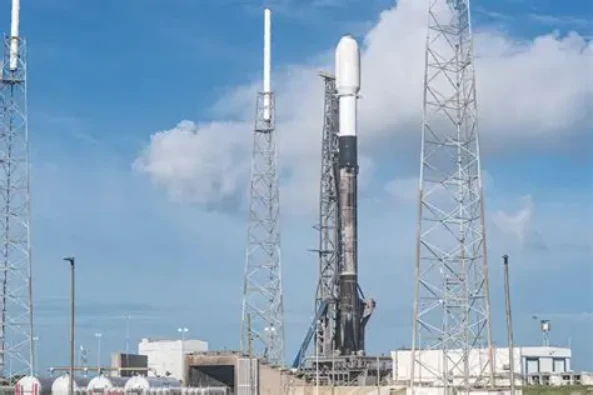
Core Technologies for LEO Ride‑Sharing Launches: Upper Stage Systems and Orbital Maneuver Capability
The large-scale deployment of low Earth orbit (LEO) satellite constellations has driven ride‑sharing launches to become the mainstream launch model in the global commercial space industry.
-
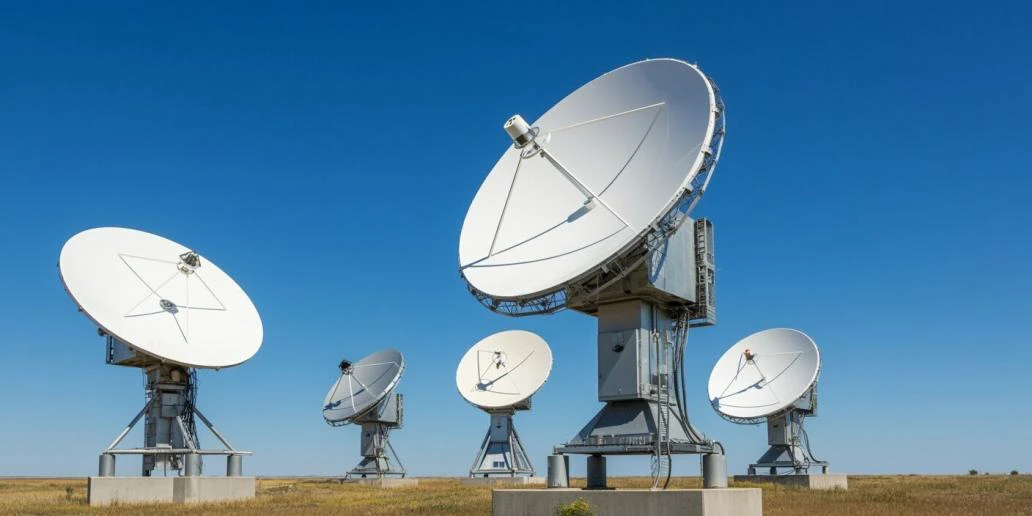
Cloud-Based Ground Stations and Software-Defined Operations: A Fundamental Transformation of Satellite Operation Models
Cloud-based ground stations and software-defined operations represent a fundamental shift in operational models across the global satellite industry.
-

Understanding Data Communication Satellites and Their Vital Role in Global Connectivity
In today’s interconnected world, reliable communication is paramount. Data communication satellites play a critical role in enabling this connectivity, bridging vast distances and facilitating global data transfer. These sophisticated systems are essential for everything from internet access in remote areas to crucial data relay for emergency services. This article will explore the technology behind these satellites, their diverse applications, the challenges involved, and future trends, offering insight into the vital role they play in modern society.
-

Exploring Ocean Health with Chlorophyll Satellite Data and its Diverse Applications
Chlorophyll satellite data plays a crucial role in monitoring ocean health and understanding global ecosystems. By measuring the concentration of chlorophyll-a, a pigment found in phytoplankton, scientists can assess primary productivity, track algal blooms, and monitor changes in marine environments. This data is invaluable for a wide range of applications, from fisheries management to climate change research. Space-navi.com provides access to and analysis of this vital information, supporting informed decision-making for a sustainable future.
-

Advancements in Commercial Hyperspectral Satellites for Earth Observation
The world of remote sensing is undergoing a revolution, driven by the increasing availability of commercial hyperspectral satellites. These advanced platforms offer unprecedented capabilities for detailed Earth observation, surpassing traditional multispectral imaging. This article will delve into what hyperspectral satellites are, their benefits, applications, key players in the market, and the future trends shaping this exciting field. Understanding this technology is crucial for industries reliant on precise environmental monitoring, resource management, and analytical data. Unlike traditional multispectral satellites that capture images in a few broad spectral bands (e.g., red, green, blue), hyperspectral satellites collect data across hundreds of narrow, contiguous spectral bands. This creates a detailed spectral "fingerprint" for each pixel in the image. This rich data allows for the identification and quantification of materials and substances with far greater precision. Essentially, while a multispectral satellite might tell you "there's vegetation here," a hyperspectral satellite can tell you what kind of vegetation, its health, and even its stress levels. This ability is transforming numerous industries. The advantages of using hyperspectral satellites are significant. The detailed spectral data enables more accurate identification of materials, leading to improved decision-making in various applications.
-
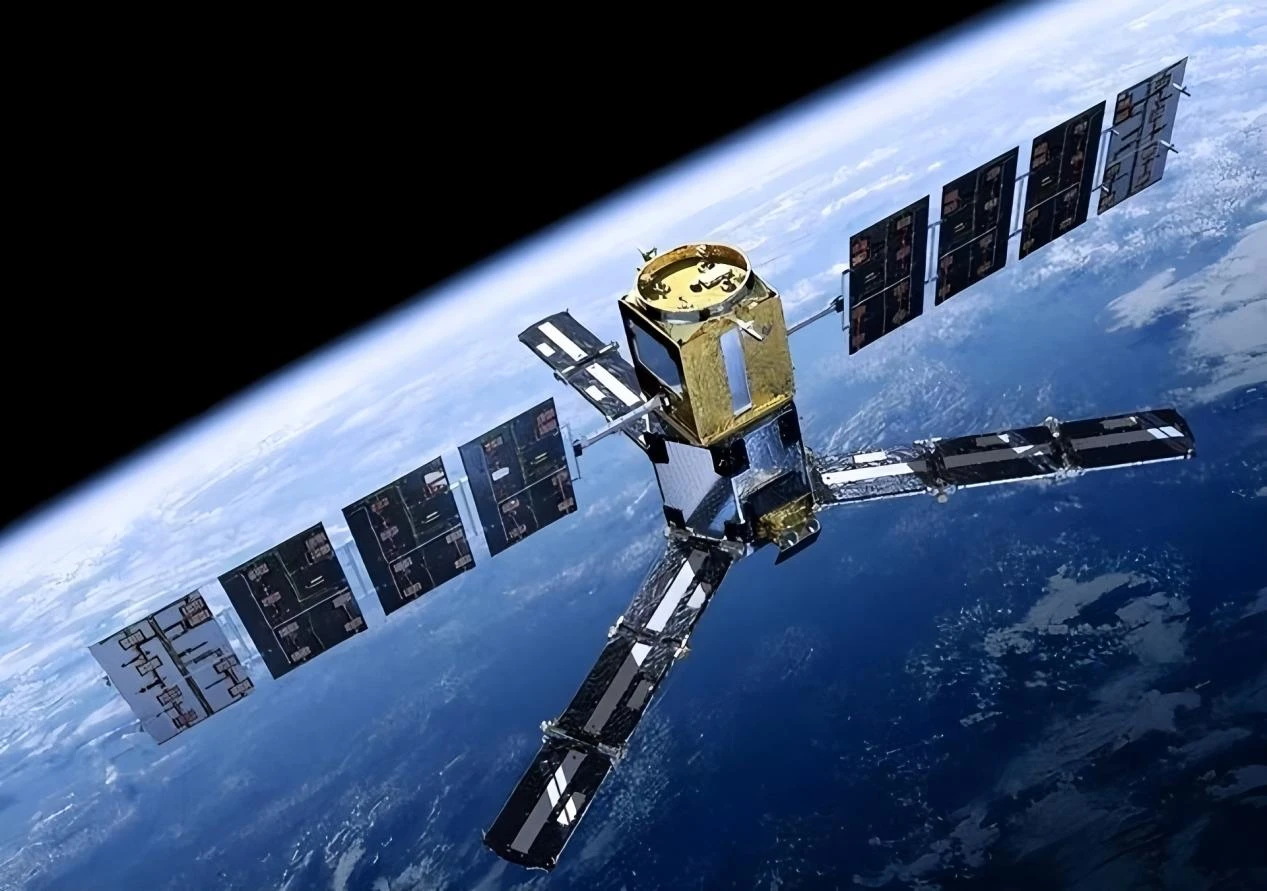
Phased Roadmap for Precision Prediction: Technological Evolution from Hour-Level to Second-Level Accuracy
Improvements in LEO satellite reentry prediction accuracy follow a progressive pathway. Based on current technological trends and research advances, a phased implementation roadmap has been developed: advancing from near-term breakthroughs in hour-level accuracy, through mid-term leaps to minute-level accuracy, to the long-term ultimate goal of second-level accuracy.