- Afrikaans
- Albanian
- Amharic
- Arabic
- Armenian
- Azerbaijani
- Basque
- Belarusian
- Bengali
- Bosnian
- Bulgarian
- Catalan
- Cebuano
- China
- Corsican
- Croatian
- Czech
- Danish
- Dutch
- English
- Esperanto
- Estonian
- Finnish
- French
- Frisian
- Galician
- Georgian
- German
- Greek
- Gujarati
- Haitian Creole
- hausa
- hawaiian
- Hebrew
- Hindi
- Miao
- Hungarian
- Icelandic
- igbo
- Indonesian
- irish
- Italian
- Japanese
- Javanese
- Kannada
- kazakh
- Khmer
- Rwandese
- Korean
- Kurdish
- Kyrgyz
- Lao
- Latin
- Latvian
- Lithuanian
- Luxembourgish
- Macedonian
- Malgashi
- Malay
- Malayalam
- Maltese
- Maori
- Marathi
- Mongolian
- Myanmar
- Nepali
- Norwegian
- Norwegian
- Occitan
- Pashto
- Persian
- Polish
- Portuguese
- Punjabi
- Romanian
- Russian
- Samoan
- Scottish Gaelic
- Serbian
- Sesotho
- Shona
- Sindhi
- Sinhala
- Slovak
- Slovenian
- Somali
- Spanish
- Sundanese
- Swahili
- Swedish
- Tagalog
- Tajik
- Tamil
- Tatar
- Telugu
- Thai
- Turkish
- Turkmen
- Ukrainian
- Urdu
- Uighur
- Uzbek
- Vietnamese
- Welsh
- Bantu
- Yiddish
- Yoruba
- Zulu
Key Auxiliary Subsystems of LEO Satellites: Unveiling Thermal Control, Data Handling, and Propulsion Technologies
Introduction
The stable operation of LEO satellites relies not only on core systems such as communications, power, and attitude and orbit control, but also on the support of auxiliary subsystems including thermal control, command and data handling, and propulsion. Although these subsystems do not directly reflect core value like communication systems, they are critical to ensuring the satellite’s survival and efficient operation. Their technical selection and reliability design directly affect the satellite’s on-orbit lifetime and mission success rate. This article details the technical principles, core functions, and cost logic of the three major auxiliary subsystems.

I. Thermal Control System: The Satellite’s "Temperature Regulator"
LEO satellites operate in extremely harsh thermal environments: temperatures drop to -150°C in Earth’s shadow and rise to 150°C in sunlight, with solar radiation intensity far higher than that for geostationary satellites. The core mission of the thermal control system is to maintain internal equipment within a suitable operating temperature range, typically -20°C to 50°C.
1. Core Technologies and Components
- Thermal control coatings: Control thermal radiation properties through surface treatment to adjust the ratio of absorbed and radiated heat.
- Heat pipe technology: Achieves high-efficiency heat transfer via working fluid phase change, with thermal conductivity dozens to hundreds of times that of copper, serving as the core heat transfer component.
- Radiators: Dissipate internal satellite heat into space, acting as the main heat dissipation outlet.
- Multi-layer insulation (MLI): Reduces heat exchange between the satellite interior and the external environment to maintain stable internal temperatures.
In Starlink satellites, SpaceX uses a combination of aluminum vapor chambers and silicon carbide heat pipes, improving thermal conductivity by three times compared with conventional heat pipes. Paired with phase-change thermal storage modules, this achieves dynamic heat balance, reduces thermal control system weight by 40%, and keeps costs below 8% of total satellite cost.
2. Cost and Key Indicators
The thermal control system costs $250,000–$450,000, accounting for 6%–10% of total satellite cost.
Core cost drivers include temperature control accuracy and system complexity: satellites for high-precision missions such as communications and remote sensing have stricter thermal requirements and correspondingly higher costs.
II. Command and Data Handling System: The Satellite’s "Intelligent Brain"
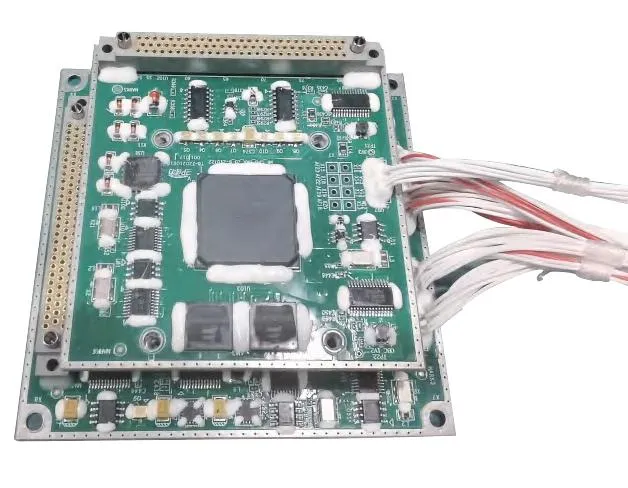
The Command and Data Handling (C&DH) system acts as the satellite’s central nervous system, controlling all functions and operations, monitoring health and safety, and enabling intelligent decision-making.
1. Core Components and Functions
- On-Board Computer (OBC): Serves as the core processor, responsible for spacecraft control, telemetry collection, and command issuance to all subsystems. It typically uses 16-bit microcontrollers (e.g., Texas Instruments MSP430) with high reliability and strong data processing capability.
- Data storage devices: Equipped with large-capacity media to securely store operational parameters, communication data, remote sensing images, and other critical information, meeting radiation-hardened and long-life requirements.
- Data bus: Provides command and telemetry links between the spacecraft and ground systems, distributing commands and collecting telemetry via duplex serial multiplexed buses and Remote Interface Units (RIU).
- Interface circuits: Enable electrical connections with other subsystems to ensure stable data transmission.
2. Cost and Technical Trends
The C&DH system costs $200,000–$400,000, accounting for 5%–8% of total satellite cost.
Cost drivers include processing performance and storage capacity: high-throughput communications satellites and high-resolution remote sensing satellites require greater capacity and performance, resulting in higher costs.
Current trends focus on high integration and intelligence: on-board computer performance continues to improve; solid-state storage is widely adopted; and artificial intelligence algorithms enable automatic fault diagnosis and intelligent data analysis, further enhancing satellite autonomous operation.
III. Propulsion System: The Satellite’s "Orbit Navigator"
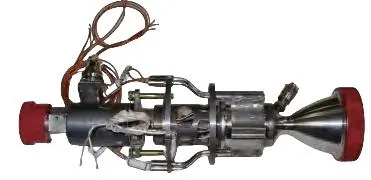
The propulsion system is responsible for orbit maintenance, attitude adjustment, and deorbiting operations. Its performance directly determines the satellite’s service life and mission flexibility.
1. Core Technologies and Types
LEO satellite propulsion systems are divided into chemical propulsion and electric propulsion. Commercial aerospace predominantly uses electric propulsion, such as krypton ion thrusters, as adopted in Starlink V2.0 Mini. Core components include ion sources, acceleration grids, and neutralizers.
The key advantage of electric propulsion is its high specific impulse (thousands of seconds, far exceeding the hundreds of seconds of chemical propulsion), which drastically reduces propellant mass and satellite weight.
The system also includes propellant tanks (e.g., krypton tanks) requiring excellent sealing and pressure resistance.
2. Cost and Flexibility
The propulsion system costs $400,000–$900,000, accounting for 10%–25% of total satellite cost — the widest cost range among all subsystems.
Cost variation mainly comes from propellant type (krypton, xenon, etc.), thrust requirements, and technical selection:
- Chemical propulsion: lower upfront cost but high propellant consumption.
- Electric propulsion: higher initial cost but more economical for long-term operation.
IV. Core Value of Auxiliary Subsystems: No Auxiliaries, No Core Missions
Although thermal control, C&DH, and propulsion do not directly perform core missions, they form the foundation of mission execution:
- Thermal control prevents equipment from freezing or burning out.
- C&DH ensures commands are transmitted accurately and completely.
- Propulsion keeps the satellite on track and properly positioned.
Under large-scale commercial aerospace deployment, the development focus of these auxiliary subsystems is low cost, high reliability, and miniaturization.
Through technological innovation (e.g., silicon carbide heat pipes, ion thrusters) and mass production, performance improves while costs decrease, providing comprehensive support for the long-life, high-efficiency operation of LEO satellites.