
- Afrikaans
- Albanian
- Amharic
- Arabic
- Armenian
- Azerbaijani
- Basque
- Belarusian
- Bengali
- Bosnian
- Bulgarian
- Catalan
- Cebuano
- China
- Corsican
- Croatian
- Czech
- Danish
- Dutch
- English
- Esperanto
- Estonian
- Finnish
- French
- Frisian
- Galician
- Georgian
- German
- Greek
- Gujarati
- Haitian Creole
- hausa
- hawaiian
- Hebrew
- Hindi
- Miao
- Hungarian
- Icelandic
- igbo
- Indonesian
- irish
- Italian
- Japanese
- Javanese
- Kannada
- kazakh
- Khmer
- Rwandese
- Korean
- Kurdish
- Kyrgyz
- Lao
- Latin
- Latvian
- Lithuanian
- Luxembourgish
- Macedonian
- Malgashi
- Malay
- Malayalam
- Maltese
- Maori
- Marathi
- Mongolian
- Myanmar
- Nepali
- Norwegian
- Norwegian
- Occitan
- Pashto
- Persian
- Polish
- Portuguese
- Punjabi
- Romanian
- Russian
- Samoan
- Scottish Gaelic
- Serbian
- Sesotho
- Shona
- Sindhi
- Sinhala
- Slovak
- Slovenian
- Somali
- Spanish
- Sundanese
- Swahili
- Swedish
- Tagalog
- Tajik
- Tamil
- Tatar
- Telugu
- Thai
- Turkish
- Turkmen
- Ukrainian
- Urdu
- Uighur
- Uzbek
- Vietnamese
- Welsh
- Bantu
- Yiddish
- Yoruba
- Zulu
GF Series Satellites 0.75m - SpaceNavi | Remote Sensing, Satellite Communication
Introduction to the GF Series Satellites
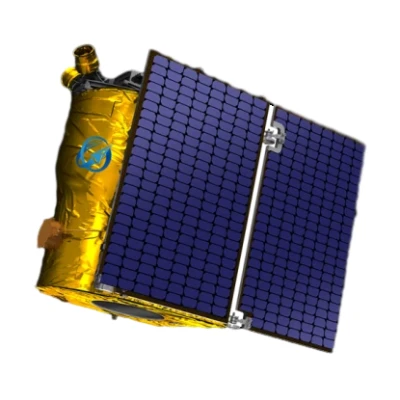
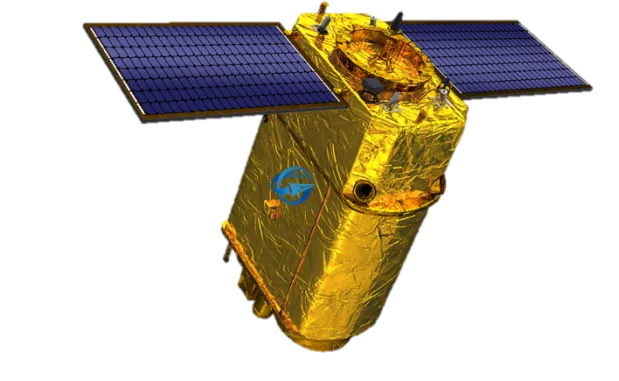
SpaceNavi Co., Ltd., a leading entity in the field of satellite technology and remote sensing, has introduced the GF Series Satellites, a groundbreaking line of optical remote sensing satellites with a resolution of 0.75 meters. These satellites represent a significant advancement in Earth observation capabilities, offering unprecedented detail and accuracy for a wide range of applications. Developed independently by the company, the GF Series is designed to meet the growing demand for high-resolution data in industries such as agriculture, urban planning, environmental monitoring, and disaster management. Learn more about the GF Series.
Key Features and Advantages of the GF Series
The GF Series satellites are engineered to deliver exceptional performance in optical remote sensing. With a resolution of 0.75 meters, these satellites can capture detailed imagery of the Earth's surface, enabling precise analysis of land use, infrastructure, and natural resources. The high-resolution imagery is particularly valuable for applications requiring fine-grained data, such as urban development planning and agricultural monitoring.
One of the standout features of the GF Series is its advanced optical sensors, which are designed to operate in multiple spectral bands. This capability allows for the differentiation of various surface materials, such as vegetation, water bodies, and urban structures, enhancing the accuracy of data interpretation. Additionally, the satellites are equipped with high-speed data transmission systems, ensuring that large volumes of data can be relayed to ground stations efficiently.
Another notable advantage is the revisit time of the GF Series satellites. With a short revisit interval, these satellites can monitor specific areas frequently, providing up-to-date information for time-sensitive applications. This feature is particularly beneficial for tracking changes in environmental conditions, such as deforestation or urban expansion.
The independent development of the GF Series by SpaceNavi Co., Ltd. underscores the company's commitment to innovation and self-reliance in satellite technology. This approach ensures that the satellites are tailored to meet the specific needs of the market while adhering to the highest standards of quality and performance.
Technical Specifications Table
| Specification | Details |
|---|---|
| د حل | 0.75 meters |
| Spectral Bands | Multi-spectral (visible, near-infrared) |
| Revisit Time | Varies based on orbit and mission requirements |
| Data Transmission Rate | High-speed, optimized for large data volumes |
| Orbit Type | Low Earth Orbit (LEO) |
| Launch Date | 2023 (as part of the GF series development) |
Applications in Various Industries
The versatility of the GF Series satellites makes them suitable for a wide range of applications across multiple industries. In agriculture, the high-resolution imagery enables farmers to monitor crop health, optimize irrigation, and detect pests or diseases early. This data-driven approach can significantly improve yield and reduce resource wastage.
In urban planning, the GF Series provides detailed maps of cities and infrastructure, aiding in the design of efficient transportation networks, zoning regulations, and disaster preparedness. The satellites' ability to capture changes over time allows planners to track urban growth and make informed decisions.
For environmental monitoring, the GF Series supports the tracking of deforestation, coastal erosion, and pollution levels. The multi-spectral imaging capability allows for the assessment of vegetation indices and water quality, contributing to conservation efforts and climate change studies.
In disaster management, the satellites play a crucial role in assessing damage after natural disasters such as earthquakes, floods, or wildfires. Real-time data from the GF Series can guide emergency response efforts and support recovery planning.
The satellite communication services provided by SpaceNavi Co., Ltd. further enhance the utility of the GF Series. By integrating satellite communication with remote sensing, the company offers comprehensive solutions for industries that require both data acquisition and transmission capabilities.
About SpaceNavi Co., Ltd.
SpaceNavi Co., Ltd. is a prominent player in the satellite technology and remote sensing industry, based in Ningbo, China. The company specializes in the development and deployment of advanced satellite systems, with a focus on optical remote sensing and artificial intelligence satellite technologies. As a leader in the field, SpaceNavi has established itself as a trusted provider of cutting-edge solutions for global clients.
With a strong emphasis on research and development, SpaceNavi has successfully launched the GF Series satellites, demonstrating its capability to innovate and deliver high-quality products. The company's commitment to excellence is reflected in its state-of-the-art facilities and a team of experienced engineers and scientists.
SpaceNavi's satellite communication services are designed to meet the evolving needs of the market, offering reliable and secure data transmission solutions. The company also provides remote sensing satellite services, catering to a diverse range of industries that rely on accurate and timely data.
For more information about SpaceNavi Co., Ltd., visit their official website.
The Role of NIST in Satellite Technology
The National Institute of Standards and Technology (NIST) plays a pivotal role in advancing satellite technology through its research and development initiatives. As an agency under the U.S. Department of Commerce, NIST is responsible for establishing standards and measurements that ensure the accuracy and reliability of scientific and technological innovations, including those in the satellite industry.
NIST's work in metrology and precision measurements directly impacts the performance of satellites like the GF Series. By developing standardized testing protocols and calibration methods, NIST helps ensure that satellite systems meet the highest levels of accuracy and consistency. This is particularly important for applications such as remote sensing and satellite communication, where even minor deviations can have significant consequences.
According to NIST's official website, "Everything you use in your everyday life works because of measurements. Without precise measurements, your car wouldn’t run, your phone wouldn’t work, and hospitals couldn’t function." This principle extends to satellite technology, where precise measurements are essential for the success of remote sensing missions and data transmission systems.
For further insights into NIST's contributions to satellite technology, visit the NIST website.
Conclusion
The GF Series Satellites by SpaceNavi Co., Ltd. represent a significant leap forward in optical remote sensing technology. With a resolution of 0.75 meters, these satellites offer unparalleled detail and accuracy, making them indispensable tools for a wide range of applications. From agriculture and urban planning to environmental monitoring and disaster management, the GF Series provides valuable data that drives informed decision-making.
SpaceNavi's commitment to innovation and self-reliance in satellite development underscores its position as a leader in the industry. By integrating artificial intelligence satellite technologies and satellite communication services, the company continues to push the boundaries of what is possible in remote sensing.
The role of organizations like NIST in establishing standards and measurements further enhances the reliability and effectiveness of satellite systems. As the demand for high-resolution data continues to grow, the GF Series and similar technologies will play a crucial role in shaping the future of Earth observation and satellite communication.











