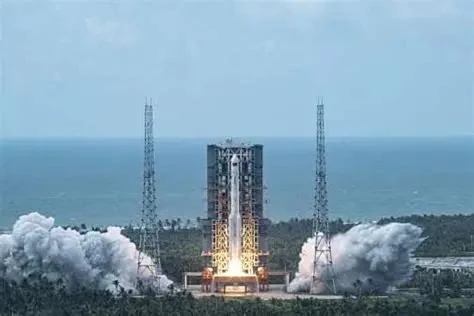
Before delivery, the OBC must pass "compliance testing" — simulating the full-cycle environmental stress of the satellite from launch to on-orbit operation, verifying its resistance to the space environment, and ensuring compliance with aerospace standards (e.g., ECSS, MIL-STD). Compliance testing is the "pass" for OBC reliability and a key basis for OBC selection.
Different test items target different space environment threats. The core test items and requirements are as follows:
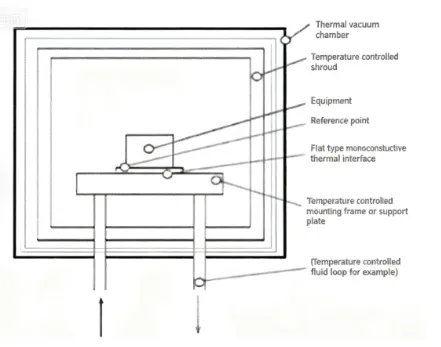
- Test Purpose: Simulate the "high vacuum" and "extreme temperature cycling" environment of space — the vacuum degree in space is below 10⁻⁵Pa, and the temperature fluctuates drastically between -180℃ and +150℃. The OBC must work stably in this environment.
- Implementation Standard: Complies with ECSS-E-10-03A (European Cooperation for Space Standardization).
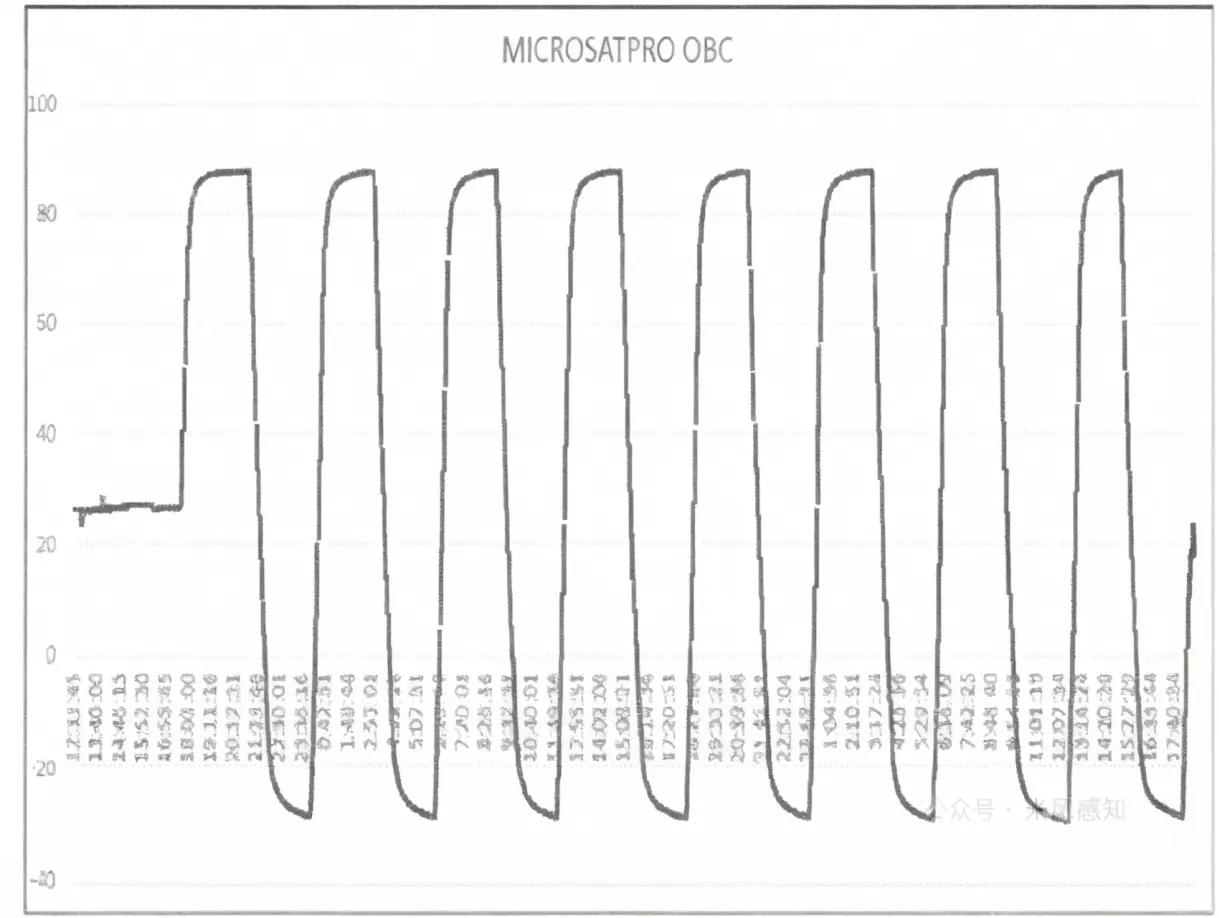
- Test Content: Place the OBC in a "thermal vacuum chamber", first evacuate to below 10⁻⁶Pa, then perform temperature cycling (e.g., -60℃ to +85℃, 10 cycles). During the test, continuously monitor the OBC’s power supply, interfaces, data processing and other functions to ensure no abnormalities.
- Test Purpose: Satellites experience severe vibrations during launch (e.g., changes in rocket engine thrust, aerodynamic vibrations). The OBC must resist such vibrations to avoid component loosening and wiring breakage.
- Implementation Standard: Complies with ECSS-Q-HB-60-02A.
- Test Content: Fix the OBC on a vibration table to simulate the vibration environment during the launch phase — including "sinusoidal vibration" (steady-state vibration at specific frequencies, e.g., 10Hz~2000Hz) and "random vibration" (unsteady vibration within a wide frequency range). The vibration acceleration is usually 10~30g (g is gravitational acceleration). After the test, check whether the OBC’s physical structure and functions are normal.
-
- Test Purpose: Simulate the impact of space radiation (e.g., gamma rays, protons) on the OBC and verify its radiation resistance level.
- Implementation Standard: Complies with ECSS-E-ST-10-02C.
- Core Test Indicators:
- Total Ionizing Dose (TID): The cumulative radiation dose that the OBC can withstand, in krad. For example, LEO satellite OBCs require TID ≥ 30krad, while GEO satellite OBCs require TID ≥ 100krad.
- Single Event Effects (SEE): Including Single Event Upset (SEU), Single Event Latchup (SEL), etc. It is necessary to test the SEE occurrence rate of the OBC under radiation to ensure it is below the aerospace standard threshold (e.g., SEL occurrence rate ≤ 1 time/mission period).
-
- Test Purpose: Various satellite subsystems (e.g., OBC, communication modules, power supply) generate electromagnetic signals. It is necessary to ensure that the OBC is not affected by electromagnetic interference from other subsystems and does not interfere with other subsystems.
- Implementation Standard: Complies with MIL-STD-461G (U.S. Military Standard).
- Core Test Items:
- Conducted Emission (CE102): Tests the electromagnetic emission of the OBC’s power lines, frequency range 10kHz~10MHz.
- Conducted Susceptibility (CS101, CS114, etc.): Tests the OBC’s susceptibility to electromagnetic signals injected into power lines and cables.
- Radiated Emission (RE102): Tests the electric field radiation of the OBC, frequency range 10kHz~18GHz.
- Radiated Susceptibility (RS103): Tests the OBC’s susceptibility to external electric fields, frequency range 2MHz~40GHz.
-
- Prioritize OBC products that have "passed a full set of compliance tests": Independent testing requires significant investment in funds (e.g., thermal vacuum chambers, radiation source equipment) and time. Test reports of mature products can be directly used as reliability evidence.
- Adjust test priorities according to the mission orbit: For example, GEO satellite OBCs need to focus on "radiation testing" (higher TID requirements), while LEO satellite OBCs need to focus on "vibration testing" (more severe vibrations during the launch phase).
In short, compliance testing is the OBC’s "space airworthiness certificate" — only OBCs that pass the test can ensure stable operation throughout the satellite’s full cycle from launch to on-orbit, avoiding mission failure due to poor environmental adaptability.