- Afrikaans
- Albanian
- Amharic
- Arabic
- Armenian
- Azerbaijani
- Basque
- Belarusian
- Bengali
- Bosnian
- Bulgarian
- Catalan
- Cebuano
- China
- Corsican
- Croatian
- Czech
- Danish
- Dutch
- English
- Esperanto
- Estonian
- Finnish
- French
- Frisian
- Galician
- Georgian
- German
- Greek
- Gujarati
- Haitian Creole
- hausa
- hawaiian
- Hebrew
- Hindi
- Miao
- Hungarian
- Icelandic
- igbo
- Indonesian
- irish
- Italian
- Japanese
- Javanese
- Kannada
- kazakh
- Khmer
- Rwandese
- Korean
- Kurdish
- Kyrgyz
- Lao
- Latin
- Latvian
- Lithuanian
- Luxembourgish
- Macedonian
- Malgashi
- Malay
- Malayalam
- Maltese
- Maori
- Marathi
- Mongolian
- Myanmar
- Nepali
- Norwegian
- Norwegian
- Occitan
- Pashto
- Persian
- Polish
- Portuguese
- Punjabi
- Romanian
- Russian
- Samoan
- Scottish Gaelic
- Serbian
- Sesotho
- Shona
- Sindhi
- Sinhala
- Slovak
- Slovenian
- Somali
- Spanish
- Sundanese
- Swahili
- Swedish
- Tagalog
- Tajik
- Tamil
- Tatar
- Telugu
- Thai
- Turkish
- Turkmen
- Ukrainian
- Urdu
- Uighur
- Uzbek
- Vietnamese
- Welsh
- Bantu
- Yiddish
- Yoruba
- Zulu
Low-Earth Orbit Satellite Reentry Prediction: Pain Points Highlighted, Precise Control Urgently Needed
The whole-process control of low-Earth orbit (LEO) satellites during the decommissioning phase is a core link for the compliance and safety of commercial space operations. Before satellite mission termination, operators must complete work including the filing of compliance documents, insurance communication, attitude adjustment, propellant residual assessment, and reentry risk window analysis. The core prerequisite for all these work points to the accurate prediction of satellite reentry time. The orbital decay of LEO satellites is mainly dominated by upper atmospheric drag, and the dynamic uncertainty of atmospheric density constitutes the core obstacle to precise prediction. Upper atmospheric density fluctuates drastically with solar activity, which directly makes the drag environment difficult to predict, further affecting the satellite orbital decay rate and posing a significant challenge to reentry time prediction.
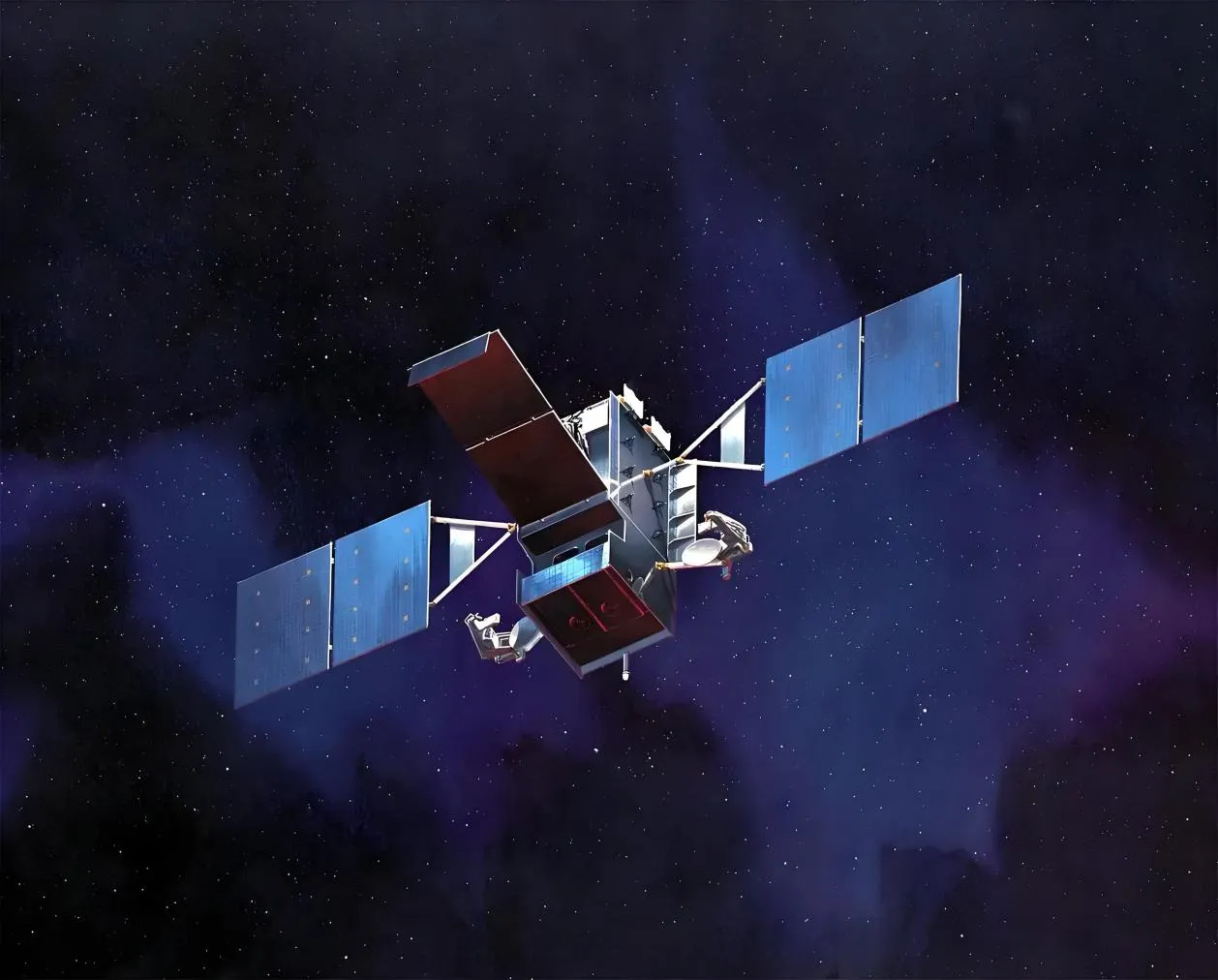
At present, LEO satellite reentry prediction faces multiple technical bottlenecks, among which the drastic fluctuation of atmospheric density is the primary source of uncertainty. Data shows that thermospheric density can fluctuate by up to 800% under extreme conditions. The widely used NRLMSISE-00 atmospheric model has a density prediction error of 30% under normal conditions, and the error even exceeds 100% during space environment disturbances. The "Gannon Superstorm" event in May 2024 fully exposed the limitations of existing prediction technologies: a Starlink satellite plummeted from a 276-kilometer orbit to 100 kilometers within 1.86 days, with an orbital decay rate of 95 kilometers per day, reentering 11 days earlier than predicted. Such extreme events not only highlight the inadequacy of existing technologies but also underscore the urgency of improving reentry prediction accuracy.
Accurate reentry time prediction is indispensable from the perspectives of space safety and regulatory compliance. Research by the International Civil Aviation Organization (ICAO) indicates that a 1-hour deviation in prediction time 10 hours before satellite reentry corresponds to a risk area of 27,000 kilometers × 200 kilometers, posing a severe challenge to ground safety management. With the rapid development of the commercial space industry, regulatory requirements are becoming increasingly stringent. The U.S. Federal Aviation Administration (FAA) explicitly stipulates that satellite operators must control the collision probability of space debris of 10 centimeters and above below 0.001, setting a higher standard for reentry prediction accuracy.