
- Afrikaans
- Albanian
- Amharic
- Arabic
- Armenian
- Azerbaijani
- Basque
- Belarusian
- Bengali
- Bosnian
- Bulgarian
- Catalan
- Cebuano
- China
- Corsican
- Croatian
- Czech
- Danish
- Dutch
- English
- Esperanto
- Estonian
- Finnish
- French
- Frisian
- Galician
- Georgian
- German
- Greek
- Gujarati
- Haitian Creole
- hausa
- hawaiian
- Hebrew
- Hindi
- Miao
- Hungarian
- Icelandic
- igbo
- Indonesian
- irish
- Italian
- Japanese
- Javanese
- Kannada
- kazakh
- Khmer
- Rwandese
- Korean
- Kurdish
- Kyrgyz
- Lao
- Latin
- Latvian
- Lithuanian
- Luxembourgish
- Macedonian
- Malgashi
- Malay
- Malayalam
- Maltese
- Maori
- Marathi
- Mongolian
- Myanmar
- Nepali
- Norwegian
- Norwegian
- Occitan
- Pashto
- Persian
- Polish
- Portuguese
- Punjabi
- Romanian
- Russian
- Samoan
- Scottish Gaelic
- Serbian
- Sesotho
- Shona
- Sindhi
- Sinhala
- Slovak
- Slovenian
- Somali
- Spanish
- Sundanese
- Swahili
- Swedish
- Tagalog
- Tajik
- Tamil
- Tatar
- Telugu
- Thai
- Turkish
- Turkmen
- Ukrainian
- Urdu
- Uighur
- Uzbek
- Vietnamese
- Welsh
- Bantu
- Yiddish
- Yoruba
- Zulu
Collimator Types: Exploring Optical Precision
The study of collimator types is essential for anyone interested in understanding modern optical systems. A collimator is a device that aligns beams of light into parallel rays, making it a fundamental tool in spectroscopy, imaging, fiber optics, and laser systems. Different collimator types exist to meet the needs of specific applications, including the adjustable collimator, the beam collimator, the collimator of a spectroscope, the collimator of spectrometer, and even specialized designs like the adjustable fiber collimator. Some industries also search for a collimator for sale, demonstrating the widespread demand for these precision tools. This article will explore how these devices function, their unique differences, and their importance in both research and industrial contexts.
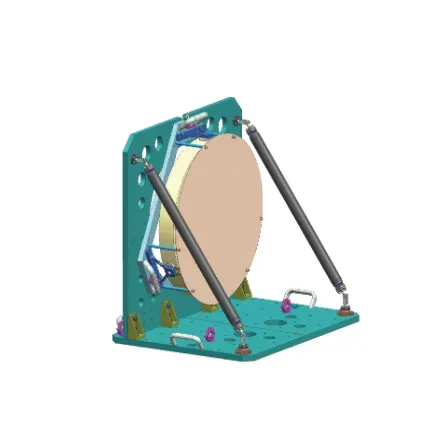
Understanding Collimator Types
The variety of collimator types reflects the diversity of optical challenges. At its simplest, a collimator aligns light into parallel beams, but depending on the system, the design can vary dramatically. A beam collimator is often used in laser applications, ensuring that the laser maintains a steady, focused output. An adjustable collimator introduces flexibility by allowing users to fine-tune alignment, which is critical in experiments or systems that require high levels of precision. For fiber optics, the adjustable fiber collimator extends this concept, providing precise control over signals transmitted through fiber networks. In scientific instruments such as spectroscopy, the collimator of a spectroscope and the collimator of spectrometer are specifically designed to provide accurate readings by ensuring the incoming light is properly collimated before analysis. Each of these collimator types serves a unique function, but together they represent the foundation of modern optical alignment.
Adjustable Collimator And Adjustable Fiber Collimator
One of the most widely used collimator types is the adjustable collimator, which allows users to control and modify the collimation of light. This adaptability is particularly important in laboratory environments, where slight changes in light behavior can alter the results of an experiment. For example, when studying spectral lines, the adjustable collimator ensures that light entering a measurement system is properly aligned and consistent. The adjustable fiber collimator takes this concept further by applying adjustability to fiber optic systems. Since fiber optics often transmit multiple signals simultaneously, the adjustable fiber collimator provides precision in minimizing signal divergence, reducing loss, and maintaining quality. Both of these collimator types highlight the importance of flexibility and control in optical design.
Beam Collimator For Lasers And Imaging
The beam collimator is another vital category in the family of collimator types. Its role is to take a diverging beam, such as one emitted from a laser, and align it into a parallel output. This ensures that the laser remains sharp and effective over long distances, which is critical in applications ranging from material processing to medical treatments. Unlike the adjustable collimator, which focuses on versatility, the beam collimator is designed for stability and consistency. It is also used in imaging systems where light needs to remain uniform across a field of view. Whether in research or industry, the beam collimator is one of the most indispensable collimator types due to its direct impact on beam quality.
Collimator Of A Spectroscope And Spectrometer
Among scientific instruments, two highly specialized collimator types are the collimator of a spectroscope and the collimator of spectrometer. Both play a central role in ensuring accuracy when analyzing light. In a spectroscope, the collimator ensures that incoming light is converted into a parallel beam before passing through a prism or diffraction grating. This step is crucial for accurate spectral analysis. Similarly, the collimator of spectrometer performs the same function but is often designed with higher precision, supporting advanced measurements in physics, chemistry, and materials science. These two collimator types show how optical alignment impacts the reliability of scientific data. Without the collimator of a spectroscope or the collimator of spectrometer, results could easily be distorted by poorly aligned light.
Collimator For Sale: Meeting Market Demand
The growing interest in finding a collimator for sale highlights the practical need for these devices in both academic and industrial sectors. Universities, laboratories, and companies often look for suppliers that can provide specific collimator types depending on their research goals or production requirements. While the beam collimator, the adjustable collimator, and the adjustable fiber collimator are frequently requested, scientific institutions often require the collimator of a spectroscope and the collimator of spectrometer for advanced research. The demand for a collimator for sale reflects the critical role these tools play in enabling progress across a wide range of optical technologies.
Future Of Collimator Types
The future of collimator types is closely tied to advancements in optical technology. As industries demand higher precision and efficiency, new materials and designs are being developed to improve durability, alignment accuracy, and environmental stability. Hybrid models that combine the flexibility of the adjustable collimator with the broadband reliability of mirror-based designs are emerging. In telecommunications, the adjustable fiber collimator will continue to evolve, supporting the expansion of global networks. In scientific research, both the collimator of a spectroscope and the collimator of spectrometer will benefit from enhanced precision, enabling discoveries at microscopic and atomic scales. The beam collimator will also advance to support high-powered laser systems, making it an essential part of future optical engineering.
Conclusion
The study of collimator types reveals just how essential these devices are to modern optics. Whether it is the adjustable collimator offering flexibility, the beam collimator ensuring laser stability, or the adjustable fiber collimator enabling efficient fiber optic transmission, each design serves a unique and critical function. Specialized devices such as the collimator of a spectroscope and the collimator of spectrometer ensure that scientific instruments achieve accurate results, while the demand for a collimator for sale highlights the widespread reliance on these tools. As optical technology continues to advance, collimator types will remain at the heart of progress, supporting industries from telecommunications to research and beyond.











