How Does a Focal Plane Array Improve Imaging?
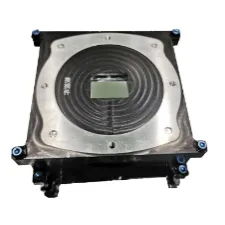
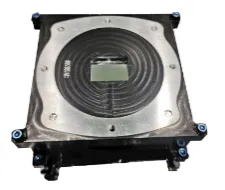
When engineers discuss advanced imaging technology, the focal plane array often stands at the center of attention. Unlike a simple sensor, this structure is composed of multiple detector elements arranged in a precise grid, allowing it to capture light at different wavelengths with high sensitivity. For applications such as earth observation, mapping, and environmental monitoring, the choice of a suitable focal plane directly determines the quality of the image data collected.
One way to understand the importance of this design is to consider the focal plane of lens. The lens does not just bend light—it must direct it accurately to the detector surface. If alignment is even slightly off, image sharpness degrades. That is why research into both optical payloads and sensor positioning is crucial. At companies with experience in satellite payload integration, these elements are not treated separately. Instead, payload and detector are engineered together, minimizing weight and enhancing efficiency.
In practical terms, this means that a focal plane camera is not just a consumer device, but can be scaled into large optical systems where high spatial resolution is required. For example, remote sensing satellites rely on advanced detectors that can handle wide-area coverage without losing detail. By integrating CMOS-based detectors with innovative payload architectures, engineers can create imaging systems that are lighter, more reliable, and less costly—yet deliver greater accuracy.
It is also worth noting the role of the focal plane shutter in specialized applications. By controlling exposure at the plane of the detector, such shutters prevent distortions during high-speed image capture. This is particularly relevant in contexts where both temporal and spatial resolution must remain consistent, such as monitoring fast-changing natural events.
The combination of sensor arrays, optical design, integration technology, and advanced satellite components forms the foundation for next-generation imaging. As industries demand faster and more accurate data, innovations at the focal plane level continue to set new standards for both scientific research and commercial applications.
What Is the Focal Plane Definition in Optical Systems?
In discussions of imaging technology, many begin with the focal plane definition, a concept that describes the exact surface where light rays converge after passing through a lens. This seemingly simple plane governs how sharply an image forms, and its accuracy is critical whether the system is designed for photography, astronomy, or remote sensing. Understanding this definition is not just theoretical—it has real implications for the performance of every optical instrument.
One way to explore this further is by examining how the focal plane scope functions. In precision optics, such scopes align reticles directly on the focal plane, ensuring that magnification changes do not shift the position of marks. This alignment enhances accuracy in measurement and observation, qualities that are also vital in advanced satellite imaging payloads. When optical sensors on satellites must provide consistent geospatial data across vast regions, precise focal plane alignment is what ensures repeatable, reliable outputs.
Another dimension comes from the focal plane in photography, a term often used by camera designers and photographers alike. Here, the concern is ensuring that the sensor surface coincides exactly with the point of sharp focus. While small consumer devices deal with this on a compact scale, aerospace platforms scale the same principle to massive detectors that must stay stable under extreme conditions. Thermal shifts, vibration, and radiation can all affect alignment, which is why engineering teams focus on durable materials and integrated designs to keep focal planes steady.
Practical implementation also involves the focal plane mark, which provides reference indicators on optics. These marks guide adjustments during calibration, making it possible to verify alignment and correct errors. For industries dependent on high spectral and spatial resolution, such as agriculture monitoring or disaster assessment, these calibration steps ensure that the imaging systems deliver consistent data quality.
Bringing these elements together, one sees how a theoretical concept like focal plane definition is deeply linked to real-world engineering. Companies experienced in both payload design and sensor integration bring these principles into practice, creating imaging systems that balance resolution, stability, and efficiency. It is at this junction of theory and application that innovation in focal plane technology continues to evolve.
Why the Focal Plane Camera Matters for Data Accuracy
When precision data is required, the focal plane camera plays an irreplaceable role. Unlike conventional imaging devices, these systems are designed around the detector surface itself, where light converges into a sharp and measurable form. By positioning the sensor directly on the focal plane, the device can record images with both spatial detail and spectral consistency. This capability becomes especially significant in earth observation missions, where every pixel carries information about terrain, vegetation, or atmosphere.
The technology behind such cameras often incorporates advanced detector structures. For instance, a focal plane array expands the system’s capability by combining multiple sensing elements into a single plane. Each element contributes to a mosaic of data, capturing variations across wavelength and intensity. In practice, this means that while one part of the array records visible light, another section might capture near-infrared, enabling multi-band imaging in a single exposure. For industries that require rapid coverage of large areas, such as forestry or urban planning, this approach provides both efficiency and versatility.
Mechanical design is equally critical. A focal plane shutter ensures that exposure is precisely controlled at the sensor level, avoiding rolling distortions that can occur during fast imaging. This detail matters not only for clarity but also for time-sensitive applications, where changes must be captured within milliseconds. From monitoring seasonal changes in agriculture to tracking sudden environmental events, shutter accuracy ensures that datasets remain consistent and usable.
Another perspective can be drawn from the focal plane of lens, a term that connects optical geometry with sensor performance. The way light is focused onto the detector dictates the sharpness of the final image. In satellite payload engineering, even the slightest misalignment can lead to blurring across thousands of kilometers of coverage. By integrating payload design with detector assembly, developers minimize such risks while reducing weight and cost.
The importance of the focal plane camera lies in its ability to merge optical precision with detector sensitivity. In environments where data reliability is critical, these systems define the standard for accuracy, pushing the boundaries of what imaging technology can deliver.