
- Afrikaans
- Albanian
- Amharic
- Arabic
- Armenian
- Azerbaijani
- Basque
- Belarusian
- Bengali
- Bosnian
- Bulgarian
- Catalan
- Cebuano
- China
- Corsican
- Croatian
- Czech
- Danish
- Dutch
- English
- Esperanto
- Estonian
- Finnish
- French
- Frisian
- Galician
- Georgian
- German
- Greek
- Gujarati
- Haitian Creole
- hausa
- hawaiian
- Hebrew
- Hindi
- Miao
- Hungarian
- Icelandic
- igbo
- Indonesian
- irish
- Italian
- Japanese
- Javanese
- Kannada
- kazakh
- Khmer
- Rwandese
- Korean
- Kurdish
- Kyrgyz
- Lao
- Latin
- Latvian
- Lithuanian
- Luxembourgish
- Macedonian
- Malgashi
- Malay
- Malayalam
- Maltese
- Maori
- Marathi
- Mongolian
- Myanmar
- Nepali
- Norwegian
- Norwegian
- Occitan
- Pashto
- Persian
- Polish
- Portuguese
- Punjabi
- Romanian
- Russian
- Samoan
- Scottish Gaelic
- Serbian
- Sesotho
- Shona
- Sindhi
- Sinhala
- Slovak
- Slovenian
- Somali
- Spanish
- Sundanese
- Swahili
- Swedish
- Tagalog
- Tajik
- Tamil
- Tatar
- Telugu
- Thai
- Turkish
- Turkmen
- Ukrainian
- Urdu
- Uighur
- Uzbek
- Vietnamese
- Welsh
- Bantu
- Yiddish
- Yoruba
- Zulu
Reflective Collimator: Advancing Optical Alignment
In the world of optics, accuracy and clarity define the success of every system. One essential device that has significantly improved the way light is controlled is the reflective collimator. Unlike lens-based systems that may introduce chromatic aberrations, the reflective collimator relies on mirrors to align beams of light into perfectly parallel rays. This unique design makes it indispensable in scientific instruments, communication systems, and imaging technologies.
The reflective collimator works alongside other advanced devices such as the off axis collimator and the reflective fiber collimator, forming a powerful group of optical tools that address diverse industrial and scientific needs. This article will explore how these devices function, their applications, and their role in shaping the future of optical precision.
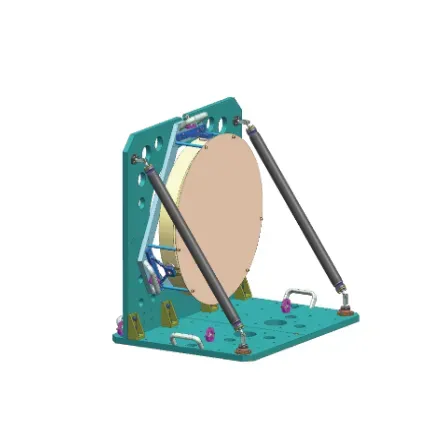
Understanding The Reflective Collimator
A reflective collimator operates by using a mirror-based optical system to collimate light. Because mirrors reflect all wavelengths equally, the reflective collimator eliminates chromatic distortions that are common with lens-based designs.
This makes the reflective collimator ideal for broadband applications such as spectroscopy and astronomy. Instruments that depend on capturing or analyzing multiple wavelengths simultaneously can achieve far greater accuracy when equipped with a reflective collimator.
Additionally, the durability of mirrors makes the reflective collimator more resistant to environmental changes, giving it stability across long-term use.
Off Axis Collimator: Complementary To Reflective Design
The off axis collimator works hand in hand with the reflective collimator in many scientific applications. By aligning light at an angle away from the optical axis, the off axis collimator reduces central obstructions and minimizes aberrations.
When paired with the reflective collimator, these systems produce highly accurate, distortion-free beams. In astronomical telescopes, this combination allows for clearer images of distant celestial bodies. In laboratory spectrographs, the off axis collimator and reflective collimator provide precise measurements across wide ranges of light.
Together, these tools demonstrate how modern collimation strategies enhance the performance of advanced instruments.
Reflective Fiber Collimator: Innovation For Telecommunications
The reflective fiber collimator applies the principles of reflective optics directly to fiber optic systems. By collimating light that exits a fiber, the reflective fiber collimator ensures minimal signal divergence, reducing data loss and improving transmission quality.
This innovation has become critical in the telecommunications industry. High-speed data networks require precise optical alignment, and the reflective fiber collimator makes this possible across a broad spectrum of wavelengths.
Unlike standard devices, the reflective fiber collimator also reduces chromatic distortions, making it particularly valuable in systems that handle multiple channels simultaneously. As demand for bandwidth grows, the role of the reflective fiber collimator will continue to expand.
Applications Of Reflective Collimator Systems
The reflective collimator is used in a wide range of industries. Some of the most important applications include:
Spectroscopy – A reflective collimator allows for accurate analysis of wavelengths by eliminating chromatic errors.
Astronomy – Telescopes equipped with the reflective collimator provide sharper, more reliable imaging of distant galaxies.
Laser technology – The reflective collimator ensures that beams remain parallel, consistent, and distortion-free.
Telecommunications – Paired with the reflective fiber collimator, these systems guarantee efficient signal transfer over long distances.
Each of these examples demonstrates the unique strength of the reflective collimator in enhancing clarity and accuracy.
Design Advantages Over Traditional Systems
One of the main advantages of the reflective collimator is its immunity to chromatic aberrations. Lenses tend to bend light at slightly different angles depending on the wavelength, which introduces distortion. Mirrors used in the reflective collimator, however, treat all wavelengths equally, producing perfectly aligned beams.
Another advantage is temperature stability. A reflective collimator does not expand or contract with heat in the same way that lens systems might. This makes the reflective collimator ideal for environments where stability is crucial.
Compared to the off axis collimator, which reduces obstructions, and the reflective fiber collimator, which optimizes fiber optics, the reflective collimator stands out as the most universal tool for eliminating chromatic errors.
Future Potential Of Reflective Collimator Technology
The future of optical systems will rely even more heavily on devices such as the reflective collimator. As scientific instruments demand higher precision and as communication systems expand, mirror-based collimation will remain a standard.
Advancements are being made in coating technologies that improve reflectivity, durability, and resistance to environmental wear. This means that the reflective collimator will become even more efficient and long-lasting in the future.
At the same time, hybrid systems are being developed where the reflective collimator is combined with the reflective fiber collimator or integrated with off axis collimator designs to create compact yet powerful solutions for modern optics.
Conclusion
The reflective collimator represents one of the most powerful tools in optical engineering. Its ability to eliminate chromatic aberrations, maintain stability, and provide precise alignment has made it a standard in spectroscopy, astronomy, telecommunications, and laser systems.
When paired with complementary designs such as the off axis collimator and the reflective fiber collimator, the reflective collimator becomes part of a versatile toolkit for achieving optical accuracy across multiple industries.
As innovation continues, the reflective collimator will remain at the core of precision optics, shaping the way we study the universe, transfer information, and build advanced technologies for the future.