- Afrikaans
- Albanian
- Amharic
- Arabic
- Armenian
- Azerbaijani
- Basque
- Belarusian
- Bengali
- Bosnian
- Bulgarian
- Catalan
- Cebuano
- China
- Corsican
- Croatian
- Czech
- Danish
- Dutch
- English
- Esperanto
- Estonian
- Finnish
- French
- Frisian
- Galician
- Georgian
- German
- Greek
- Gujarati
- Haitian Creole
- hausa
- hawaiian
- Hebrew
- Hindi
- Miao
- Hungarian
- Icelandic
- igbo
- Indonesian
- irish
- Italian
- Japanese
- Javanese
- Kannada
- kazakh
- Khmer
- Rwandese
- Korean
- Kurdish
- Kyrgyz
- Lao
- Latin
- Latvian
- Lithuanian
- Luxembourgish
- Macedonian
- Malgashi
- Malay
- Malayalam
- Maltese
- Maori
- Marathi
- Mongolian
- Myanmar
- Nepali
- Norwegian
- Norwegian
- Occitan
- Pashto
- Persian
- Polish
- Portuguese
- Punjabi
- Romanian
- Russian
- Samoan
- Scottish Gaelic
- Serbian
- Sesotho
- Shona
- Sindhi
- Sinhala
- Slovak
- Slovenian
- Somali
- Spanish
- Sundanese
- Swahili
- Swedish
- Tagalog
- Tajik
- Tamil
- Tatar
- Telugu
- Thai
- Turkish
- Turkmen
- Ukrainian
- Urdu
- Uighur
- Uzbek
- Vietnamese
- Welsh
- Bantu
- Yiddish
- Yoruba
- Zulu
nouvelles
Satellite OBC Selection Guide (II): Mission Duration-Matching OBC Life and Component Selection
The service life of satellite OBC is not determined by a single factor, but the core depends on the tolerance of electronic components to space radiation, and the task duration directly determines the component selection, design complexity and cost input of OBC, which is the key constraint condition for OBC selection.
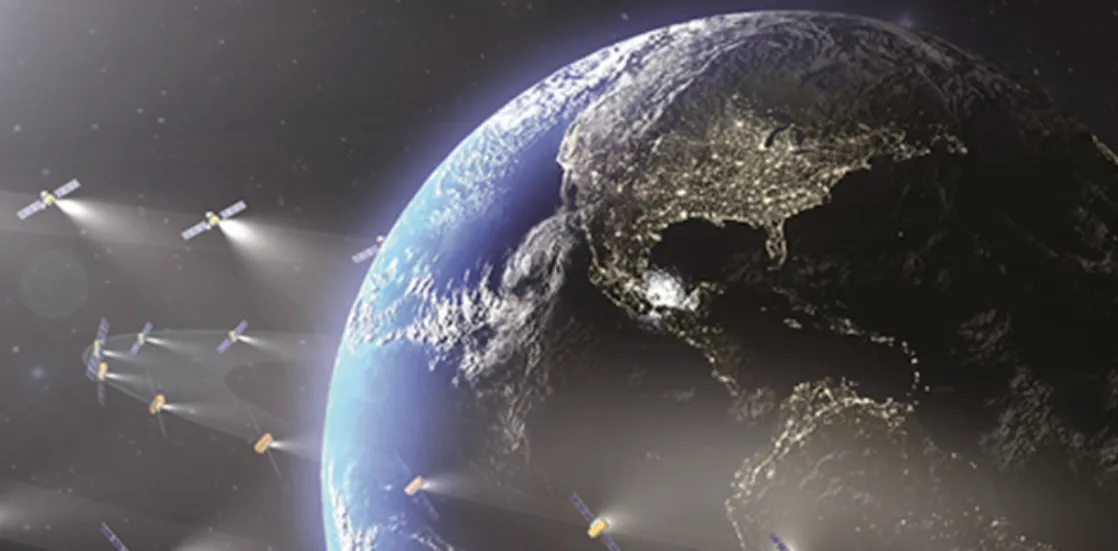
Correspondence between Task Duration and Component Selection
The radiation of cosmic rays and solar particles in space environment will gradually age the electronic components of OBC, leading to performance attenuation or failure. Therefore, different levels of components should be selected according to the task cycle:
Short-term mission (< 2 years, such as LEO scientific experimental satellite and student satellite): COTS components can be used. This kind of component has the advantages of low cost, convenient procurement and short development cycle, which can effectively control the overall cost of the satellite. However, due to the weak radiation resistance of COTS components, it is necessary to make up for the defects by "fault-tolerant design" (such as hardware redundancy and software watchdog) to ensure the reliability during the mission period.
Long-term mission (> 5 years, such as GEO communication satellite and meteorological satellite): Rad-Hard components must be used. Radiation-resistant components can improve their radiation tolerance through special processes (such as strengthening chip structure and shielding materials), and can work stably in long-term strong radiation environment. Common anti-radiation components include anti-radiation processor, EDAC (Error Detection and Correction) memory and so on.
Relationship between task duration and OBC design
In addition to component selection, the overall design of OBC also needs to match the task duration:
The long-term task of OBC needs to optimize "power management" and "heat dissipation design"-for example, adopting low-power circuit architecture to reduce component heating; Use efficient heat dissipation materials to avoid performance degradation caused by long-term high temperature.
Regardless of short-term or long-term tasks, OBC's "wiring reliability" and "interface protection" must meet aerospace standards (such as ECSS) to avoid shortening the actual service life due to physical structure failures (such as loose wiring and interface oxidation).
In short, the task duration is the baton of OBC component selection: short-term tasks can balance the cost performance through "low-cost components+fault-tolerant design", while long-term tasks need "anti-radiation components+robust design" to guarantee the life.