- Afrikaans
- Albanian
- Amharic
- Arabic
- Armenian
- Azerbaijani
- Basque
- Belarusian
- Bengali
- Bosnian
- Bulgarian
- Catalan
- Cebuano
- China
- Corsican
- Croatian
- Czech
- Danish
- Dutch
- English
- Esperanto
- Estonian
- Finnish
- French
- Frisian
- Galician
- Georgian
- German
- Greek
- Gujarati
- Haitian Creole
- hausa
- hawaiian
- Hebrew
- Hindi
- Miao
- Hungarian
- Icelandic
- igbo
- Indonesian
- irish
- Italian
- Japanese
- Javanese
- Kannada
- kazakh
- Khmer
- Rwandese
- Korean
- Kurdish
- Kyrgyz
- Lao
- Latin
- Latvian
- Lithuanian
- Luxembourgish
- Macedonian
- Malgashi
- Malay
- Malayalam
- Maltese
- Maori
- Marathi
- Mongolian
- Myanmar
- Nepali
- Norwegian
- Norwegian
- Occitan
- Pashto
- Persian
- Polish
- Portuguese
- Punjabi
- Romanian
- Russian
- Samoan
- Scottish Gaelic
- Serbian
- Sesotho
- Shona
- Sindhi
- Sinhala
- Slovak
- Slovenian
- Somali
- Spanish
- Sundanese
- Swahili
- Swedish
- Tagalog
- Tajik
- Tamil
- Tatar
- Telugu
- Thai
- Turkish
- Turkmen
- Ukrainian
- Urdu
- Uighur
- Uzbek
- Vietnamese
- Welsh
- Bantu
- Yiddish
- Yoruba
- Zulu
Cloud-Based Ground Stations and Software-Defined Operations: A Fundamental Transformation of Satellite Operation Models
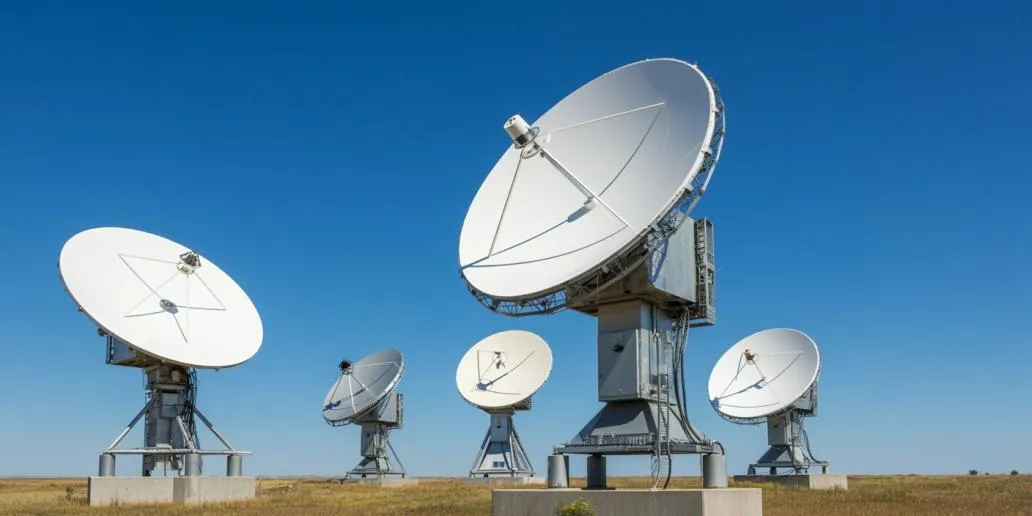
Cloud-based ground stations and software-defined operations represent a fundamental shift in operational models across the global satellite industry. Traditional ground station construction entails prohibitive costs, with a single large-scale antenna system costing millions of US dollars, and suffers from inherent drawbacks such as long construction cycles, poor functional scalability, and low operation and maintenance (O&M) efficiency. In contrast, cloud-based ground stations virtualize conventional hardware and deploy it on the cloud, achieving dual optimizations in construction costs and deployment cycles. A software-defined operation system enables flexible scheduling of satellite resources and intelligent full-process management. Together, they propel the satellite operation industry into a new stage of development.
Core Driver: Software-Defined Satellite (SDS) Technology
Software-Defined Satellite (SDS) technology serves as the core enabler of this operational transformation. Unlike traditional static satellites with fixed functions and parameters, SDS supports in-orbit reconfiguration, allowing adjustments to coverage, communication frequencies, and even payload capabilities directly via software updates without hardware modifications. This in-orbit flexible reconfigurability unlocks new possibilities for diversified satellite services while imposing equivalent flexibility requirements on ground operation systems, forming the foundational prerequisite for the development of cloud-based ground stations and software-defined operation architectures.
Meanwhile, software-defined technology realizes multiple payload functions on a universal hardware platform, eliminating the additional costs of developing dedicated hardware for diverse business needs. This creates end-to-end cost optimization and capability synergy from the satellite to the ground, laying a technical foundation for the large-scale and flexible development of satellite operations.
Core Technical Implementation Paths of Cloud-Based Ground Stations
The core value of cloud-based ground stations lies in drastically reducing construction costs and significantly improving operational efficiency through technological innovation. Its key technical implementation paths fall into three major categories:
- Equipment Virtualization Technology: Dedicated hardware of traditional ground stations—including antenna controllers, signal processors, and data storage devices—is virtualized and deployed on general-purpose cloud servers. This model drastically cuts upfront investment in dedicated hardware, while dynamic cloud resource scheduling markedly improves equipment and computing resource utilization, avoiding the idle waste of hardware resources common in conventional ground stations.
- Distributed Network Architecture: A distributed network of ground station nodes is established to achieve global signal coverage and data reception. Multi-node redundancy design greatly reduces the risk of service interruption caused by single points of failure, enhancing the overall stability and reliability of the ground station system.
- Full-Process Automated Management: Leveraging the automated management capabilities of cloud platforms, it enables remote real-time monitoring, fault early warning, and O&M management of ground station equipment, minimizing manual intervention. This reduces O&M costs while improving system response efficiency and management precision.
Core Capability System of Software-Defined Operations
Software-defined operations embody the pivotal shift of satellite operations from hardware-driven to software-driven models. Its core capability system covers three major dimensions:
- Software-Defined Signal Processing: Based on Software-Defined Radio (SDR) technology, it supports adaptation to multiple communication protocols and signal processing functions on a single hardware platform, greatly boosting the flexibility and reusability of ground equipment. It accommodates signal processing needs of different satellites and services without hardware replacement, while significantly reducing equipment iteration and maintenance costs.
- Intelligent Dynamic Resource Management: An intelligent software system facilitates global dynamic allocation and optimized scheduling of satellite, ground station, and computing resources. It rapidly adjusts resource allocation schemes in response to real-time changes in business demands, maximizing resource utilization efficiency to suit the diversified and fragmented business needs of commercial aerospace.
- End-to-End Automated Business Processes: Standardized software systems enable full-process automated control from satellite mission planning and resource scheduling to data reception, processing, and product distribution. This reduces errors and delays caused by manual operations, improves operational efficiency, and ensures standardized and traceable business processes.
Core Value and Industry Challenges of Technical Implementation
The deep integration of cloud-based ground stations and software-defined operations delivers substantial commercial value to satellite operators. Industry analysis shows that cloud and software-defined technologies can reduce ground station construction costs by over 60% and daily operational costs by over 40%. Furthermore, the cloud-deployed architecture supports rapid business expansion and elastic scaling, allowing operators to flexibly adjust resource allocation based on business needs without large-scale hardware retrofits or construction, significantly lowering the entry barriers and business expansion costs of commercial aerospace operations.
Nonetheless, the industry faces critical challenges in large-scale technical deployment. From 2025 to 2030, the unification of technical standards and achievement of interoperability will emerge as central industry priorities. Ground equipment suppliers and service providers must adopt universal technical standards and establish open specifications and interface protocols to prevent satellite operators from being locked into closed systems, thereby driving the global large-scale application of cloud-based ground station and software-defined operation technologies.