- Afrikaans
- Albanian
- Amharic
- Arabic
- Armenian
- Azerbaijani
- Basque
- Belarusian
- Bengali
- Bosnian
- Bulgarian
- Catalan
- Cebuano
- China
- Corsican
- Croatian
- Czech
- Danish
- Dutch
- English
- Esperanto
- Estonian
- Finnish
- French
- Frisian
- Galician
- Georgian
- German
- Greek
- Gujarati
- Haitian Creole
- hausa
- hawaiian
- Hebrew
- Hindi
- Miao
- Hungarian
- Icelandic
- igbo
- Indonesian
- irish
- Italian
- Japanese
- Javanese
- Kannada
- kazakh
- Khmer
- Rwandese
- Korean
- Kurdish
- Kyrgyz
- Lao
- Latin
- Latvian
- Lithuanian
- Luxembourgish
- Macedonian
- Malgashi
- Malay
- Malayalam
- Maltese
- Maori
- Marathi
- Mongolian
- Myanmar
- Nepali
- Norwegian
- Norwegian
- Occitan
- Pashto
- Persian
- Polish
- Portuguese
- Punjabi
- Romanian
- Russian
- Samoan
- Scottish Gaelic
- Serbian
- Sesotho
- Shona
- Sindhi
- Sinhala
- Slovak
- Slovenian
- Somali
- Spanish
- Sundanese
- Swahili
- Swedish
- Tagalog
- Tajik
- Tamil
- Tatar
- Telugu
- Thai
- Turkish
- Turkmen
- Ukrainian
- Urdu
- Uighur
- Uzbek
- Vietnamese
- Welsh
- Bantu
- Yiddish
- Yoruba
- Zulu
Structure and Mechanism System: The "Robust Skeleton" of LEO Satellites and Innovations in Materials and Manufacturin
Introduction
During launch, LEO satellites endure intense vibration and shock; while in orbit, they face extreme temperature fluctuations, radiation, and other harsh space conditions. These demands require the structure and mechanism system to be lightweight, strong, and stable. As a critical subsystem accounting for 15%–20% of total satellite cost, the structure and mechanism system acts as the satellite’s robust skeleton and provides the fundamental protection for all onboard subsystems. This article elaborates on its design philosophy, materials, manufacturing processes, and cost composition.

I. Core Components: Dual Support of “Primary Structure + Deployable Mechanism System”
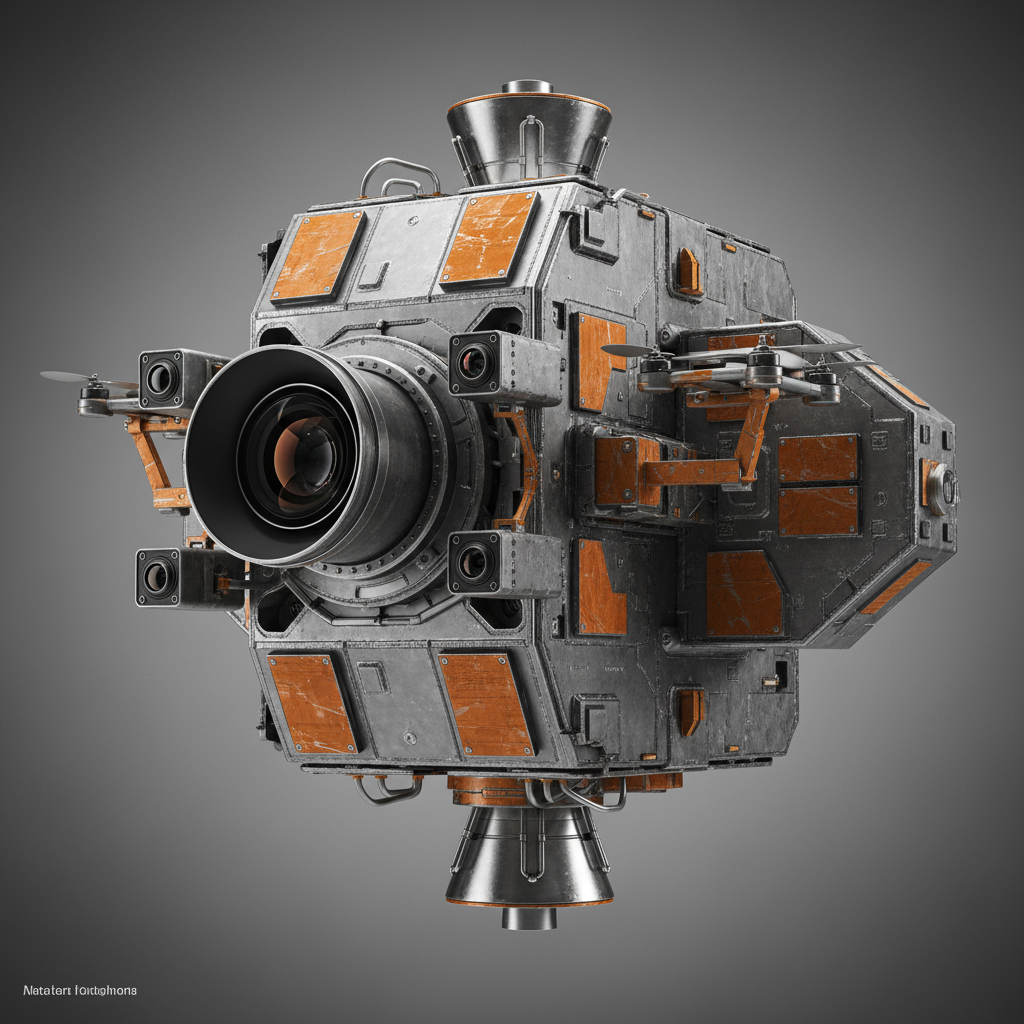
The structure and mechanism system consists of two major parts: the primary structure and the deployable mechanism system, responsible for static support and dynamic adjustment respectively.
1. Primary Structure: The Rigid Skeleton of the Satellite
The primary structure provides mechanical support and protection for all subsystems. Its core components include:
- Central load-bearing cylinder: Carries launch and on-orbit loads, serving as the structural core.
- Equipment mounting panels: Provide mounting interfaces for satellite payloads and subsystems, requiring high precision and thermal stability.
- Hull / Outer structure: Provides aerodynamic shaping and protection against space radiation and micro-meteoroid impacts.
- Solar panel support structures: Integrated with the main body to ensure stable deployment and operation.
The main frame of Starlink V2.0 Mini is manufactured from high-strength, low-density carbon fiber composite, perfectly matching its dimensions of 4.1 m in length and 2.7 m in width, achieving both lightweight design and structural rigidity.
The primary structure accounts for 60%–70% of the structure system cost ($400,000–$600,000), with cost driven mainly by material consumption and manufacturing complexity.
2. Mechanism and Deployable System: The Movable Joints of the Satellite
The deployable mechanism system enables in-orbit deployment and attitude adjustment. Core types include:
- Solar panel deployment mechanisms: Unfold and lock folded panels to ensure power supply.
- Antenna deployment mechanisms: Deploy large antennas from stowed to operational configuration.
- Solar array drive mechanisms: Rotate solar panels to track the Sun and improve power efficiency.
- Mast / Boom deployment mechanisms: Deploy sensors and antennas to expand mission capability.
These mechanisms must meet strict requirements:
- High reliability: Successful one-time deployment in the space environment.
- Лёгкі: Minimize satellite mass burden.
- Low-impact: Avoid disturbance to other subsystems.
This segment accounts for 20%–30% of the structure system cost ($150,000–$250,000), depending mainly on complexity and reliability standards.
II. Material Selection: The Absolute Dominance of Carbon Fiber Composites
Satellite structural materials must balance strength, stiffness, mass, and thermal stability. With outstanding comprehensive performance, carbon fiber reinforced polymer (CFRP) has become the undisputed industry standard.
1. Core Advantages
- Лёгкі: Density is only ~60% of aluminum alloy and ~21% of steel, greatly reducing satellite weight.
- Ultra-high strength: 5–7 times the strength of steel; a 5 mm diameter carbon fiber rope can lift two SUVs.
- Environmental resistance: Resists extreme temperatures and radiation; extremely low coefficient of thermal expansion ensures dimensional stability under solar heat cycling.
- Moldability: Can be formed into complex structural components via various processes, supporting customized satellite design.
2. Application Ratio
At present, carbon fiber accounts for 60%–80% of primary structural components, trusses, and housings. In terms of structural mass, CFRP represents 70%–90% of spacecraft weight. It has become an industry consensus that 80%–90% of satellite structures can be made from carbon fiber.
3. Cost Share
Carbon fiber materials account for 40%–50% of the structure system cost ($250,000–$450,000). Cost variations come from:
- Material grade: Aerospace-grade carbon fiber requires ultra-high purity and strength.
- Procurement scale: Bulk purchasing reduces costs by 15%–20%.
III. Manufacturing Processes: Dual Pursuit of Precision and Efficiency
Manufacturing processes directly determine structural accuracy, reliability, and cost. Mainstream processes include:
- Automated fiber placement (AFP): Improves efficiency and consistency for large-scale components.
- Resin Transfer Molding (RTM): Suitable for complex parts with high dimensional precision and stable mechanical properties.
- Autoclave curing: Ensures full consolidation of composites and enhances environmental durability.
- 3D printing: Used for complex internal structures and functional parts, shortening R&D cycles and reducing custom costs.
Manufacturing processes account for 30%–35% of the structure system cost ($200,000–$300,000). Key cost drivers include process difficulty and quality control requirements — for example, autoclave curing requires strict temperature and pressure control, which significantly increases production cost.
IV. Industry Trends: Lightweight, Low-Cost, and Scalable
1. Lightweight Upgrade
Higher-performance carbon fiber with increased strength and lower density continues to emerge. Meanwhile, integrated structural design reduces part count and further lowers mass.
2. Cost Optimization Paths
- Domestic substitution: Improved maturity of domestic aerospace-grade carbon fiber gradually replaces imports, reducing material costs.
- Large-scale production: Automated production lines reduce labor costs; mass manufacturing amortizes process development expenses.
- Process innovation: Widespread adoption of 3D printing and automated fiber placement shortens cycles and lowers scrap rates.
3. Adaptation to Large-Scale Constellation Deployment
With the large-scale rollout of satellite internet, structure and mechanism systems are moving toward standardization and modularization. Unified structural interfaces and deployable mechanism designs enable mass production and support rapid satellite delivery.
V. Core Value: Structure as the Safety Foundation of the Satellite
The reliability of the structure and mechanism system directly determines launch success rate and on-orbit service life.
Under the commercial aerospace trend of low cost, high reliability, and large-scale deployment, material innovation, process optimization, and standardized design of the structure system will be key to reducing satellite costs, improving deployment efficiency, and laying the foundation for the widespread commercialization of the LEO satellite industry.