- Afrikaans
- Albanian
- Amharic
- Arabic
- Armenian
- Azerbaijani
- Basque
- Belarusian
- Bengali
- Bosnian
- Bulgarian
- Catalan
- Cebuano
- China
- Corsican
- Croatian
- Czech
- Danish
- Dutch
- English
- Esperanto
- Estonian
- Finnish
- French
- Frisian
- Galician
- Georgian
- German
- Greek
- Gujarati
- Haitian Creole
- hausa
- hawaiian
- Hebrew
- Hindi
- Miao
- Hungarian
- Icelandic
- igbo
- Indonesian
- irish
- Italian
- Japanese
- Javanese
- Kannada
- kazakh
- Khmer
- Rwandese
- Korean
- Kurdish
- Kyrgyz
- Lao
- Latin
- Latvian
- Lithuanian
- Luxembourgish
- Macedonian
- Malgashi
- Malay
- Malayalam
- Maltese
- Maori
- Marathi
- Mongolian
- Myanmar
- Nepali
- Norwegian
- Norwegian
- Occitan
- Pashto
- Persian
- Polish
- Portuguese
- Punjabi
- Romanian
- Russian
- Samoan
- Scottish Gaelic
- Serbian
- Sesotho
- Shona
- Sindhi
- Sinhala
- Slovak
- Slovenian
- Somali
- Spanish
- Sundanese
- Swahili
- Swedish
- Tagalog
- Tajik
- Tamil
- Tatar
- Telugu
- Thai
- Turkish
- Turkmen
- Ukrainian
- Urdu
- Uighur
- Uzbek
- Vietnamese
- Welsh
- Bantu
- Yiddish
- Yoruba
- Zulu
Collimator Of Spectrometer: Precision Within Collimator Types
Modern science depends on instruments that can measure light and radiation with extreme accuracy. One of the most critical components in such instruments is a collimator. By aligning beams into parallel paths, collimators reduce distortion and ensure reliable data collection. Among the many collimator types, the collimator of spectrometer stands out as one of the most vital, ensuring accuracy in wavelength and intensity measurements.
This article explores the role of the collimator of spectrometer, how it compares with other designs such as the beam collimator, the adjustable collimator, and the adjustable fiber collimator, and its connection to the collimator of a spectroscope. It also highlights the increasing availability of collimator for sale, showing how these instruments are spreading across industries and laboratories worldwide.
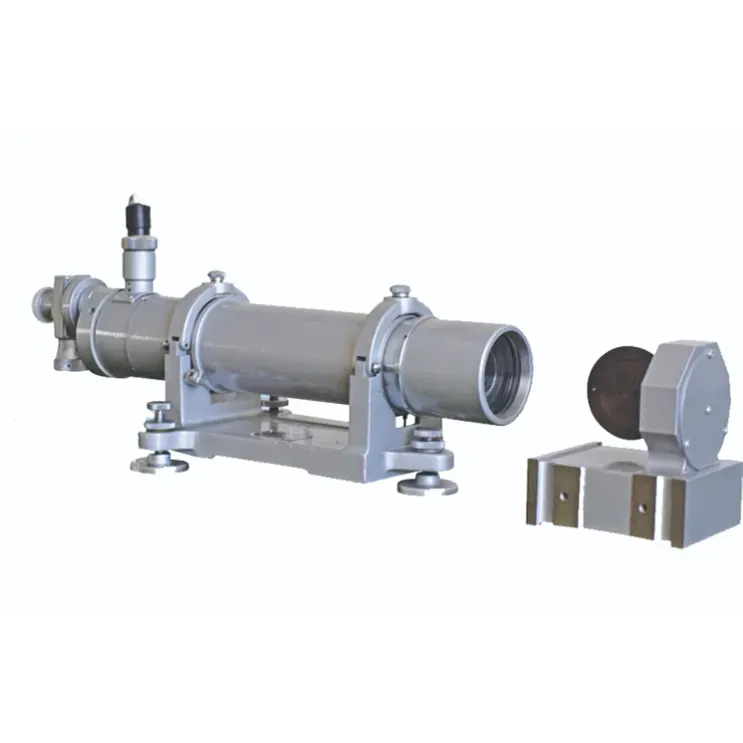
A Collimator: The Foundation Of Optical Accuracy
At its core, a collimator ensures that light or radiation travels in parallel beams. Without this precision, instruments would produce inconsistent or unreliable results. In medicine, physics, chemistry, and communication, a collimator is often the unseen component that guarantees accuracy.
From the beam collimator used in laser optics to the adjustable fiber collimator in telecommunications, every version of a collimator shares the same goal: keeping beams aligned for maximum performance.
Collimator Types: Meeting Different Demands
Over the years, engineers and scientists have developed multiple collimator types to serve specialized functions. Some of the most common include:
Beam collimator: Produces stable, parallel beams for lasers, imaging, and radiation.
Adjustable collimator: Allows users to modify beam focus and aperture.
Adjustable fiber collimator: Optimized for optical fibers in communication systems.
Collimator of a spectroscope: Provides aligned beams for spectral line analysis.
Collimator of spectrometer: Ensures accuracy in wavelength and intensity measurements.
Each of these collimator types serves a unique role, proving that collimation is not one-size-fits-all but instead tailored to exact needs.
Collimator Of Spectrometer: A Critical Component
The collimator of spectrometer is an essential part of spectrometry devices. Spectrometers are widely used to measure light intensity, wavelength, and composition. Without the collimator of spectrometer, incoming light would scatter, making it impossible to achieve consistent results.
In chemistry, the collimator of spectrometer helps analyze unknown substances by ensuring precise wavelength measurements. In environmental science, it assists in monitoring pollution and atmospheric gases. In physics, it ensures accurate optical experiments.
The precision of the collimator of spectrometer directly determines the reliability of the data, making it one of the most important collimator types in research.
Collimator Of A Spectroscope: A Close Relative
Closely related to the spectrometer version is the collimator of a spectroscope. While the collimator of spectrometer ensures measurement accuracy, the collimator of a spectroscope is vital for observing and separating spectral lines.
For example, astronomers rely on the collimator of a spectroscope to study starlight, while chemists use it to identify elements based on their emission lines. Together, these two collimator types support both observational and analytical sciences.
Their complementary roles show how collimation technology advances different branches of research.
Beam Collimator: Stability In Broader Applications
Beyond spectrometers and spectroscopes, the beam collimator is widely used in other industries. The beam collimator generates consistent, parallel beams, which are essential in imaging, radiation therapy, and laser optics.
Its stability makes the beam collimator one of the most reliable collimator types. Unlike the specialized collimator of spectrometer, the beam collimator is used across a broad range of applications, from laboratories to medical facilities.
This universality demonstrates the foundational role of collimation in science and technology.
Adjustable Collimator: Flexibility Across Experiments
In contrast to fixed designs, the adjustable collimator provides flexibility. Users can adjust parameters such as beam size and focus, making the adjustable collimator ideal for research environments where requirements change frequently.
For example, in optical laboratories, the adjustable collimator can adapt to different experimental setups without requiring multiple instruments. This saves time and resources while maintaining precision.
Though less specialized than the collimator of spectrometer, the adjustable collimator plays an important role in ensuring adaptable solutions.
Adjustable Fiber Collimator: Enabling Telecommunications
One of the most modern designs is the adjustable fiber collimator, created specifically for fiber optic systems. In global telecommunications, accuracy is critical, and the adjustable fiber collimator ensures minimal signal loss during data transmission.
Unlike the beam collimator or collimator of spectrometer, which focus on scientific accuracy, the adjustable fiber collimator addresses the demands of high-speed communication. Its ability to tune for different fibers and wavelengths makes it one of the most advanced collimator types in use today.
As networks continue to expand, the adjustable fiber collimator will remain essential in keeping global communication systems efficient.
Collimator For Sale: A Growing Market
With industries ranging from medicine to telecommunications relying on collimation, the demand for collimator for sale is expanding rapidly. Companies now offer a wide variety of designs, from basic beam collimator models to sophisticated adjustable fiber collimator systems.
Researchers may purchase the collimator of spectrometer or the collimator of a spectroscope for laboratory experiments, while engineers working on communication infrastructure invest in the adjustable collimator or adjustable fiber collimator.
The global availability of collimator for sale reflects just how indispensable these devices have become.
Conclusion
The collimator of spectrometer is a cornerstone of modern measurement technology, ensuring that data is accurate and reliable across disciplines. Alongside the collimator of a spectroscope, it demonstrates how specialized collimator types serve different yet complementary scientific roles.
The broader field of collimation, supported by tools such as the beam collimator, adjustable collimator, and adjustable fiber collimator, shows how innovation continues to meet evolving demands. Meanwhile, the growing market for collimator for sale makes these essential tools more widely accessible.
In the end, whether it is a collimator in a laboratory, a beam collimator in a medical device, or the collimator of spectrometer in analytical science, all serve the same purpose: transforming light into precision. As technology advances, the importance of these collimator types will only continue to grow, shaping the future of optics and measurement.