HighEfficiency SpaceLevel Perovskite Solar Cell China Factory and Suppliers
HighEfficiency SpaceLevel Perovskite Solar Cell China Factory and Suppliers
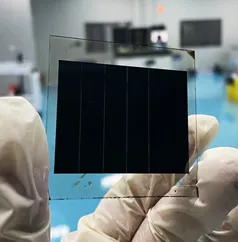
The Space-Level Perovskite Solar Cell represents a breakthrough in photovoltaic technology, specifically engineered for the extreme rigors of outer space. By utilizing a sophisticated combination of calcium-titanium-mineral materials, these cells provide unparalleled energy conversion efficiency and structural durability, ensuring reliable power generation for satellites, deep space probes, and low-Earth orbit (LEO) missions.
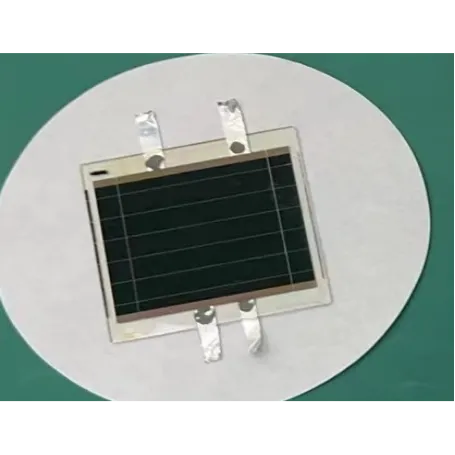
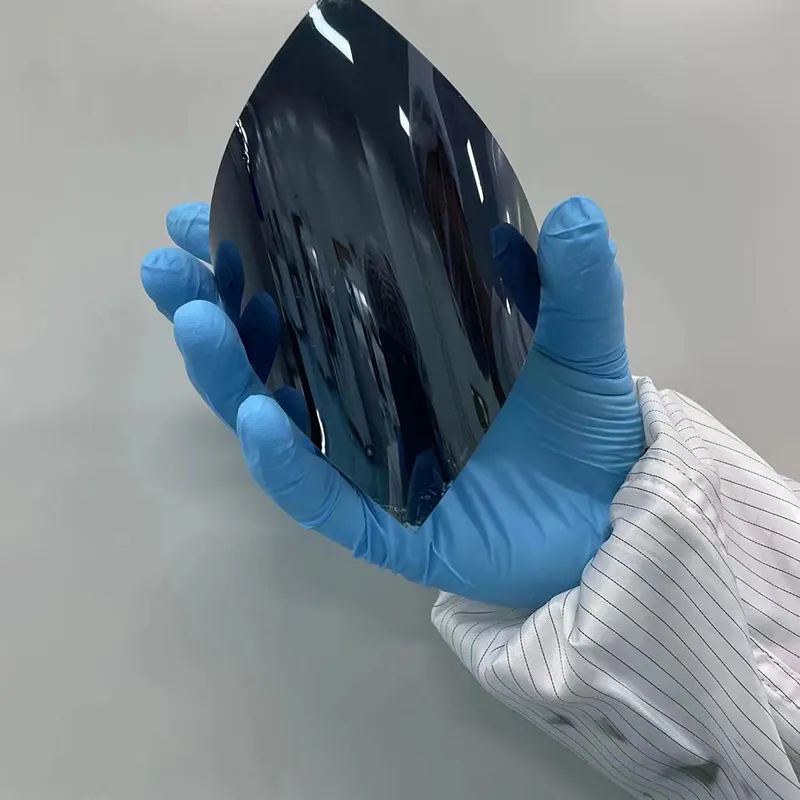
Designed to withstand intense cosmic radiation and extreme thermal cycling, our perovskite solar cells offer a lightweight yet high-performance alternative to traditional space-grade panels. With available configurations in both rigid and flexible designs, these cells maximize energy absorption and operational longevity, providing a critical power foundation for the next generation of aerospace exploration and satellite communication systems.
Detailed Parameters
| Conversion Efficiency (AM0) | 23.9% (Single Junction) / 24.5% (Stacked) | Conversion Efficiency (AM1.5) | 22.7% |
|---|---|---|---|
| Monolithic Size | 50mm × 50mm | Working Temperature | -100℃ to +110℃ |
| Thermal Impact Range | -90℃ to +90℃ (Heating rate: 20℃/min) | Impact Cycle Count | 500 times (Continuous testing) |
| Radiation Tolerance | 1MeV, 3×10¹⁴e/cm2 (Electron Irradiation) | Post-Annealing Efficiency | Maintains 22.8% after 24h AM0 irradiation |
| Rigid Cell Weight | 0.8kg/m² | Flexible Cell Weight | 0.5kg/m² |
Key Advantages
Radiation Hardened
Engineered to resist proton and electron irradiation, maintaining stable efficiency in high-radiation cosmic environments.
Thermal Stability
Capable of operating from -100℃ to +110℃, ensuring consistent power output during orbital temperature swings.
Ultra-High Efficiency
Stacked junction technology achieves up to 24.5% efficiency, maximizing energy harvest per square meter.
Flexible Integration
PI membrane design allows for 180° full angle bending, ideal for curved satellite surfaces and deployable arrays.
Lightweight Design
With weights as low as 0.5kg/m², these cells significantly reduce launch mass and overall satellite weight.
Advanced Materials
Utilizes silver-clad busbars and specialized perovskite minerals to prevent degradation and enhance conductivity.
Product Gallery
Management Platforms
Array Configuration
Optimized layout management for single and stacked junction cell arrays to maximize voltage output.
Power Control Integration
Seamless synchronization with satellite Power Control Units (PCU) for efficient energy distribution.
Thermal Monitoring
Real-time tracking of cell temperature to ensure operation remains within the -100℃ to +110℃ range.
Radiation Analysis
Predictive modeling of efficiency decay based on electron and proton irradiation levels in specific orbits.
Deployment Control
Management of folding and unfolding mechanisms for flexible perovskite arrays during orbital deployment.
Efficiency Analytics
Advanced data tracking of AM0 conversion rates to optimize satellite orientation for maximum sunlight.
Investment Return Comparison
| Performance Metric | Standard Space Cells | Perovskite Space Cells |
|---|---|---|
| Mass-to-Power Ratio | Higher (Heavier) | Ultra-Low (Lightweight) |
| Radiation Resilience | Moderate Decay | High Stability (Post-Annealing) |
| Flexibility | Rigid Only | Rigid & Flexible Options |
| Thermal Range | Standard Space Grade | Extreme (-100℃ to +110℃) |
| Conversion Rate | Industry Average | Superior (Up to 24.5%) |
Frequently Asked Questions
They offer a superior power-to-weight ratio and high radiation resistance, which are critical for reducing launch costs and ensuring longevity in the harsh environment of space.
The flexible version utilizes a PI membrane integrated design, allowing for 180° bending and a lower weight of 0.5kg/m², compared to 0.8kg/m² for rigid cells.
Under 1MeV, 3×10¹⁴e/cm2 irradiation, efficiency may slightly decrease from 23.9% to 22.8%, but it remains highly stable after 24h of AM0 irradiation annealing.
Yes, they are specifically engineered for extreme thermal stability, with a working temperature range from -100℃ to +110℃.
Stacked cells utilize multiple layers to capture a wider spectrum of light, increasing the photoelectric conversion efficiency to 24.5% compared to 23.9% in single junction cells.
Absolutely. Their lightweight nature and high efficiency make them ideal for high-altitude UAVs requiring long-endurance power solutions.