Understanding Different Types of Hinges in Space Applications
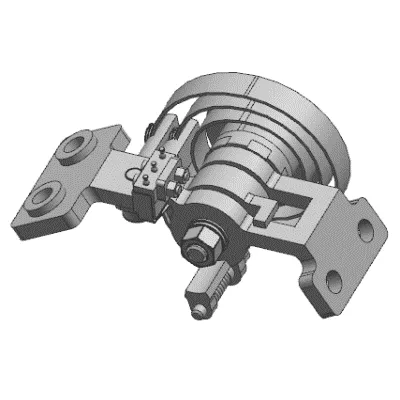
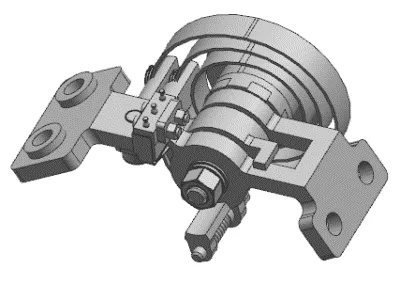
When discussing different types of hinges, most people think of furniture, cabinets, or interior doors. Yet, in aerospace engineering, hinges serve a far more demanding purpose. Our company, rooted in the field of satellites and advanced space technology, develops high-reliability hinge systems that operate in extreme environments. These precision components ensure that satellite panels, antenna arrays, and optical instruments can deploy smoothly after launch.
In spacecraft design, cabinet hinges types or cupboard door hinges types might seem unrelated at first glance, but the underlying mechanical principles are surprisingly similar. Both require controlled motion, durability, and precise alignment. In orbital systems, however, the stakes are higher. A hinge must remain lightweight while withstanding radiation, temperature fluctuations, and vibration during launch. Unlike terrestrial hardware, a malfunction in orbit cannot be corrected, which is why our engineers adapt proven hinge concepts into aerospace-grade mechanisms.
There are multiple door hinges types and concealed hinges types in industrial use, each with unique mechanical properties. Translating this diversity into aerospace hinges allows for solutions ranging from compact deployment units to large-scale rotating joints. For example, a focal plane camera in a satellite may rely on a fine-tuned hinge for protective covers, while solar panels require robust but flexible mechanisms. By leveraging knowledge from varied furniture hinges types, aerospace engineers can design systems that optimize strength-to-weight ratios and ensure long-term reliability.
Another important aspect is adaptability. Just as architects select from internal door hinges types to match different materials, spacecraft designers choose hinge systems based on mission profile. A deep-space probe may need hinges that resist extreme cold, while Earth-orbiting satellites prioritize repeated movement cycles. Our company’s continuous research bridges this gap, delivering hinge solutions that balance structural integrity with functional precision.
Understanding the different types of cabinet hinges and their mechanical variations provides insight into aerospace hinge innovation. By reimagining everyday hinge principles for space technology, we support the seamless deployment of satellite structures and contribute to the reliability of global space missions.
Precision Aerospace Hinge Engineering and Applications
In aerospace structures, hinge mechanisms must meet stringent requirements far beyond those of terrestrial applications. Large satellite components, such as solar arrays or antennas, demand heavy duty hinges that support significant loads while maintaining flawless functionality in orbit. These hinges are carefully engineered to be lightweight, yet durable enough to withstand vibration, radiation, and extreme thermal cycles. Their design often draws inspiration from adjustable cabinet hinges, allowing fine-tuned adjustments that ensure precise positioning of sensors, communication devices, or optical instruments.
Even seemingly simple principles, such as those behind soft close cabinet hinges types, play a crucial role in space engineering. Controlled motion reduces impact during deployment, preventing damage to delicate panels and covers. This is especially important for satellites carrying focal plane cameras or sensitive remote sensing instruments, where precision alignment is critical. Likewise, the diversity found in different types of door hinges informs material selection, load distribution, and rotational characteristics, all vital for components that undergo repeated deployment cycles.
When space is limited, designers turn to solutions inspired by concealed door hinges types. These mechanisms provide compact yet reliable motion, allowing protective panels or instrument covers to operate without interference while maintaining structural integrity. By studying these variations and integrating them with aerospace-grade materials, engineers can optimize the strength-to-weight ratio and improve the reliability of satellite hinge assemblies.
Our company’s approach bridges traditional hinge mechanics and space technology. Every hinge system undergoes rigorous testing under simulated launch conditions, including vibration, thermal extremes, and repeated motion cycles, to guarantee performance in orbit. By combining knowledge from terrestrial hinge designs with aerospace-specific engineering, we deliver hinge solutions that ensure smooth deployment, minimize mechanical risk, and extend the operational life of critical satellite systems, meeting the exacting standards of leading satellite components manufacturers.
This precision-focused methodology ensures that each hinge, whether for deployment panels or sensor covers, contributes to the overall success of the mission. By leveraging expertise in adjustable door hinges types, aerospace engineers achieve mechanisms that are both highly reliable and capable of meeting the demanding requirements of modern satellite applications.
Advanced Satellite Hinge Design for Deployment Systems
In modern satellite engineering, hinge performance is crucial not only for deployment but also for the long-term reliability of the spacecraft. Components such as cabinet door hinges types serve as a reference for designing joints that maintain precise alignment while enduring repeated movements in orbit. These aerospace hinges must function flawlessly under extreme conditions, including vacuum, radiation, and temperature fluctuations, while supporting delicate optical instruments and heavy structural elements like solar arrays and antennas.
Engineering insights from hinge types guide the development of mechanisms capable of precise rotation and smooth operation. By analyzing mechanical principles from everyday applications, engineers adapt solutions that balance strength, weight, and functionality. For example, the logic behind furniture hinges types informs compact yet robust hinge assemblies, enabling small deployment panels to operate reliably without introducing excessive mass or stress to the satellite structure.
The concept of hinge design extends beyond mechanical movement; it includes material selection, lubrication, and testing protocols that ensure consistent performance throughout the satellite’s mission. Similarly, lessons from different types of cabinet hinges contribute to modularity and maintainability, allowing subsystems to be adjusted or replaced efficiently before launch. Engineers also consider hinge function, ensuring that every joint fulfills its specific purpose—whether it is deploying a sensor, opening a protective cover, or rotating an antenna—while maintaining high reliability over thousands of operational cycles.
Through the careful integration of these design principles with space-grade materials and precision manufacturing, our company produces hinge solutions that maximize deployment accuracy, minimize risk of mechanical failure, and extend satellite lifespan. By translating terrestrial engineering knowledge into aerospace-grade applications, we ensure that critical satellite components deploy seamlessly and maintain structural integrity, supporting long-term mission success and operational efficiency in space.
This combination of innovative hinge engineering and rigorous testing ensures that every satellite hinge contributes to the reliability of advanced space systems, reinforcing confidence in global aerospace missions.